


|
Table of Contents
|
|
| Possible Causes of P0449 & Their Repair Costs | A P0449 code indicates an electrical problem with the EVAP system’s vent valve solenoid circuit, which controls fresh air flow into the charcoal canister during fuel vapor purging. |
| How to Diagnose The Cause of Your P0449 Code | A P0449 code is usually caused by an electrical issue in the vent valve circuit, such as damaged wiring, corroded connectors, a failed solenoid in the vent control valve, or a defective engine control module (ECM)/powertrain control module (PCM). While other EVAP components like the gas cap, fuel tank, or charcoal canister can complicate diagnosis, the root cause is typically an electrical problem with the vent valve circuit. |
| Can I drive with a P0449 code? | Yes, operating a vehicle for a week or two with a P0449 code is acceptable, although the car could experience reduced fuel economy and increased emissions. Delaying repairs for more than a few weeks risks more repairs. |
| DIY | How To Fix P0449 Causes | DIYable P0449 triggers include:Damaged or Defective Gas CapFaulty EVAP lineOther DIY Considerations for Code P0449 |
| P0449 Code FAQs | Frequently asked questions:What makes and models does code P0449 affect the most?Why are P0449 Chevy and P0449 GMC codes so common?Why is a “P0449 Code Chevy” a common problem on What P0449 code symptoms should I look for? |
The average car owner doesn’t give much thought to their vehicle’s evaporative emission control (EVAP) system. Its purpose is straightforward: prevent harmful gasoline vapors from entering the atmosphere. Yet, this simple task requires a complex network of components that can create multiple opportunities for problems. Over a dozen diagnostic trouble codes (DTCs) are dedicated to EVAP troubles.
One code you can encounter is P0449—Evaporative Emission Control System Vent Valve/Solenoid Circuit Malfunction (EVAP System Vent Valve/Solenoid Circuit Malfunction). This DTC is triggered when the engine control module (ECM) or powertrain control module (PCM) detects an electrical problem with the vent valve circuit.
The valve vent is critical because it opens to allow fresh air into the charcoal canister during purge cycles. This action helps draw fuel vapors from the canister into the engine’s intake manifold for combustion.
Numerous DTCs are associated with the EVAP system. Some are electrical-related (like P0449), while others involve a leak in the EVAP system. Some codes can be either one or the other. EVAP system trouble codes include:
- P0440: EVAP System Malfunction (General)
- P0441: EVAP System Incorrect Purge Flow
- P0442: EVAP System Small Leak Detected
- P0443: EVAP System Purge Control Valve Circuit
- P0444: EVAP System Purge Control Valve Circuit Open
- P0445: EVAP System Purge Control Valve Circuit Shorted
- P0446: EVAP System Vent Control Circuit Malfunction
- P0447: EVAP System Vent Control Circuit Open
- P0448: EVAP System Vent Control Circuit Shorted
- P0450: EVAP System Pressure Sensor Malfunction
- P0451: EVAP System Pressure Sensor Range/Performance
- P0452: EVAP System Pressure Sensor Low Input
- P0453: EVAP System Pressure Sensor High Input
- P0454: EVAP System Pressure Sensor Intermittent
- P0455: EVAP System Large Leak Detected
- P0456: EVAP System Very Small Leak Detected
- P0457: EVAP System Leak Detected (Fuel Cap Loose/Off)
- P0458: EVAP System Purge Control Valve Circuit Low
- P0459: EVAP System Purge Control Valve Circuit High
Code P0449 isn’t a problem to ignore; in most cases, you can postpone repairs for a week or two. However, any presence of gasoline vapors requires immediate attention due to the risk of these combustible fumes.
Because P0449-related problems are usually electrical, the typical car owner or novice DIYer can only take repairs so far. Nonetheless, we’ll guide you through what to look for and when to seek professional help. We’ll also cover what vehicles are most vulnerable to this code.
It’s worth mentioning that there’s some debate about whether common EVAP-related troubles, like a faulty gas cap or defective EVAP line, can be associated with a P0449 code because this DTC involves electrical issues, not mechanical ones. Some technicians say yes, and others say no.
We’ll include these potential trouble areas in our review for thoroughness, as the accompanying initial efforts usually involve an inspection. It never hurts to keep a watchful eye on your car, and you might catch another EVAP problem at an early stage. If you encounter multiple EVAP-related codes (P0449 and others), you’ll want to give the system a thorough lookover involving all these areas.
Possible Causes of P0449 & Their Repair Costs
Understanding potential trouble spots and the prices for different service work is the first step to exploring P0449-related repairs.
Check out the FIXD article on the most common causes of check engine lights.
Here’s an overview of the most likely parts and systems that can cause a P0449 code and their average repair costs. Actual prices can depend on the vehicle and location.
P0449 Code Triggers & Typical Repair Costs
| Part To Repair | Part / DIY Price | Mechanic Total Cost |
| Replacement gas cap | $20–$60 | N/A |
| Fuel Tank Filler Neck | $60–$310 | $270–$580 |
| Wiring/Connector | $20–$45 | $85–$125 |
| Charcoal Canister Vent Control Valve | $50–$65 | $126–$141 |
| Replacement EVAP Line | $30–$70 | $106–$146 |
| Fuel Tank Pressure Sensor | $127–$129 | $264–$304 |
| Charcoal Canister | $362–$391 | $453–$507 |
| Fuel Tank | $1,224–$1,265 | $1,488–$1,598 |
| Engine Control Module (ECM)/Powertrain Control Module (PCM) | $929–$978 | $1,006–$1,075 |
Here’s a brief look at how faulty parts trigger a P0449 code.
Parts Most Likely to Fail & Cause a P0449 Code
| Parts that can cause P0449 | How it could cause P0449 |
| Gas Cap | While not directly causing the electrical fault, a faulty cap can create system pressures that make diagnosing the actual vent valve electrical problem more challenging during testing. |
| Fuel Tank Filler Neck | Corrosion or damage can lead to false pressure readings when testing the vent valve’s electrical operation, potentially masking or complicating the real circuit issue. |
| Wiring/Connector | Damaged, corroded, or loose connections can break the circuit between the engine control module and the vent valve solenoid. Common issues include frayed wires, bent pins, or water intrusion in the connector. |
| Charcoal Canister Vent Control Valve | The solenoid inside the valve can fail electrically, creating an open or short circuit. The internal windings can break or short out. |
| EVAP Line | Restricted or damaged lines can cause the system to behave abnormally during diagnostic tests, making it harder to isolate whether the vent valve’s electrical operation is the root cause. |
| Fuel Tank Pressure Sensor | Bad sensor readings can mislead technicians during vent valve circuit testing, as the PCM relies on these readings to control the vent valve’s operation. |
| Charcoal Canister | A saturated or damaged canister can create abnormal system conditions that might make the vent valve appear to have electrical issues when tested. |
| Fuel Tank | Deformation or internal baffle damage can create unusual pressure conditions that complicate proper vent valve electrical circuit testing. |
| Engine Control Module (ECM)/Powertrain Control Module (PCM) | The vent valve solenoid’s driver circuit can fail within the module, causing incorrect voltage or ground signals. |
Makes Commonly Affected By P0449
While FIXD sensor data shows that P0449 codes aren’t exclusive to one automaker, many General Motors vehicles are the worst offenders. In reality, four of the five most vulnerable to P0449-related problems are from GM brands.
Often, this is due to the design of the charcoal canister that leaves the EVAP vent solenoid vulnerable to exposure to the environment and the resulting corrosion. This is especially prevalent in older GM models.
Chevrolet leads the GM pack in this regard, with the Silverado 1500 being one of the three vehicles (of any brand) with a high occurrence rating of P0449 codes (the Nissan Altima and GMC Sierra are the other two). The Impala and Avalanche follow with medium rankings.
Meanwhile, the Nissan Altima gets the dubious distinction of being the only non-GM vehicle in this top five index. Interestingly, no other Nissan, such as the Pathfinder or Rogue, has a reported history of P0449 troubles.
GMC anchors third place, starting with the Sierra pickup. As the mechanical twin of the Chevy Silverado, it’s unsurprising that the Sierra has a high incident level of P0449 codes. The occurrence ratings for the Yukon and Acadia fall to a low ranking.
Cadillac, GM’s luxury brand, occupies the fourth slot. While the Escalade, SRX, and CTS have a background with P0449 codes, all are at a low incident level. Even though a Pontiac hasn’t left a factory in a decade and a half, these vehicles still have a presence on streets and highways. This also means these cars have their share of DTCs. Regarding the P0449 codes, the G6 and Grand Prix are the guilty parties.
| Top 5 Makes Affected by P0449 | Most Affected Model(s) |
| Chevrolet | Silverado 1500 |
| Impala | |
| Avalanche | |
| Nissan | Altima |
| GMC | Sierra |
| Yukon | |
| Acadia | |
| Cadillac | Escalade |
| SRX | |
| CTS | |
| Pontiac | G6 |
| Grand Prix |
How to Diagnose The Cause of Your P0449 Code
Guessing about diagnostic trouble codes and EVAP system issues isn’t recommended. Instead, an OBD-II scanner can help isolate the problem after a check engine light is triggered. A basic code reader will display the code(s) involved but not much else. Instead, the FIXD sensor and accompanying app provide a more in-depth look at trouble codes. Users can learn common causes for P0449-related problems and typical repairs, saving time and reducing headaches.
Regardless of the code equipment used, confirming a P0449 code is initially approached through an essential inspection. We’ve outlined the essential steps below. Necessary gear includes a flashlight, safety goggles, work gloves, and a rag. Before looking at anything, follow these safety fundamentals:
- Park on a level surface in a safe, well-ventilated area
- Ensure the car is off and the parking brake is engaged
- Allow the engine to cool
Symptoms of P0449 Causes
Even professionals can be vexed by EVAP problems. Still, a preliminary visual inspection will prepare you for the repair, whether you’re attempting DIY work or heading to a service facility.
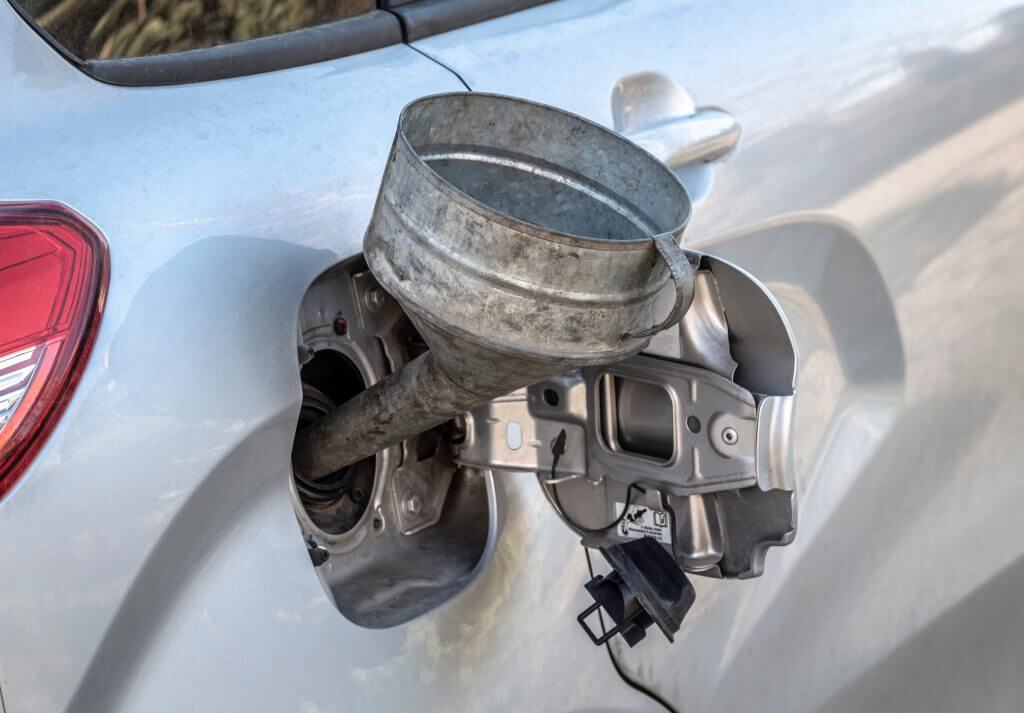

Symptoms:
- Check engine light illuminated
- Gas smell around the fuel door
- Clicking sound isn’t heard when tightening the cap
- Cap feels loose or won’t tighten properly
What to Inspect:
- Remove and reseat the cap, listening for 3-4 clicks
- Check rubber seal for damage/wear
- Clean cap and filler neck rim
Pro Tip: If the cap feels loose after clicking, replace it—they’re inexpensive.
Symptoms:
- Check engine light illuminated
- Gas smell around the fuel door
- Clicking sound isn’t heard when tightening the cap
- Cap feels damaged or worn
- Missing or damaged O-ring
- Cap doesn’t fit properly
What To Inspect:
- Inspect rubber seal for cracks/tears
- Check if the spring mechanism still works
- Look for stripped threads
- Verify that the cap is the correct model for your vehicle
Symptoms:
- Check engine light illuminated
- Gas smell around the fuel door
- Visible fuel drips or wetness around the neck
- Difficulty inserting fuel nozzle
- Unusual sounds when fueling
What To Inspect:
- Look for rust around the neck area
- Check the rubber boot for cracks
- Inspect for dents or damage
- Verify that the drain hole isn’t clogged
Warning: Don’t probe or poke at rusty areas—you could create a leak.
Symptoms:
- Check engine light illuminated
- Poor fuel economy
- Hard starting after refueling
- Clicking or buzzing noise from the EVAP area when the key is on (due to the solenoid getting intermittent power)
What To Inspect:
- Look for damaged/burnt wires
- Check if the connector is fully seated
- Look for green corrosion on pins
- Listen for clicking when the key is turned on
- Gently wiggle the harness while running (use caution around a running car)
Warning: Don’t pull hard on wires or force connectors.
Note: Circuit testing requires professional tools and expertise.
Symptoms:
- Check engine light illuminated
- Gas smell under the hood or vehicle
- Poor fuel economy
- Rough idle
- Difficulty starting in cold weather
What To Inspect:
- Visual check for cracked/brittle hoses
- Look for chafing against metal parts
- Check for loose connections
- Feel for soft/mushy spots in lines
Pro Tip: Use a flashlight and mirror to check hard-to-see areas.
Symptoms:
- Check engine light illuminated
- Poor fuel economy
- Engine running rough
- Difficulty filling the gas tank
- Gas pump frequently clicks off while fueling
What To Inspect:
- Listen for clicking with the key on
- Check connector seating
- Look for physical damage
- Verify mounting is secure
- Clear debris around the valve area
Warning: Don’t disassemble the valve—it’s sealed. Testing requires professional experience and equipment.
Symptoms:
- Check engine light illuminated
- Difficulty filling the gas tank
- Engine stalling
- Erratic fuel gauge readings
- Poor engine performance
This is not a DIY inspection task. It requires specialized diagnostic equipment and technical expertise to test sensor function and electrical signals.
Symptoms:
- Check engine light illuminated
- Strong gas smell
- Poor fuel economy
- Difficulty filling the gas tank
- Black charcoal debris is visible around the canister
What To Inspect:
- Inspect for external damage
- Check mounting straps
- Look for loose connections
- Verify that the vent isn’t blocked
Warning: Don’t try to clean or flush the canister. Canister function testing requires professional involvement.
Symptoms:
- Check engine light illuminated
- Visible fuel leaks under the vehicle
- Fuel gauge reading irregularly
- Strong gas smell
- Poor fuel economy
- Engine stalling due to fuel delivery issues
What To Inspect:
- Look for rust/damage underneath
- Check mounting straps
- Inspect for wet spots/fuel smell
- Look for scrape damage or punctures
Warning: Never attempt tank repairs yourself. This is a fire hazard!
Symptoms:
- Check engine light illuminated or flashing
- Multiple warning lights on the dash
- Erratic engine performance
- Poor fuel economy
- Stalling or rough running
- Failed emissions tests
What To Inspect:
- Check for blown fuses
- Look for water damage signs
- Verify connector seating
- Listen for unusual clicking
Note: Except for a preliminary inspection, repairing the ECM/PCM is professional work.
Pro Tip: For any fuel system repairs, including inspections, always work in a well-ventilated area and have a fire extinguisher nearby. If you smell strong fuel odors or see obvious leaks, don’t start the vehicle—have it towed to a repair shop.
Can I drive with Code P0449?
Quick answer: Yes. Generally, driving for a week or two with a P0449 won’t worsen any existing problems. However, it’s best NOT TO DRIVE with a damaged fuel tank or faulty engine control module due to safety hazards.
Unless you have an upcoming emissions test, delaying P0449 repairs might be appealing. Yet, doing so risks damaging the catalytic converter and other expensive parts. Always be alert to gas fumes, which can ignite.
Here’s a more detailed look at driveability with a P0449 code.
| Causes | Can I Drive? | Risks / Safety / Performance |
|---|---|---|
|
Faulty Gas Cap
|
Yes, driving for a short period (one to two weeks) is okay. However, delaying repairs beyond this point risks more repairs. |
Fuel vapors can escape into the atmosphere, and the car will likely fail emissions testing. You may notice decreased fuel economy and an occasional fuel smell.
|
|
Faulty Fuel Filler Neck |
Yes, driving for a short period (one to two weeks) is okay. However, delaying repairs beyond this point risks more repairs. |
Fuel vapors can escape, and water or debris might enter the tank, potentially contaminating fuel. If severely damaged, it could create a fire hazard.
|
|
Defective Wiring/Connector |
Yes, driving for a short period (one to two weeks) is okay. However, delaying repairs beyond this point risks more repairs. |
A constant draw can cause erratic EVAP system operation and drain the battery, which may reduce fuel economy and increase emissions. |
|
Damaged EVAP line |
Yes, driving for a short period (one to two weeks) is okay. However, delaying repairs beyond this point risks more repairs. |
It allows fuel vapors to escape into the atmosphere, which could allow debris into the system. This may cause rough running and failed emissions tests. |
|
Defective Charcoal Canister Vent Control Valve |
Yes, driving for a short period (one to two weeks) is okay. However, delaying repairs beyond this point risks more repairs. |
This could cause tank pressure issues during refueling and poor engine performance. If left unchecked, it might also damage other EVAP components.
|
|
Faulty Fuel Tank Pressure Sensor |
Yes, driving for a short period (one to two weeks) is okay. However, delaying repairs beyond this point risks more repairs. |
It can cause incorrect fuel mixture, poor engine performance, or stalling. Improper system operation may damage other EVAP components. |
|
Malfunctioning Charcoal Canister
|
Yes, driving for a short period (one to two weeks) is okay. However, delaying repairs beyond this point risks more repairs. |
It will release harmful fuel vapors into the atmosphere, which could cause refueling difficulties. It may also trigger multiple check engine codes and emissions test failures. |
|
Broken Fuel Tank |
No. A leaking fuel tank creates a safety hazard. Driving should be avoided. |
DANGER—Do not drive with a damaged fuel tank; it creates a fire and safety hazard. Even small cracks or holes can lead to fuel leaks and a potential fire or explosion. |
|
Malfunctioning Engine Control Module (ECM)/Powertrain Control Module (PCM) |
No. Driving with a faulty ECM is dangerous since it can cause the engine to stall unexpectedly or behave erratically, putting you at risk on the road. |
DANGER—Avoid driving, which can cause unpredictable engine behavior, stalling, or complete failure. The engine could shut off while driving or run in a way that damages other components. |
DIY | How To Fix P0449 Causes
Electrical problems are among the most challenging for automotive mechanics. So, solutions for P0449 codes are usually best left in the hands of a professional. Whether tracing a bad wire, locating a faulty connector, or properly rewiring a replacement, these repairs require expertise that most DIYers lack.
Outside of more complex issues, there are opportunities for an eager novice to attempt an EVAP system fix. We’ve listed two below: a faulty gas cap and a troublesome EVAP line. As covered earlier, some problems may not directly relate to a sole P0449 code but could be involved if there are related EVAP system codes.
Whether conducting a basic inspection or taking a wrench-it-yourself approach, proceed at a comfortable and cautious pace. Don’t get in over your head. It’s the best way to avoid injuries and larger repair bills.
Damaged or Defective Gas Cap
What is it?
A properly functioning gas cap maintains fuel system pressure. If the cap is loose, misaligned, or damaged, it can cause a pressure drop and vapor leak, potentially triggering a P0449 code. An improperly closed or defective gas cap can lead to the same problem.
How hard is it to fix P0449 ?
Difficulty Level: Easy
Fixing a gas cap issue is simple: ensure it’s tightened correctly or replace it with a compatible, quality cap. After the repair, drive your vehicle for a few cycles or use a diagnostic tool (like the FIXD app) to clear the check engine light and P0449 code. Avoid cheap replacements that may not seal properly.
P0449 Cost of Repairs
There’s no expense if the problem is traced to a misaligned gas cap. Otherwise, a replacement costs $20 to $60.
Faulty EVAP line
What is it?
A damaged EVAP line can cause system leaks, triggering the P0449 code. In this case, replacing the faulty hose usually fixes the issue.
How hard is it to fix PO449?
Difficulty Level: Moderate
Replacing a faulty EVAP hose varies in difficulty based on its location. Engine bay repairs are often manageable for those with moderate skills. However, hoses near the axle, suspension, or gas tank may require professional help due to limited access. After the repair, drive the vehicle for several cycles or use an OBD-II scanner to clear the check engine light.
PO449 Cost of Repairs
A replacement EVAP line usually costs $30 to $70.
Other DIY Considerations for Code P0449
While some EVAP system repairs, like replacing a gas cap, are simple, many others require professional diagnostic equipment and expertise—especially when dealing with fuel tanks or computers. This is why most EVAP system work is best left to trained mechanics.
Before dealing with any code P0449-related repair, check whether your car is under warranty. You can save money by letting the automaker handle the work. In addition, research if there are any technical service bulletins (TSBs) for your car. TSBs are official repair/correction notices issued by the manufacturer that cover specific problem areas. You can research this online or contact a dealer.
P0449 Code FAQs
What makes and models does code P0449 affect the most?
Here’s a breakdown of the vehicles most affected by code P0449, according to FIXD sensor data collected in 2023.
| Make | Model | Occurrence Frequency |
| Chevrolet | Silverado 1500 | High |
| GMC | Sierra | High |
| Nissan | Altima | High |
| Chevrolet | Impala | Medium |
| Chevrolet | Avalanche | Medium |
| Chevrolet | Colorado | Medium |
Why are P0449 Chevy and P0449 GMC codes so common?
General Motors vehicles (Chevrolet, GMC, Buick, Pontiac, and Cadillac) commonly experience P0449 codes due to a known design issue with the vent valve solenoid and wiring harness placement. The vent valve is often mounted in a location exposed to road debris, moisture, and environmental elements, which can damage the wiring or connector over time. Additionally, the wiring harness routing can lead to chafing against nearby components, causing shorts in the electrical circuit.
Why is a "P0449 Code Chevy" a common problem on Silverados and other GM trucks?
This code often appears because the vent valve and its wiring are mounted in a vulnerable spot exposed to water, dirt, and debris, leading to electrical connection problems over time.
What P0449 code symptoms should I look for?
Here are the common symptoms that may indicate a P0449 code condition:
- Check engine light illuminated
- Difficulty filling gas tank (pump may click off repeatedly)
- Fuel smell around the vehicle
- Engine running rough at idle
- Hard starting after refueling
- Clicking noise from the EVAP area when the key is turned on
- Failed emissions test
- Decreased fuel economy
Pro Tip: Not all vehicles will show all these symptoms. Sometimes, the only sign is a check engine light.
Warning: If you see fuel leakage or notice a strong fuel smell, DO NOT DRIVE the vehicle. Have it towed to a repair facility, which could indicate a dangerous fuel system leak.
References:
Repair-cost estimates, repairpal.com (various dates). Retrieved December 24, 2024, from repairpal.com.

Dave Goldberg is an automotive journalist and lifelong car fanatic. He writes for numerous enthusiast and business outlets and is an ongoing contributor to HotCars.com, one of the most popular car culture websites. When he’s not writing or driving, Dave is either under a hood or asleep. His credentials include a BA in Journalism from The George Washington University.








12 Responses
Nice lil site here…Love it!
I did exactly as in the video and it worked perfectly!!! Thanks a lot!!!
Will this code p0449 cause no start?
Would the evap system cause the truck while driving down the road act like its misfiring and wanting to stall.
Not the fuel cap, but he selenoid can, also check the fuel presure sensor on the top of the fuel pump
I cannot get this fixd to work on my 07 gmc denaili
I replaced mine. 500 Miles later the engine light came back on and the same code. GM says that the location between the gas tank and the spare tire is the problem. They say the canister gets dirty too easy. Their solution is to relocate the canister between the cab and the bed. They want almost $500 to do this
Po 449 is in reference to the electrictal part of the evap system ohm out the vent valve and u will likely find the problem
How much does this cost 2 fix
I just replaced mine on my 03 Silverado 5.3 it cost $34.00
What exactly did you pay $34 to replace?
I first replaced the solenoid located at the fuel tank
The problem then became errant instead of constant
I chased wires to bulkhead connection below the driver-side and found this connection severely corroded
Had to removed rivets and replace both side of all 3 plugs.
Fault corrected.