

| Table of Contents | |
| Possible Causes of P0301 & Their Repair Costs | Code P0301 indicates that the engine or powertrain control module detected a misfire in cylinder #1. |
| How to Diagnose the Cause of Your P0301 Code | A check engine light with a P0301 code can stem from multiple issues in cylinder #1. Common causes include ignition system problems (spark plugs, wires, coils), fuel delivery issues (injectors, pressure, pumps), mechanical failures (vacuum leaks, compression), or faulty sensors (camshaft, crankshaft position). Early diagnosis is essential since these problems typically worsen over time. |
| Can I drive with a P0301 code? | No. Driving with a P0301 code risks damage to the engine and catalytic converter. In addition, hazardous driving situations can arise if the car hesitates, stalls, or loses power. |
| DIY | How To Fix P0301 Causes |
DIYable P0301 triggers include:
|
| P0301 Code FAQs |
Frequently asked questions:
|
Among the thousands of diagnostic trouble codes (DTCs) your car can encounter, DTC P0301—Cylinder 1 Misfire Detected is one to give prompt and serious attention to. While engine problems can be difficult to diagnose, P0301 generalizes the trouble (engine cylinder #1).
P0301 is part of a family of engine misfire codes. P0300 signals random misfires across multiple cylinders, but P03XX codes point to cylinder-specific misfires. So, P0303 involves cylinder #3, cylinder #4 is at the center of P0304, and cylinder #6 underscores what’s going on with P0306. You get the idea. This code group ranges from P0301 to P0312. Yes, 12-cylinder engines are unusual but equally vulnerable to misfires.
Misfire-related check engine lights happen when the engine control module (ECM) or powertrain control module (PCM) identifies an error in the normally well-timed combustion cycle. As we’ll review, numerous possibilities exist for what’s causing a P0301 code. This gets at the heart of the problem; a lot can go wrong, which often requires the help of a professional mechanic.
Regardless of what you suspect is triggering a P0301 code, it’s imperative not to ignore the problem. The safest approach is to pull over (where it’s safe), turn off the car, and call a tow truck.
Driving even a short distance risks engine damage that costs a lot more to repair than the price of roadside assistance. Ultimately, the problem could be as simple as a faulty spark plug or ignition coil. However, more severe problems could be equally at fault, so why take a chance?
Here’s a comprehensive look at the P0301 code. We’ll cover common causes, likely symptoms, and typical repairs. You can also review the makes and models most susceptible to P0301-related problems.
Possible Causes of P0301 & Their Repair Costs
There’s a lot to consider when diagnosing P0301-related problems. Besides the potential for engine damage, misfires can create hazardous driving situations. Losing engine power or stalling can make highway maneuvers or intersection crossings a potential disaster.
Check out the FIXD article on the most common causes of check engine lights.
Here’s a look at the parts most likely involved with a P0301 code and how much things cost. Note that actual prices depend on the vehicle and location.
P0301 Code Triggers & Typical Repair Costs
| Part To Repair | Part / DIY Price | Mechanic Total Cost |
| Spark Plugs | $83–$112 | $212–$276 |
| Spark Plug Wires | $66–$84 | $208–$256 |
| Camshaft Position Sensor | $75–$95 | $176–$227 |
| Crankshaft Position Sensor | $96–$121 | $168–$224 |
| Vacuum Line | $50–$100 | $200–$300 |
| Ignition Coil | $161–$230 | $213–$295 |
| Fuel Pressure Regulator | $165–$195 | $266–$322 |
| Oxygen Sensor | $300–$333 | $362–$412 |
| Fuel Injector | $450–$541 | $644–$784 |
| Fuel Pump | $916–$1,042 | $166–$209 |
| Head Gasket | $815–$833 | $1,100–$1,387 |
| Catalytic Converter | $2,188–$2,284 | $2,342–$2,479 |
Here’s how different malfunctioning parts can trigger a P0301 code.
Parts Most Likely to Fail & Cause a P0301 Code
| Parts that can cause P0301 | How it could cause P0301 |
|
Spark Plugs Spark Plug Wires |
The combustion cycle in cylinder #1 is affected. |
| Ignition Coil | The spark plug can’t fire correctly. |
|
Camshaft Position Sensor Crankshaft Position Sensor Fuel Pressure Regulator |
The engine control module/powertrain control module identifies a problem with timing or fuel delivery. |
|
Vacuum Line Fuel Injector Oxygen Sensor |
The mix of air and fuel becomes unbalanced. |
| Fuel Pump | Not enough fuel gets into cylinder #1. |
| Head Gasket | Insufficient cylinder pressure. |
| Catalytic Converter | Unburnt fuel and exhaust back pressure. |
Makes Commonly Affected By P0301
A review of FIXD sensor data reveals that most mainstream and some luxury auto brands have an extensive history of P0301 codes.
Despite its reputation for building dependable vehicles, Toyota stands at the top of this list. Its worst-offending model is the Camry, followed closely by the Corolla and the game-changing Prius hybrid. These nameplates have high occurrence levels of P0301 codes.
Ford follows with America’s best-selling vehicle, the F-150, at the Blue Oval’s code P0301 rankings. The midsize Ranger pickup and compact Escape SUV also make the roster but at medium incident levels (the F-150 has high occurrence ratings).
Another Detroit stalwart, Chevrolet, gets third place for code P0301 frequency, with the Silverado 1500 ranking as the automaker’s most likely model for this problem. The forgotten Cobalt compact gets the dishonors for the second spot, with the Impala trailing third. Only the Silverado 1500 has high incident levels of this DTC.
While three sedans rank the highest for Nissans with coded P0301 troubles, the Altima stands far above the Sentra and Maxima. Meanwhile, the Audi A4 completes the top-five roundup for P0301 codes.
| Top 5 Makes Affected by P0301 | Most Affected Model(s) |
|
|
Camry |
| Corolla | |
| Prius | |
| Ford |
F-150 |
| Ranger | |
| Escape | |
Chevrolet |
Silverado 1500 |
| Cobalt | |
| Impala | |
Nissan |
Altima |
| Sentra | |
| Maxima | |
| Audi | A4 |
How to Diagnose the Cause of Your P0301 Code
Discovering the reason behind a check engine light requires an OBD-II scanner. Your options include the FIXD plug-in sensor and accompanying app that shows the diagnostic trouble code and common causes behind the problem. Alternatively, a basic code reader that plugs into your car’s OBD-II port will also work, but these devices only show the code, not the underlying issue that triggered the code.
For a P0301 code, there’s not much for an amateur mechanic to investigate (problems like a faulty oxygen sensor or catalytic converter are best left to a professional). Nonetheless, if you decide to explore under the hood or elsewhere, there are a few essential safety steps to follow:
- Have the right tools for a basic inspection: a flashlight, gloves, safety goggles, and a rag. Hand tools may be necessary for more detailed work.
- Park on a safe, level surface.
- Turn the car off and engage the parking brake.
- Allow the engine to cool.
Symptoms of P0301 Causes
Locating cylinder #1 is critical to solving P0301-related problems, such as a faulty spark plug, spark plug wire, or oxygen sensor. Most automakers count cylinders from front to back. In straight or inline engines, #1 is simply at the front (or closest to the serpentine belt in the case of transverse-mounted engines)
V-style engines have two rows. Cylinder #1 usually sits on the odd-numbered side, except in Fords—Ford V8s place #1 at the front of the driver’s side. Flat or boxer engines, like in Subarus and some Porsches, have cylinder #1 at the front right when viewed from behind.
Since each manufacturer differs, check the owner’s manual or a technical guide or ask a mechanic for the specific engine layout for your car.
Diagnosing an engine misfire can involve numerous steps, sometimes taxing an advanced DIYer or professional mechanic. Regardless, amateurs wanting to take a hands-on approach to P0301 problems can explore the following areas.



Symptoms:
- Illuminated check engine light
- Rough idling
- Reduced fuel economy
- Engine stalling or hesitation
What to Inspect:
Remove cylinder #1’s spark plug and inspect it for:
- Carbon buildup or oil coating
- Damaged or worn electrode tip
Symptoms:
- Illuminated check engine light
- Rough idling
- Reduced fuel economy
- Engine stalling or hesitation
What to Inspect:
Test the plug wire for cylinder #1:
- Examine outer insulation for cracks or wear
- Inspect both end connectors for damage
- Use a 12-volt tester to verify proper operation
Symptoms:
- Illuminated check engine light
- Rough idling
- Reduced fuel economy
- Engine stalling or hesitation
What to Inspect:
Examine cylinder #1’s ignition coil:
- Check for visible damage
- Look for oil seepage
- Test resistance with multimeter (results may not be conclusive)
For a practical test, a moderately experienced DIYer can swap coils:
- Move cylinder #1’s coil to a known good cylinder
- Place the working coil into cylinder #1
- Start the engine and scan for codes
- If the misfire moves with the original coil, you’ve found the problem
Symptoms:
- Illuminated check engine light
- Rough idling
- Reduced fuel economy
- Engine stalling or hesitation
What to Inspect:
Check your vehicle’s manual or repair guide to find the correct sensor. Inspect it for:
- Physical damage
- Loose or corroded connections
- Proper mounting
Symptoms:
- Illuminated check engine light
- Rough idling
- Reduced fuel economy
- Engine stalling or hesitation
- Fuel leak/smell
- Black exhaust smoke
- Backfiring
- Hard-to-start engine
What to Inspect:
This repair requires decent DIY skills, a fuel pressure tester, or a professional mechanic.
Symptoms:
- Illuminated check engine light
- Higher-than-normal engine RPMs at idle
- Rough engine idle
- Engine sputtering or stalling
- Hard-to-start engine
- Abrupt transmission shifts at high RPMs
What to Inspect:
Check all air hoses and vacuum lines for damage or wear.
Start the engine with the hood open and listen for any hissing sounds.
Use a water spray along hoses, lines, gaskets, and injectors. A change in engine sound indicates a leak at that spot.
Symptoms:
- Illuminated check engine light
- Rough idling
- Engine stalling or hesitation
- Fuel leak/smell
- Black exhaust smoke
What to Inspect:
Locate the fuel injector for cylinder #1 and start the engine.
Check operation:
Using screwdriver method:
- Place the tip against the injector
- Listen through the handle end
- Check for regular clicking
Optional test (for experienced DIYers):
- Unplug cylinder #1 injector while running
- Note any engine sound or RPM changes
- No change suggests a faulty injector
Warning: Be careful working around a running engine.
Symptoms:
- Illuminated check engine light
- Rough idling
- Reduced fuel economy
- Engine stalling or hesitation
- Black exhaust smoke
- Failed emissions test
What to Inspect:
Test the oxygen sensor using a voltmeter. This requires mechanical experience or professional help.
Symptoms:
- Illuminated check engine light
- Rough idling
- Reduced fuel economy
- Engine stalling or hesitation
- Hard-to-start engine
- Whirring noise from the fuel tank area
- Overheating
What to Inspect:
This repair requires technical skills, a fuel pressure gauge, and possible electrical testing. Consider a professional mechanic for this task.
Symptoms:
- Illuminated check engine light
- Rough idling
- Engine stalling or hesitation
- Overheating
- White or gray exhaust smoke
- Milky oil
- Coolant loss
What to Inspect:
A simple block leak test can be done at home with a store-bought kit.
For a complete check, have a mechanic do a compression test.
Symptoms:
- Illuminated check engine light
- Rough idling
- Reduced fuel economy
- Engine stalling or hesitation
- Failed emissions test
- Rattling noise
- Sulfur smell
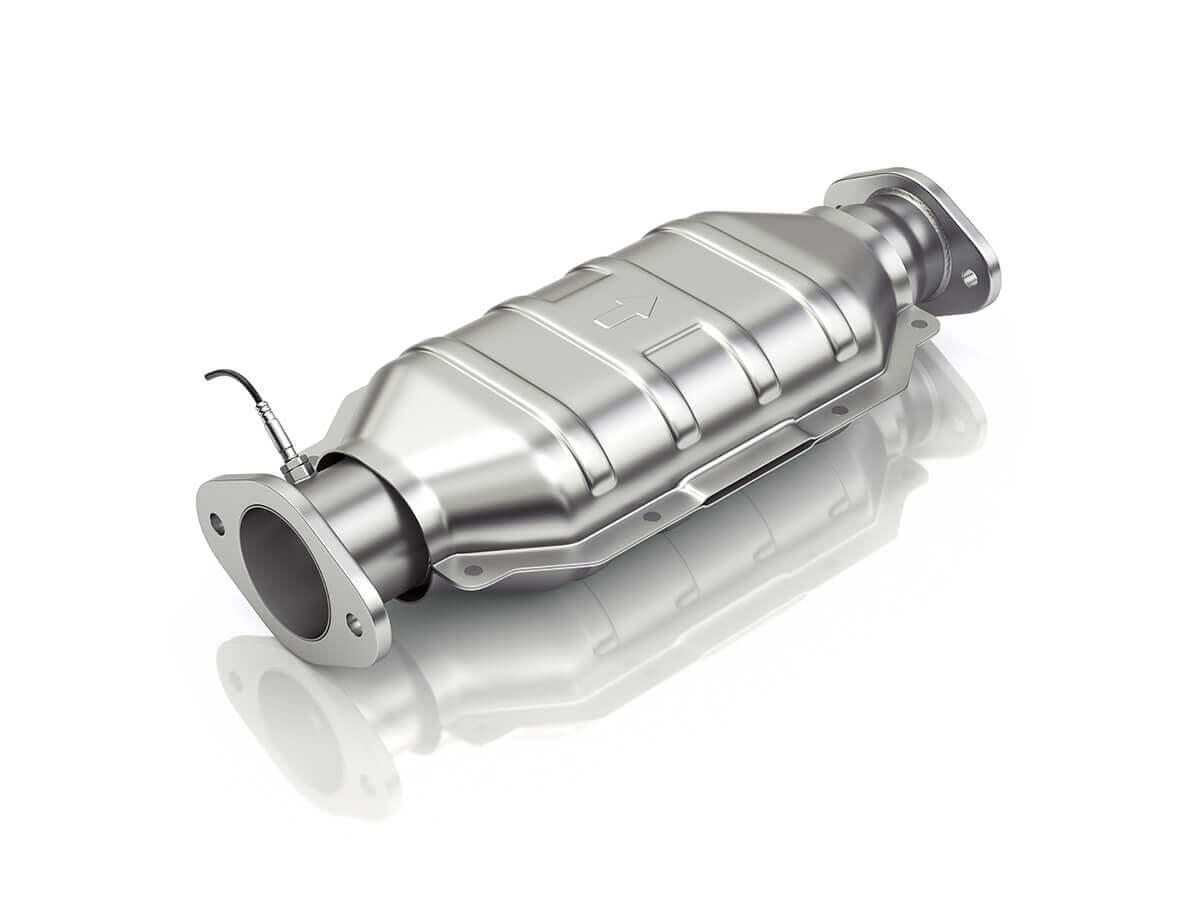
What to Inspect:
Get a professional mechanic to check catalytic converter problems; emissions work requires expert skills.
Can I drive with Code P0301?
Quick answer: No. Avoid driving with a code P0301.
Operating a car with a misfiring engine creates multiple risky scenarios. The first is potentially damaging the engine, which involves the pistons and cylinder walls. This can result in expensive repairs, to say the least.
Further, the catalytic converter is another expensive component that’s vulnerable by driving under a P0301 code. An imbalanced combustion cycle caused by an engine misfire can deliver unburnt fuel into the converts, causing deterioration of sensitive components.
Lastly, the hesitation, stalling, and loss of power that often accompanies an engine misfire create hazardous driving conditions. The simple task of highway merging or turning at an intersection can lead to a catastrophic accident.
| Causes | Can I Drive? | Risks / Safety / Performance |
|---|---|---|
|
Defective Spark Plug |
No. Stop driving immediately. A misfiring engine risks serious damage and unsafe operation. |
Can lead to stalling, rough running, and unexpected power loss during acceleration. |
|
Damaged Spark Plug Wire |
No. Stop driving immediately. A misfiring engine risks serious damage and unsafe operation. |
Prevents proper spark, causing rough operation and potential stalling in traffic. |
|
Bad Ignition Coil |
No. Stop driving immediately. A misfiring engine risks serious damage and unsafe operation. |
The engine may cut out suddenly or run extremely rough, risking unsafe driving conditions. |
|
Faulty Camshaft or Crankshaft Position Sensor |
No. Stop driving immediately. A misfiring engine risks serious damage and unsafe operation. |
Incorrect timing causes stuttering, stalling, and potential loss of power.
|
|
Defective Fuel Pressure Regulator |
No. Stop driving immediately. A misfiring engine risks serious damage and unsafe operation. |
An improper fuel mixture leads to power loss and dangerous hesitation during acceleration. |
|
Vacuum Leak |
No. Stop driving immediately. A misfiring engine risks serious damage and unsafe operation. |
Creates unstable idle, rough running, and possible stalling. |
|
Bad Fuel Injector |
No. Stop driving immediately. A misfiring engine risks serious damage and unsafe operation. |
Causes jerky operation, power loss, and unexpected stalling while driving. |
|
Faulty Oxygen Sensor |
No. Stop driving immediately. A misfiring engine risks serious damage and unsafe operation. |
Can lead to poor performance, reduced power, and possible damage to other engine components. |
|
Defective Fuel Pump |
No. Stop driving immediately. A misfiring engine risks serious damage and unsafe operation. |
Starves engine of fuel, causing dangerous stalling and loss of power at any speed. |
|
Leaking Head Gasket |
No. Stop driving immediately. A misfiring engine risks serious damage and unsafe operation. |
Engine overheating and severe internal damage if driven with this condition. |
|
Malfunctioning Catalytic Converter |
No. Stop driving immediately. A misfiring engine risks serious damage and unsafe operation. |
No. Stop driving immediately. A misfiring engine risks serious damage and unsafe operation. |
DIY | How To Fix P0301 Causes
The broad range of triggers for P0301 codes means that professional involvement is typically required to find a solution. That said, there are a few DIY actions to take, assuming some basic mechanical skills.
Importantly, this doesn’t mean going beyond your abilities or comfort level. The last thing anyone wants is to make the problem worse or get injured. Recognize your limits and proceed accordingly.
Possible Cause: Defective Spark Plug
What is it?
Spark plugs are essential to every gasoline engine. A fouled or defective spark plug is a common cause of engine misfires and could be the source of a cylinder #4 issue.
How hard is it to fix?
Difficulty Level: Easy/Moderate
Fortunately, replacing a spark plug is easy if you can get to it. Some transverse-mounted engines have spark plugs located near the firewall, making access challenging. You’ll need a few tools and supplies: replacement spark plugs (it’s best to replace them all), a gap gauge, a torque wrench (to avoid overtightening), a spark plug socket, a ratchet handle, and anti-seize for the spark plug threads. A spark plug boot puller can make disconnecting the spark plug wires simpler, and spark plug boot (dielectric) grease will make the task easier in the future.
Cost of Repairs
On average, a new set of spark plugs costs $83–$112. Tools and supplies are separate.
Possible Cause: Damaged Spark Plug Wire
What is it?
Like many things under the hood, a spark plug wire can degrade over time, affecting how the spark plug functions and leading to an engine misfire.
How hard is it to fix?
Difficulty Level: Easy/Moderate
Replacing a spark wire is typically straightforward. As with spark plugs, the greatest challenge is being able to get to the connection points. Once you have access, a spark plug boot puller (see above) and spark plug boot grease can help with the task. Wire loom spacers can ensure the new wires are correctly positioned to prevent arcing to the ground and cross-firing, which can damage other components.
If you’re working beyond cylinder #3, be sure to pay attention to the placement and length of each wire—usually, if one wire needs replacing, the others aren’t far behind. So, you might as well replace all the spark plugs while you’re at it.
Cost of Repairs
On average, a new set of spark plugs costs $66–$84. Tools and supplies are separate.
Possible Cause: Vacuum Leak
What is it?
Proper air-fuel mixture is one vital element of a smooth-running engine. A vacuum leak creates an imbalance that can lead to a higher-revving engine and code P0301.
How hard is it to fix?
Difficulty Level: Moderate
The greatest challenge to fixing a vacuum leak is finding the problem. The water spray technique (see above) only goes so far and can require more sophisticated methods that are best left to experienced hands. While replacing some vacuum lines is relatively easy, a vacuum leak involving a gasket, intake manifold, or other components requires professional intervention.
Cost of Repairs
Depending on the vehicle and the component, a replacement vacuum line will cost $50 to $150.
Other DIY Considerations for Code P0301
The above tasks are by no means the only possible DIY repairs for a P0301 code. Swapping out a bad ignition coil or camshaft position sensor isn’t overly complicated. The same applies to installing a new oxygen sensor (you just need safe access to the vehicle’s underside). So, someone with more immediate skills and the right tools may want to get further involved in finding a solution to P0301-related troubles.
Before dealing with any code P0301-related repair, check whether your car is under warranty. You can save money by letting the automaker handle the work. In addition, research if there are any technical service bulletins (TSBs) for your car. TSBs are official repair/correction notices issued by the manufacturer that cover specific problem areas. You can research this online or contact a dealer.
P0301 Code FAQs
What makes and models does code P0301 affect the most?
Here’s a breakdown of the vehicles most affected by code P0301, according to FIXD sensor data collected in 2023.
| Make | Model | Occurrence Frequency |
| Audi | A4 | High |
| Chevrolet | Silverado 1500 | High |
| Dodge | Grand Caravan | High |
| Ford | F-150 | High |
| Nissan | Altima | High |
| Subaru | Outback | High |
| Toyota | Camry | High |
| Toyota | Corolla | High |
| Toyota | Prius | High |
| Volkswagen | Jetta | High |
| Volkswagen | Passat | High |
What is a P0301 engine code?
A P0301 code indicates that cylinder #1 is misfiring, meaning it’s not burning fuel properly during combustion. The misfire can be triggered by ignition problems (spark plugs, wires, coils), fuel issues (injectors, pressure, pump), mechanical failures (head gasket, valves), or sensor malfunctions (oxygen, camshaft, crankshaft sensors).
How can I prevent a P0301 code?
While it isn’t possible to completely prevent P0301 from happening, there are preventative measures to take. Follow your vehicle’s maintenance schedule for tune-ups, including regular spark plug replacement and fuel system cleaning. Keep up with oil changes and promptly address any check engine warnings, as minor issues can turn into cylinder misfires. In addition, have your car’s engine professionally inspected during scheduled maintenance to catch potential problems early.
I have a DTC P0301 for my Volkswagen. What's the next step?
While it isn’t possible to completely prevent P0301 from happening, there are preventative measures to take. Follow your vehicle’s maintenance schedule for tune-ups, including regular spark plug replacement and fuel system cleaning. Keep up with oil changes and promptly address any check engine warnings, as minor issues can turn into cylinder misfires. In addition, have your car’s engine professionally inspected during scheduled maintenance to catch potential problems early.
References:
Repair-cost estimates, repairpal.com (various dates). October 22, 2024, from repairpal.com.

Dave Goldberg is an automotive journalist and lifelong car fanatic. He writes for numerous enthusiast and business outlets and is an ongoing contributor to HotCars.com, one of the most popular car culture websites. When he’s not writing or driving, Dave is either under a hood or asleep. His credentials include a BA in Journalism from The George Washington University.