

| Table of Contents | |
| Possible Causes of P0303 & Their Repair Costs | Code P0303 signals the presence of a misfire in cylinder #3. |
| How to Diagnose the Cause of Your P0303 Code | Several potential triggers exist for a check engine light and a P0303 code. The problem can be caused by a faulty spark plug or spark plug wire, a defective ignition coil or fuel injector, a vacuum leak, or a bad camshaft or crankshaft position sensor. |
| Can I drive with a P0303 code? | No. Driving with a P0303 creates an unsafe condition (due to engine hesitation or stalling) and risks significant engine damage. |
| DIY | How To Fix P0303 Causes |
DIYable P0303 triggers include:
|
| P0303 Code FAQs |
Frequently asked questions:
|
While all diagnostic trouble codes (DTCs) are helpful because they remove much of the guesswork about car troubles, DTC P0303: Cylinder 3 Misfire Detected is useful. This error message lets owners and mechanics know the problem stems from engine cylinder #3. Of course, engine trouble is never a good thing, but being able to focus on a particular area saves time and money.
The challenge lies with the nature of the misfire code, which can be triggered by several reasons. In most situations, the trouble is due to a disruption in the carefully timed combustion cycle or an imbalance in the precise air-to-fuel ratio. A misfire-related check engine light occurs when the engine control module (ECM) or powertrain control module (PCM) detects this error.
While P0300 indicates a random misfire across multiple cylinders, P0303 is more specific about cylinder #3. Further, P0303 is part of a series of codes ranging from P0301 to P0312 and dealing with cylinder-specific engine misfires. For instance, P0304 points to a misfire in cylinder #4 and P0306 signals a similar issue with cylinder #6. Although 12-cylinder engines are rare, they are equally susceptible to misfires, hence DTCs that go up to P0312.
Misfires are serious business and shouldn’t be ignored. It’s a pull-over-and-call-a-tow-truck situation that, if ignored, can lead to hazardous driving conditions and substantial engine damage. Repairs can be straightforward, like replacing a spark plug or fixing a vacuum leak. Or, a misfire can involve more advanced diagnostic work and repairs, such as replacing a head gasket. Understanding these complexities is at the heart of resolving P0303-related problems.
Let’s dive into what’s involved with a P0303 code. We’ll review typical causes, symptoms, and repairs. You’ll also learn what vehicles are most vulnerable to having P0303 codes.
Possible Causes of P0303 & Their Repair Costs
Misfires require immediate attention because of the resulting problems. A car that loses power or stalls can create a dangerous situation in traffic. At the same time, a misfire can turn from a minor repair into a major (and expensive) one. Quick action is the best way to keep a P0303 code in check.
Check out the FIXD article on the most common causes of check engine lights.
Here’s a look at the parts most likely involved with a P0303 code and how much things cost. Note that actual prices depend on the vehicle and location.
P0303 Code Triggers and Typical Repair Costs
| Part To Repair | Part / DIY Price | Mechanic Total Cost |
| Spark Plugs | $83–$112 | $212–$276 |
| Spark Plug Wires | $66–$84 | $208–$256 |
| Camshaft Position Sensor | $75–$95 | $176–$227 |
| Crankshaft Position Sensor | $96–$121 | $168–$224 |
| Vacuum Line | $50–$100 | $200–$300 |
| Ignition Coil | $161–$230 | $213–$295 |
| Fuel Pressure Regulator | $165–$195 | $266–$322 |
| Oxygen Sensor | $300–$333 | $362–$412 |
| Fuel Injector | $450–$541 | $644–$784 |
| Fuel Pump | $916–$1,042 | $166–$209 |
| Head Gasket | $815–$833 | $1,100–$1,387 |
| Catalytic Converter | $2,188–$2,284 | $2,342–$2,479 |
Here’s how different malfunctioning parts can trigger a P0303 code.
Parts Most Likely to Fail & Cause a P0303 Code
| Parts that can cause P0303 | How it could cause P0303 |
Spark Plugs Spark Plug Wires | A faulty ignition component can cause incomplete combustion in cylinder #3 |
| Ignition Coil | Prevents the spark plug from operating normally |
Camshaft Position Sensor Crankshaft Position Sensor Fuel Pressure Regulator | The powertrain control module or engine control module detects a disruption in proper engine timing or fuel delivery |
Vacuum Line Fuel Injector Oxygen Sensor | Affects the correct air-fuel mixture |
| Fuel Pump | Leads to insufficient fuel entering cylinder #3 |
| Head Gasket | Fails to maintain sufficient cylinder pressure |
| Catalytic Converter | Results in back pressure and incomplete fuel burning |
Makes Commonly Affected By P0303
FIXD sensor data show that many makes and models have an unfortunately strong history with P0303 codes. The worst of the worst is the Ford F-150. It may be America’s most popular vehicle, but it’s doubtful that cylinder #3 misfires are what make it a best-seller. Ford’s other pickup, the Ranger, ranks below its larger stablemate, while the Escape crossover rounds out the podium.
Popularity is certainly applicable to the venerable Toyota Camry, as is a high frequency of check engine lights owing to a P0303 code. Meanwhile, the Corolla has an equally high P0303 occurrence rate. The Prius occupies Toyota’s third spot.
Chevrolet unintentionally borrows a page from Ford’s playbook. The F-150’s perennial rival, the Silverado 1500, has a more significant history with P0303 codes than any other vehicle from the Bow Tie brand. Although P0303 happens to a lesser extent with the Traverse and Camaro, these cars still earn a spot on this list.
While Audi sales are a fraction of Ford, Toyota, and Chevrolet’s, the A4’s lower popularity doesn’t keep this sedan off this unfortunate index. The overall P0303 occurrence rate for the A4 is exceptionally high.
Nissan closes out the top five with its code sedan, the Altima, occupying first place for this Japanese brand. Another four-door, the Maxima, slides into second. Yet, notable occurrence levels for P0303 codes aren’t limited to Nissan sedans. The Rogue crossover completes the Nissan trio of vehicles with notable P0303 histories.
| Top 5 Makes Affected by P0174 | Most Affected Model(s) |
Ford | F-150 |
| Ranger | |
| Escape | |
Toyota | Camry |
| Corolla | |
| Prius | |
Chevrolet | Silverado 1500 |
| Traverse | |
| Camaro | |
| Audi | A4 |
Nissan | Altima |
| Maxima | |
| Rogue |
How to Diagnose the Cause of Your P0303 Code
Diagnosing a check engine light starts with using an OBD-II scanner to identify what’s causing the issue. The FIXD plug-in sensor will show the code and likely causes on your phone via the accompanying FIXD app. You can also try a basic code reader with a cable to plug into the car’s OBD-II port. In truth, there are only a few things a novice DIYer can do to identify what triggered a P0303 code. You’ll want a flashlight, gloves, safety goggles, and a rag to get started. A more involved effort will require essential hand tools.
Safety Essentials
Before exploring the source of a P0303 code, you’ll want to observe the following:
- Park on a level surface in a safe area
- Ensure the car is off and the parking brake is engaged
- Allow the engine to cool
Symptoms of P0303 Causes
The first step in identifying the cause of a P0303 code is locating cylinder #3. This step can help you zero in on problems like a bad spark plug (or spark plug wire) or a malfunctioning oxygen sensor. Cylinder location varies by engine type and, in some cases, the manufacturer.
Finding cylinder #3 in an engine depends on the engine type and make—most engines number cylinders from front to back. For straight (inline) engines, cylinder #3 is usually the third from the front.
Numbering often switches between sides in V-shaped engines (V6, V8, etc.). Cylinder #3 is typically on the odd-numbered side. Ford V-engines are different. They number in order on each side. In a Ford V8, #3 is on the driver’s side, second from the front. For flat (boxer) engines, like in Subarus and Porsches, #3 is usually the front cylinder on the left when looking from the back.
Remember, different car makers may use other systems. Always check your car’s manual or ask a mechanic where cylinder #3 is in your engine.
Locating the source of an engine misfire can sometimes challenge even experienced technicians. Nonetheless, there are still steps a novice DIYer can take to begin the diagnostic process.


Symptoms:
- Illuminated check engine light
- Rough idling
- Reduced fuel economy
- Engine stalling or hesitation
What to Inspect:
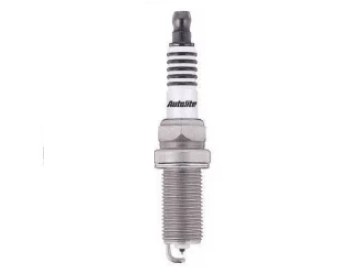
Take out the spark plug from cylinder #3. Check if it has too much carbon or oil on it. Also, look to see if the tip (electrode) is damaged.
Symptoms:
- Illuminated check engine light
- Rough idling
- Reduced fuel economy
- Engine stalling or hesitation
What to Inspect:
Take out the spark plug from cylinder #3. Check if it has too much carbon or oil on it. Also, look to see if the tip (electrode) is damaged.
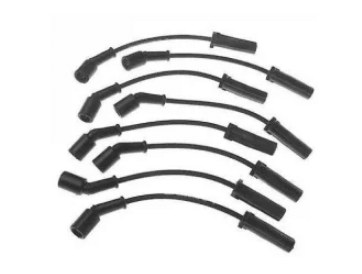
Look at the wire going to the cylinder #3 spark plug. Check if the outer cover is cracked or worn out. Make sure there’s no damage to the connector on each end.
To confirm if the wire is working right, you can use a special 12-volt light test.
Symptoms:
- Illuminated check engine light
- Rough idling
- Reduced fuel economy
- Engine stalling or hesitation
What to Inspect:
Check the ignition coil for cylinder #3. Look for any damage or oil leaks.
You can test the coil with a multimeter, but this might not give a clear answer.
An experienced DIYer try swapping coils:
- Take the coil from cylinder #3 and put it in a cylinder that’s working fine.
- Remove the good cylinder’s coil and put it in cylinder #3.
- Start the car and check for error codes again.
- If the problem follows the cylinder #3 coil to its new spot, that coil is likely bad.
Symptoms:
- Illuminated check engine light
- Rough idling
- Reduced fuel economy
- Engine stalling or hesitation
What to Inspect:
Identify the sensor location (check online for details) and check for external damage or a loose connector.
Symptoms:
- Illuminated check engine light
- Rough idling
- Reduced fuel economy
- Engine stalling or hesitation
- Fuel leak/smell
- Black exhaust smoke
- Backfiring
- Hard-to-start engine
What to Inspect:
Requires intermediate DIY skills or a professional mechanic and a fuel pressure tester.
Symptoms:
- Illuminated check engine light
- Higher-than-normal engine RPMs at idle
- Rough engine idle
- Engine sputtering or stalling
- Hard-to-start engine
- Abrupt transmission shifts at high RPMs
What to Inspect:
Visually inspect the air hoses and vacuum lines for any cracks or deterioration.
Turn the engine on, open the hood, and listen for any high-pitched hissing or whistling sound.
Spray water along air hoses, vacuum lines, gaskets, and fuel injectors while listening for any change in engine operation. A sputtering can indicate water entering the system, signaling a likely leak.
Symptoms:
- Illuminated check engine light
- Rough idling
- Engine stalling or hesitation
- Fuel leak/smell
- Black exhaust smoke
What to Inspect:
Start the engine. Find the fuel injector for cylinder #3. Use a long screwdriver:
- Put the tip on the injector.
- Put your ear on the handle.
- Listen for clicking sounds. The injector might be clogged or defective if you don’t hear clicks.
An experienced DIYer can try this:
- While the car is running, unplug the #3 injector.
- Listen to the engine sound and watch the RPM gauge.
- If nothing changes, the injector is likely broken.
Always exercise caution near an operating engine.
Symptoms:
- Illuminated check engine light
- Rough idling
- Reduced fuel economy
- Engine stalling or hesitation
- Black exhaust smoke
- Failed emissions test
What to Inspect:
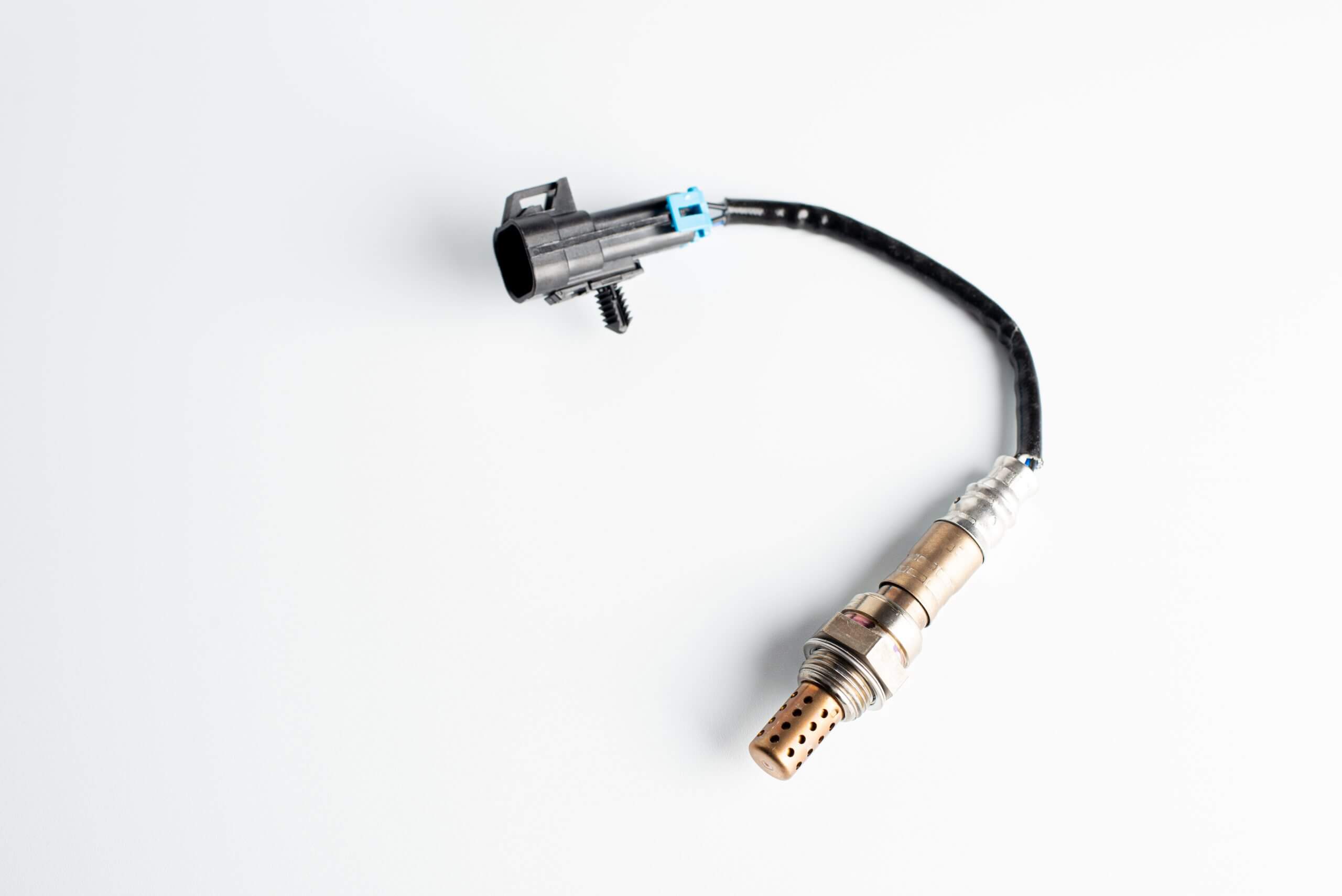
An intermediate DIYer or a technician can use a voltmeter to test the status of an oxygen sensor.
Symptoms:
- Illuminated check engine light
- Rough idling
- Reduced fuel economy
- Engine stalling or hesitation
- Hard-to-start engine
- Whirring noise from the fuel tank area
- Overheating
What to Inspect:
Requires intermediate DIY skills or a professional mechanic and a fuel pressure tester. Additional electrical testing may be required.
Symptoms:
- Illuminated check engine light
- Rough idling
- Engine stalling or hesitation
- Overheating
- White or gray exhaust smoke
- Milky oil
- Coolant loss
What to Inspect:
A block leak test, which can be purchased at an auto supply store, requires only novice DIY skills.
A technician can conduct a compression test for a more thorough analysis.
Symptoms:
- Illuminated check engine light
- Rough idling
- Reduced fuel economy
- Engine stalling or hesitation
- Failed emissions test
- Rattling noise
- Sulfur smell
What to Inspect:
Due to precise emissions requirements, it’s best to consult a professional mechanic for catalytic converter issues.
Can I drive with Code P0303?
Quick answer: No. Driving with a code P0303 isn’t advisable.
There are several risks associated with driving a misfiring car. Most critically, a misfiring engine can lose power, hesitate, or stall—conditions that can be hazardous on a highway or while turning at an intersection. For safety’s sake, it’s best to avoid these situations.
Secondly, a misfire means an engine is operating correctly. This scenario creates an opportunity to damage critical components like a piston or the cylinder wall. The repair bill can continue to climb if unburnt fuel enters the catalytic converter.
In short, the best way to stay safe and reduce the chance of expensive service work is to pull over if code P0303 is present. Find a safe spot, turn the car off, and call a tow truck. The small amount spent on roadside assistance is modest compared to the potential risks.
Here’s a more detailed look at driveability with a P0303 code.
| Causes | Can I Drive? | Risks / Safety / Performance |
|---|---|---|
|
Defective Spark Plug |
No. Don’t drive the car. This could be dangerous and could cause significant engine damage. |
Reduced engine power or stalling can create a dangerous driving situation. Potential for damage to critical parts and systems. |
|
Damaged Spark Plug Wire |
No. Don’t drive the car. This could be dangerous and could cause significant engine damage. |
Reduced engine power or stalling can create a dangerous driving situation. Potential for damage to critical parts and systems. |
|
Bad Ignition Coil |
No. Don’t drive the car. This could be dangerous and could cause significant engine damage. |
Reduced engine power or stalling can create a dangerous driving situation. Potential for damage to critical parts and systems. |
|
Faulty Camshaft or Crankshaft Position Sensor |
No. Don’t drive the car. This could be dangerous and could cause significant engine damage. |
An engine with out-of-sync timing can cause problems. Your car might be harder to control and prone to stalling. This can be risky when driving. Also, critical components like the crankshaft and cylinder head could be damaged if the camshaft isn’t working right. |
|
Defective Fuel Pressure Regulator |
No. Don’t drive the car. This could be dangerous and could cause significant engine damage. |
Reduced engine power or stalling can create a dangerous driving situation. Potential for damage to critical parts and systems. |
|
Vacuum Leak |
No. Don’t drive the car. This could be dangerous and could cause significant engine damage. |
Reduced engine power or stalling can create a dangerous driving situation. Potential for damage to critical parts and systems. |
|
Bad Fuel Injector |
No. Don’t drive the car. This could be dangerous and could cause significant engine damage. |
Reduced engine power or stalling can create a dangerous driving situation. Potential for damage to critical parts and systems. |
|
Faulty Oxygen Sensor |
No. Don’t drive the car. This could be dangerous and could cause significant engine damage. |
Reduced engine power or stalling can create a dangerous driving situation. Potential for damage to critical parts and systems. |
|
Defective Fuel Pump |
No. Don’t drive the car. This could be dangerous and could cause significant engine damage. |
Reduced engine power or stalling can create a dangerous driving situation. Potential for damage to critical parts and systems. |
|
Leaking Head Gasket |
No. Don’t drive the car. This could be dangerous and could cause significant engine damage. |
Reduced engine power or stalling can create a dangerous driving situation. Potential for damage to critical parts and systems. |
|
Malfunctioning Catalytic Converter |
No. Don’t drive the car. This could be dangerous and could cause significant engine damage. |
Reduced engine power or stalling can create a dangerous driving situation. Potential for damage to critical parts and systems. |
DIY | How To Fix P0303 Causes
With so many potential causes for a P0303 code, repairs usually require an experienced mechanic. However, there are some steps that someone with modest mechanical skills can undertake.
Critically, knowing your limits is vital when working under the hood. You want to stay safe and not increase the severity of the problem. Don’t consider it a failure if you must turn to a mechanic or a more experienced DIYer. Seeking help is usually smart if you’re uncertain how to proceed.
Possible Cause: Defective Spark Plug
What is it?
Spark plugs are essential to every gasoline engine. A fouled or defective spark plug is a common cause of engine misfires and could be the source of a cylinder #4 issue.
How hard is it to fix?
Difficulty Level: Easy/Moderate
Fortunately, replacing a spark plug is easy if you can get to it. Some transverse-mounted engines have spark plugs located near the firewall, making access challenging. You’ll need a few tools and supplies: replacement spark plugs (it’s best to replace them all), a gap gauge, a torque wrench (to avoid overtightening), a spark plug socket, a ratchet handle, and anti-seize for the spark plug threads. A spark plug boot puller can make disconnecting the spark plug wires simpler, and spark plug boot (dielectric) grease will make the task easier in the future.
Cost of Repairs
On average, a new set of spark plugs costs $83–$112. Tools and supplies are separate.
Possible Cause: Damaged Spark Plug Wire
What is it?
Like many things under the hood, a spark plug wire can degrade over time, affecting how the spark plug functions and leading to an engine misfire.
How hard is it to fix?
Difficulty Level: Easy/Moderate
Replacing a spark wire is typically straightforward. As with spark plugs, the greatest challenge is being able to get to the connection points. Once you have access, a spark plug boot puller (see above) and spark plug boot grease can help with the task. Wire loom spacers can ensure the new wires are correctly positioned to prevent arcing to the ground and cross-firing, which can damage other components.
If you’re working beyond cylinder #3, be sure to pay attention to the placement and length of each wire—usually, if one wire needs replacing, the others aren’t far behind. So, you might as well replace all the spark plugs while you’re at it.
Cost of Repairs
On average, a new set of spark plugs costs $66–$84. Tools and supplies are separate.
Possible Cause: Vacuum Leak
What is it?
Proper air-fuel mixture is one vital element of a smooth-running engine. A vacuum leak creates an imbalance that can lead to a higher-revving engine and code P0303.
How hard is it to fix?
Difficulty Level: Moderate
The greatest challenge to fixing a vacuum leak is finding the problem. The water spray technique (see above) only goes so far and can require more sophisticated methods that are best left to experienced hands. While replacing some vacuum lines is relatively easy, a vacuum leak involving a gasket, intake manifold, or other components requires professional intervention.
Cost of Repairs
Depending on the vehicle and the component, a replacement vacuum line will cost $50 to $150.
Other DIY Considerations for Code P0303
If your DIY experience is past the beginner stage, it’s possible to move on to more advanced repairs for a P0303 code. Installing a new ignition coil or swapping out a bad oxygen sensor isn’t overly complex, and neither is replacing a faulty camshaft or crankshaft position sensor. You just need a willingness to tackle the work, more advanced tools, and more comprehensive skills.
Before dealing with any code P0303-related repair, check whether your car is under warranty. You can save money by letting the automaker handle the work. In addition, research if there are any technical service bulletins (TSBs) for your car. TSBs are official repair/correction notices issued by the manufacturer that cover specific problem areas. You can research this online or contact a dealer.
P0303 Code FAQs
What makes and models does code P0303 affect the most?
Here’s a breakdown of the vehicles most affected by code P0303, according to FIXD sensor data collected in 2023.
| Make | Model | Occurrence Frequency |
| Audi | A4 | High |
| Chevrolet | Silverado 1500 | High |
| Dodge | Grand Caravan | High |
| Ford | F-150 | High |
| Ford | Ranger | High |
| Nissan | Altima | High |
| Subaru | Outback | High |
| Toyota | Camry | High |
| Toyota | Corolla | High |
| Volkswagen | Jetta | High |
| Volkswagen | Passat | High |
| Volkswagen | Tiguan | High |
There's a cylinder 3 misfire detected. Now what?
Assuming you’ve confirmed a P0303 DTC through the FIXD app or a code reader, you’ll want to do the following:
- Don’t drive the car if possible. Driving with a misfire can cause more damage.
- Start with simple checks:
- Look at the spark plug in cylinder 3. Is it dirty or worn out?
- Check if the wire to this spark plug is loose or damaged.
- See if the ignition coil for cylinder 3 looks okay.
- If you can’t spot the problem or are uncomfortable doing these checks, it’s best to have a mechanic look at it.
How serious is a cylinder 3 misfire?
A cylinder 3 misfire is a serious problem that can lead to significant engine damage and a hazardous driving situation due to power loss or engine hesitation.
References:
Repair-cost estimates, repairpal.com (various dates). August 27, 2024, from repairpal.com.

Dave Goldberg is an automotive journalist and lifelong car fanatic. He writes for numerous enthusiast and business outlets and is an ongoing contributor to HotCars.com, one of the most popular car culture websites. When he’s not writing or driving, Dave is either under a hood or asleep. His credentials include a BA in Journalism from The George Washington University.