

| Table of Contents | |
| Possible Causes of P0304 & Their Repair Costs | Code P0304 signals the presence of a misfire in cylinder #4. |
| How to Diagnose the Cause of Your P0304 Code | Several potential triggers exist for a check engine light and a P0304 code. The problem can be due to a faulty spark plug/spark plug wire, a defective ignition coil or fuel injector, a vacuum leak, or a bad camshaft/crankshaft position sensor. |
| Can I drive with a P0304 code? | No. Driving with a P0304 creates an unsafe condition (due to engine hesitation or stalling) and risks significant engine damage. |
| DIY | How To Fix P0304 Causes |
DIYable P0304 triggers include:
|
| P0304 Code FAQs |
Frequently asked questions:
|
Diagnostic trouble code (DTC) P0304: Cylinder 4 Misfire Detected is one of those good news, bad news situations. It’s positive from the standpoint that this error message points to a particular trouble spot—cylinder #4—which isn’t often the case with many DTCs. However, the negative is that this problem involves a misfire, which can lead to potentially devastating engine damage and a frustrating diagnosis process. A misfire can result from one of many possible causes, each requiring careful investigation.
P0304 is part of a family of codes involving engine misfires. P0300 covers random misfires in multiple cylinders, while P0301 through P0312 points to misfires with specific cylinders. As mentioned, P0304 indicates the misfire is occurring in the fourth cylinder.
Meanwhile, a P0306 code signals a misfire in cylinder #6 and P0308 warns of the same issue with cylinder #8. Most car owners will never have to worry about a P0310 or P0312 code, but ten-cylinder and twelve-cylinder engines aren’t immune from misfires.
Let’s get back to the specifics of P0304, which appears as a check engine light when the powertrain control module (PCM) or engine control module (ECM) identifies a misfire in cylinder #4. The long list of potential causes can usually be traced to something to do with the combustion process or the air-to-fuel ratio. Unfortunately, car owners may also find that a bad head gasket or catalytic converter is also to blame.
Like all misfire-related codes (P03XX), P0304 is serious and requires immediate attention. Failing to take action right away can affect safety and engine performance and ultimately lead to severe engine damage.
Keep reading as we explore what steps to take if a P0304 code occurs. You’ll learn about causes, symptoms, repairs, and the cars most likely to encounter a P0304 code.
Possible Causes of P0304 & Their Repair Costs
A misfire may not seem to be a big deal, but an engine that stalls or doesn’t operate at full power can become a safety hazard during highway driving or while turning at a busy intersection.
Yet, that’s only part of the problem. A misfire can damage an expensive-to-replace catalytic converter or, worse, lead to excess friction along the piston and cylinder wall. It all can add up to a cringe-worthy repair bill.
Check out the FIXD article on the most common causes of check engine lights.
Let’s examine common P0304 triggers and typical repair costs. Keep in mind that prices can vary by location and vehicle make.
| Part To Repair | Part / DIY Price | Mechanic Total Cost |
| Spark Plugs | $83–$112 | $212–$276 |
| Spark Plug Wires | $66–$84 | $208–$256 |
| Camshaft Position Sensor | $75–$95 | $176–$227 |
| Crankshaft Position Sensor | $96–$121 | $168–$224 |
| Vacuum Line | $50–$100 | $200–$300 |
| Ignition Coil | $161–$230 | $213–$295 |
| Fuel Pressure Regulator | $165–$195 | $266–$322 |
| Oxygen Sensor | $300–$333 | $362–$412 |
| Fuel Injector | $450–$541 | $644–$784 |
| Fuel Pump | $916–$1,042 | $166–$209 |
| Head Gasket | $815–$833 | $1,100–$1,387 |
| Catalytic Converter | $2,072–$2,117 | $2,224–$2,117 |
Let’s examine how specific parts can fail and cause a P0304 code.
| Parts that can cause P0304 | How it could cause P0304 |
|
Spark Plugs Spark Plug Wires |
Impedes proper fuel combustion |
| Ignition Coil | Hinders spark plug functionality |
|
Camshaft Position Sensor Crankshaft Position Sensor Fuel Pressure Regulator |
Alters correct communication between the powertrain control module or engine control module and vehicle systems |
|
Vacuum Line Fuel Injector Oxygen Sensor |
Disrupts the normal air-to-fuel ratio |
| Fuel Pump | Restricts fuel deliver |
| Head Gasket | Reduces cylinder pressure |
| Catalytic Converter | Leads to partial fuel burning |
Makes Commonly Affected By P0304
FIXD sensor data show that P0304 codes occur frequently across various of makes and models.
Leading the pack is Ford, the seller of America’s most popular vehicle, the Ford F-150. This venerable pickup may lead the sales charts, but it’s also the worst offender regarding P0304-related check engine lights. Another Ford truck, the compact or midsize (depending on the generation) Ranger, slots behind its larger stablemate. Completing the Blue Oval’s P0304 trio is the Expedition SUV, which is unsurprising as this jumbo utility vehicle shares a platform and many components with the F-150.
Toyota fans will be interested to know that the Camry, the most popular passenger car in the U.S. for much of the 21st century, has the same P0304 occurrence rating as the F-150. Equally as unexpected is that the Corolla is also highly prone to P0304 incidents. Among Toyota’s larger people movers, the Sienna minivan is no stranger to misfires being detected in cylinder #4.
The Chevrolet Silverado 1500 has continually ranked below the F-150 in the sales department but has the same high occurrence level of P0304 happenings as the Ford. Taking Chevy’s number two spot for this issue is the Impala, followed by the Camaro. Interestingly, the Camaro has a lower P0304 occurrence rating than the Ford Mustang, but the Mustang didn’t make it to the top three list due to the other Fords mentioned above ranking higher.
Several Nissans also have an unfortunate history of P0304 codes. Leading the Japanese brand is the Altima, a Camry archrival. Similarly to the Toyota Corolla, the compact Sentra takes second place for code P0304 occurrences. Meanwhile, the Frontier pickup gets the bronze award.
Lastly, FIXD sensor data report that numerous Audi A4 owners have experience with check engine lights caused by P0304-related issues.
| Top 5 Makes Affected by P0304 | Most Affected Model(s) |
|
Ford |
F-150 |
| Ranger | |
| Expedition | |
|
Toyota |
Camry |
| Corolla | |
| Sienna | |
|
Chevrolet |
Silverado 1500 |
| Impala | |
| Camaro | |
|
Nissan |
Altima |
| Sentra | |
| Frontier | |
| Audi | A4 |
How to Diagnose the Cause of Your P0304 Code
Diagnosing a check engine light starts with using an OBD-II scanner to identify what’s causing the issue. The FIXD plug-in sensor will show the code and likely causes on your phone via the accompanying FIXD app. You can also try a basic code reader with a cable to plug into the car’s OBD-II port. In truth, there are only a few things a novice DIYer can do to identify what triggered a P0304 code. You’ll want a flashlight, gloves, safety goggles, and a rag to get started. A more involved effort will require essential hand tools.
Safety Essentials
Before exploring the source of a P0304 code, you’ll want to observe the following:
- Park on a level surface in a safe area
- Ensure the car is off and the parking brake is engaged
- Allow the engine to cool
Symptoms of P0304 Causes
We covered that most code P0304 causes usually, but not always, involve the combustion process or the air-fuel mix. As a result, the trigger for this code can be traced to numerous possibilities. Let’s expand on these as we detail typical symptoms and suggest an inspection approach.
However, unlike the generalized P0300 code, a P0304 code tells us the problem involves cylinder #4. This gives us a head start by pinpointing the issue in some cases, but it requires knowing which cylinder to look at.
To identify cylinder #4 in an engine, you first need to understand the engine’s configuration and numbering pattern. In most cases, cylinder numbering starts from the front of the engine and moves towards the rear. For transverse-mounted engines (mounted perpendicular to the length of the car), the front of the engine is usually where the serpentine and accessory belts are located.
For inline engines, cylinder #4 is typically the fourth cylinder from the front. In V-formation engines (V6, V8, V10, and V12), the numbering usually alternates between banks, with odd numbers on one side and even numbers on the other. Cylinder #4 would typically be the second cylinder on the even-numbered bank.
However, most Ford ‘V’ engines use sequential numbering. For instance, a Ford V8 has cylinders 1-4 on one bank and cylinders 5-8 on the opposite bank. Cylinder #4 is usually located closest to the firewall on the car’s passenger side.
For boxer engines (like those used in Subarus and some Porsches), which have horizontally opposed cylinders, #4 is usually the second cylinder on the right side when viewed from the rear of the engine.
It’s critical to know that not all manufacturers use the same numbering systems, and these standards can even vary by model and engine. You’ll want to know precisely where cylinder #4 is located in your car before starting any inspections. Consult a definitive source, like an experienced mechanic or a repair manual, for the answer. Don’t rely on anecdotal comments from online forums.
While many code P0304 causes require professional involvement, there are opportunities for a beginner DIYer to get the diagnostic ball rolling.
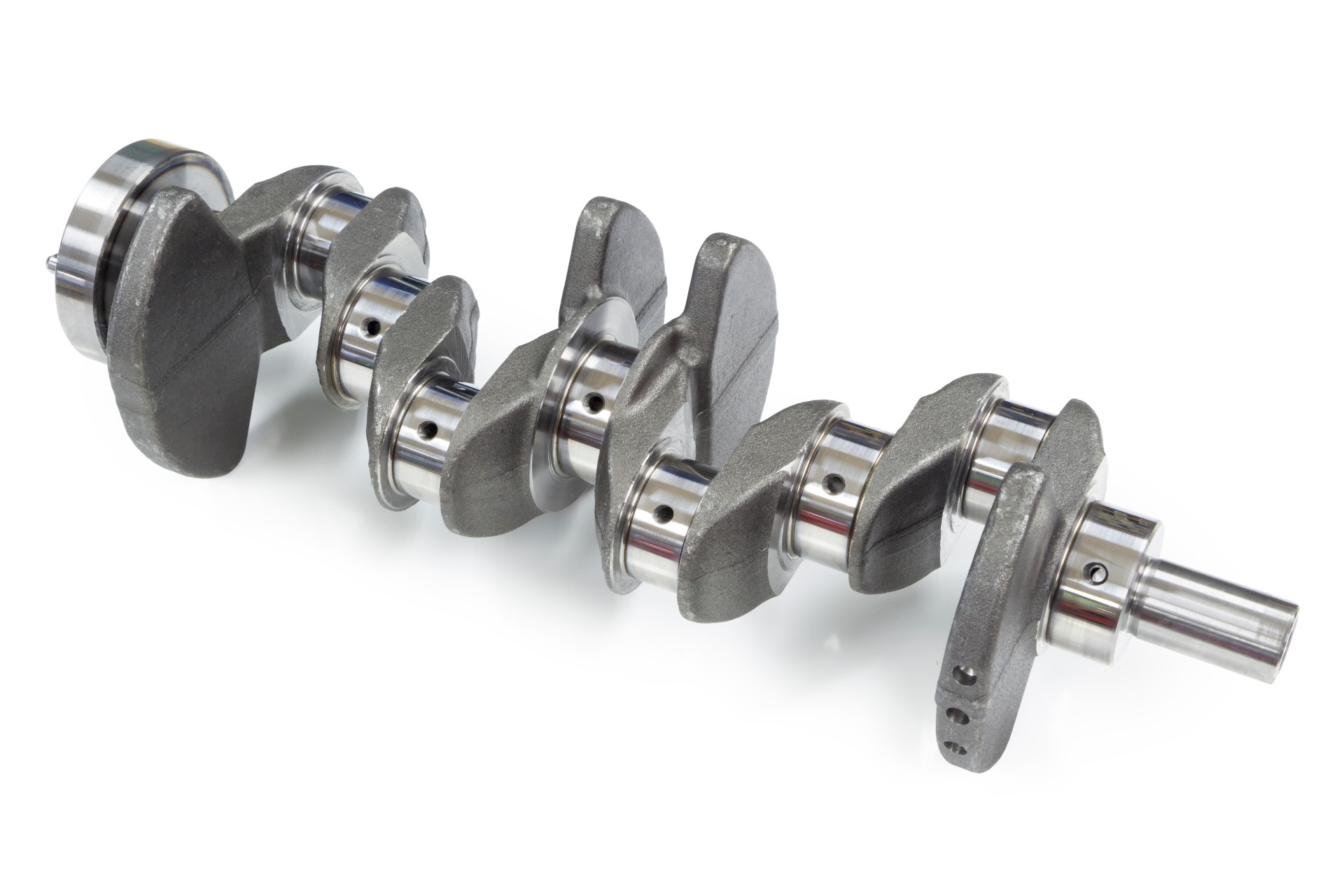
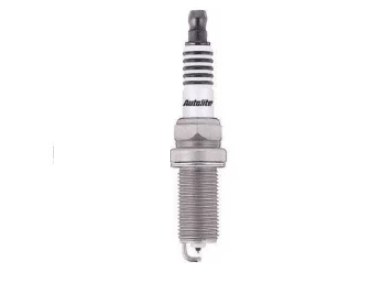


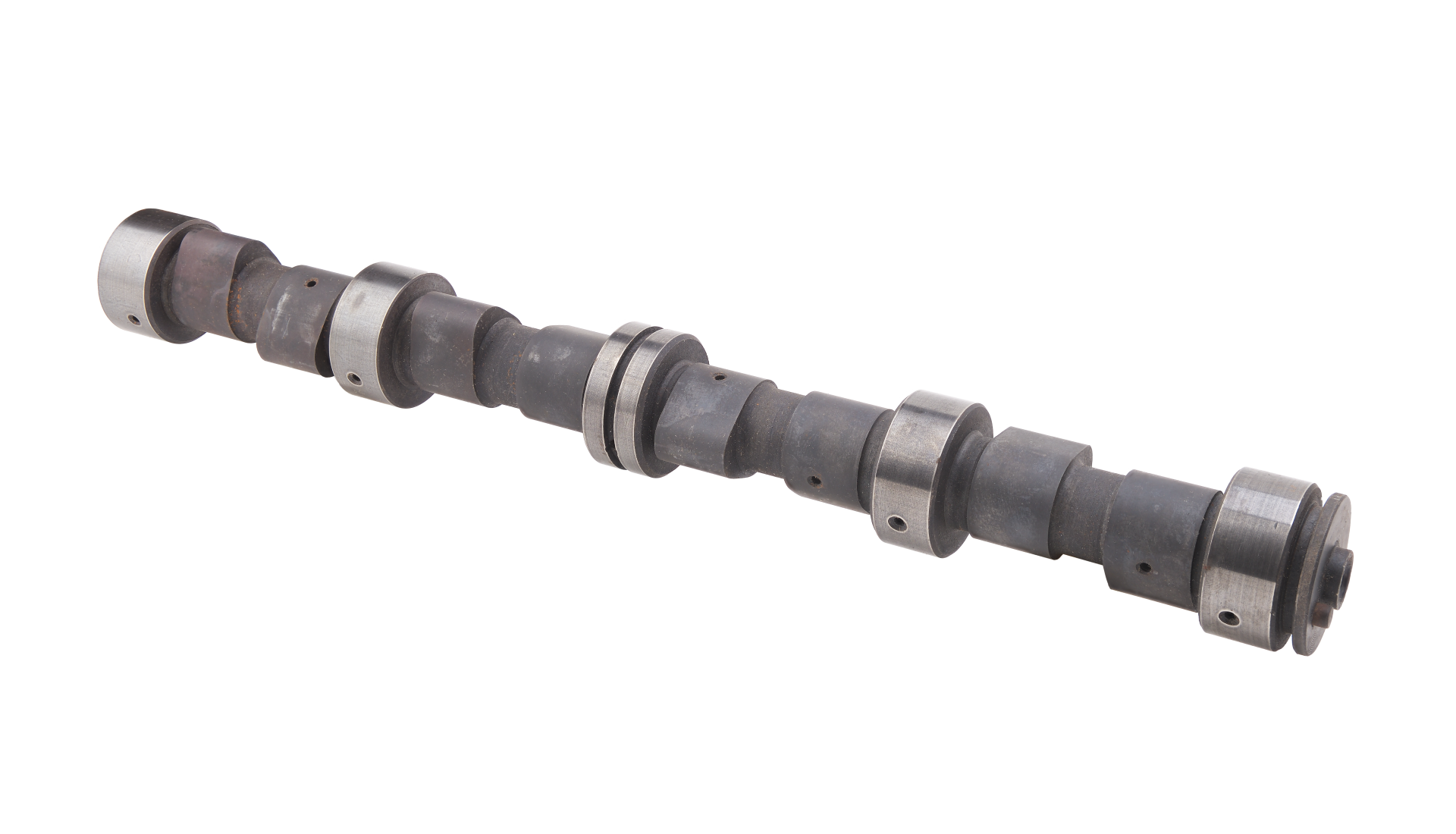
Click on each Possible Cause of a P0304 code to know the symptoms to look out for and what to inspect.
Symptoms:
- Illuminated check engine light
- Rough idling
- Reduced fuel economy
- Engine stalling or hesitation
What to Inspect:
Remove the cylinder #4 spark plug and examine it for carbon build-up or an oily residue. Look for any damage to the electrode.
Symptoms:
- Illuminated check engine light
- Rough idling
- Reduced fuel economy
- Engine stalling or hesitation
What to Inspect:
Examine the cylinder #4 spark plug wire for cracked or deteriorated insulation or a damaged connector.
A more thorough 12-volt light test can definitely determine if there’s an issue with the wire.
Symptoms:
- Illuminated check engine light
- Rough idling
- Reduced fuel economy
- Engine stalling or hesitation
What to Inspect:
Inspect the cylinder #4 ignition coil for any damage or signs of an oil leak.
Conduct a resistance test of the coil winding using a multimeter, although the results may be less conclusive.
Symptoms:
- Illuminated check engine light
- Rough idling
- Reduced fuel economy
- Engine stalling or hesitation
What to Inspect:
Identify the sensor location (check online for details) and check for external damage or a loose connector.
Symptoms:
- Illuminated check engine light
- Rough idling
- Reduced fuel economy
- Engine stalling or hesitation
- Fuel leak/smell
- Black exhaust smoke
- Backfiring
- Hard-to-start engine
What to Inspect:
Requires intermediate DIY skills or a professional mechanic and a fuel pressure tester.
Symptoms:
- Illuminated check engine light
- Higher-than-normal engine RPMs at idle
- Rough engine idle
- Engine sputtering or stalling
- Hard-to-start engine
- Abrupt transmission shifts at high RPMs
What to Inspect:
Visually inspect the air hoses and vacuum lines for any cracks or deterioration.
Turn the engine on, open the hood, and listen for any high-pitched hissing or whistling sound.
Spray water along air hoses, vacuum lines, gaskets, and fuel injectors while listening for any change in engine operation. A sputtering can indicate water entering the system, signaling a likely leak.
Symptoms:
- Illuminated check engine light
- Rough idling
- Engine stalling or hesitation
- Fuel leak/smell
- Black exhaust smoke
What to inspect:
Turn on the engine. Find the fuel injector for cylinder #4. Take a long screwdriver and touch its tip to the injector. Listen carefully by putting your ear near the screwdriver’s handle. If you don’t hear clicking sounds, the injector may be clogged or broken.
An intermediate DIYer or a mechanic can try disconnecting the #4 injector while the car is running. If there’s no change to the RPMs or engine sound, then that injector is faulty.
Symptoms:
- Illuminated check engine light
- Rough idling
- Reduced fuel economy
- Engine stalling or hesitation
- Black exhaust smoke
- Failed emissions test
What to inspect:
An intermediate DIYer or a technician can use a voltmeter to test the status of an oxygen sensor.
Symptoms:
- Illuminated check engine light
- Rough idling
- Reduced fuel economy
- Engine stalling or hesitation
- Hard-to-start engine
- Whirring noise from the fuel tank area
- Overheating
What to inspect:
Requires intermediate DIY skills or a professional mechanic and a fuel pressure tester. Additional electrical testing may be required.
Symptoms:
- Illuminated check engine light
- Rough idling
- Engine stalling or hesitation
- Overheating
- White or gray exhaust smoke
- Milky oil
- Coolant loss
What to inspect:
A block leak test, which can be purchased at an auto supply store, requires only novice DIY skills.
A technician can conduct a compression test for a more thorough analysis.
Symptoms:
- Illuminated check engine light
- Rough idling
- Reduced fuel economy
- Engine stalling or hesitation
- Failed emissions test
- Rattling noise
- Sulfur smell
What to inspect:
Due to precise emissions requirements, it’s best to consult a professional mechanic for catalytic converter issues.
Can I drive with Code P0304?
Quick answer: No. Don’t drive with a DTC P0304.
Anytime you drive with an engine misfire you run the risk of causing damage to the car. Specifically, the engine or the catalytic converter. A mechanic’s bill for fixing a scored piston or cylinder wall is going to run into the thousands, not the hundreds.
A misfire can also introduce partially burnt fuel into the catalytic converter, effectively breaking down the sensitive internal components of this essential emissions control device. Expect to pay about $2,000 for a new one. Contacting roadside assistance or paying for a tow truck is minor compared to the alternative.
There’s another factor you can’t put a price on: safety. Driving a car with an engine that’s hesitating or stalling can put you, your passengers, and fellow motorists at risk. An interrupted dash across a busy intersection or a failed high merge attempt is a recipe for disaster.
So, protect people and your wallet by not driving with a P0304 code. As a general rule, it can never hurt to pull over (where it’s safe to do so), turn off the engine, and get help if your car is not operating normally.
Here’s a more detailed look at driveability with a P0304 code.
| Causes | Can I Drive? | Risks / Safety / Performance |
| Defective Spark Plug | No. Avoid driving to prevent the risk of a dangerous situation or serious engine damage. | Potential for the car to lose power or stall while driving. Risk of damage to components. |
| Damaged Spark Plug Wire | No. Avoid driving to prevent the risk of a dangerous situation or serious engine damage. | Potential for the car to lose power or stall while driving. Risk of damage to components. |
| Bad Ignition Coil | No. Avoid driving to prevent the risk of a dangerous situation or serious engine damage. | Potential for the car to lose power or stall while driving. Risk of damage to components. |
| Faulty Camshaft or Crankshaft Position Sensor | No. Avoid driving to prevent the risk of a dangerous situation or serious engine damage. | An engine with incorrect timing will not run at its best, making the vehicle slower and less responsive. This can be dangerous, especially when driving on busy roads or through intersections. Additionally, a faulty camshaft can cause harm to other important engine parts like the crankshaft and cylinder head. |
| Defective Fuel Pressure Regulator | No. Avoid driving to prevent the risk of a dangerous situation or serious engine damage. | Potential for the car to lose power or stall while driving. Risk of damage to components. |
| Vacuum Leak | No. Avoid driving to prevent the risk of a dangerous situation or serious engine damage. | Potential for the car to lose power or stall while driving. Risk of damage to components. |
| Bad Fuel Injector | No. Avoid driving to prevent the risk of a dangerous situation or serious engine damage. | Potential for the car to lose power or stall while driving. Risk of damage to components. |
| Faulty Oxygen Sensor | No. Avoid driving to prevent the risk of a dangerous situation or serious engine damage. | Potential for the car to lose power or stall while driving. Risk of damage to components. |
| Defective Fuel Pump | No. Avoid driving to prevent the risk of a dangerous situation or serious engine damage. | Potential for the car to lose power or stall while driving. Risk of damage to components. |
| Leaking Head Gasket | No. Avoid driving to prevent the risk of a dangerous situation or serious engine damage. | Potential for the car to lose power or stall while driving. Risk of damage to components. |
| Malfunctioning Catalytic Converter | No. Avoid driving to prevent the risk of a dangerous situation or serious engine damage. | Potential for the car to lose power or stall while driving. Risk of damage to components. |
DIY | How To Fix P0304 Causes
The long list of possible P0340 causes can be overwhelming for less experienced DIYers. There’s nothing wrong with turning to a professional for help with this issue, but there are a few logical places where a beginner can start on their own.
Remember, there are two main goals with every DIY car repair: don’t make the problem worse and don’t risk injury. This means understanding your limits and knowing when to call it quits.
Possible Cause: Defective Spark Plug
What is it?
Spark plugs are essential to every gasoline engine. A fouled or defective spark plug is a common cause of engine misfires and could be the source of a cylinder #4 issue.
How hard is it to fix?
Difficulty Level: Easy/Moderate
Fortunately, replacing a spark plug is easy if you can get to it. Some transverse-mounted engines have spark plugs located near the firewall, making access challenging. You’ll need a few tools and supplies: replacement spark plugs (it’s best to replace them all), a gap gauge, a torque wrench (to avoid overtightening), a spark plug socket, a ratchet handle, and anti-seize for the spark plug threads. A spark plug boot puller can make disconnecting the spark plug wires easier, and spark plug boot grease will make the task easier in the future.
Cost of Repairs
On average, a new set of spark plugs costs $83– $112. Tools and supplies are separate.
Possible Cause: Damaged Spark Plug Wire
What is it?
Like many things under the hood, a spark plug wire can degrade over time, affecting how the spark plug functions and leading to an engine misfire.
How hard is it to fix?
Difficulty Level: Easy/Moderate
Replacing a spark wire is typically straightforward. Like with spark plugs, the greatest challenge is being able to get to the connection points. Once you have access, a spark plug boot puller (see above) and spark plug boot grease can help with the task. Wire loom spacers can ensure the new wires are correctly positioned to prevent arcing to the ground and cross-firing, which can damage other components.
If you’re working beyond cylinder #4, be sure to pay attention to the placement and length of each wire—usually, if one wire needs replacing, the others aren’t far behind. So, you might as well replace all the spark plugs while you’re at it.
Cost of Repairs
On average, a new set of spark plugs costs $66– $84. Tools and supplies are separate.
Possible Cause: Vacuum Leak
What is it?
Proper air-fuel mixture is one vital element of a smooth-running engine. A vacuum leak creates an imbalance that can lead to a higher-revving engine and code P0304.
How hard is it to fix?
Difficulty Level: Moderate
The greatest challenge to fixing a vacuum leak is finding the problem. The water spray technique (see above) only goes so far and can require more sophisticated methods that are best left to experienced hands. While replacing some vacuum lines is relatively easy, a vacuum leak involving a gasket, intake manifold, or other components requires professional intervention.
Cost of Repairs
Depending on the vehicle and the component, a replacement vacuum line will cost $50 to $150.
Other DIY Considerations for Code P0304
We’ve outlined a few tasks that an eager and willing novice DIYer can consider. Someone with greater skills and experience can take on more advanced efforts like replacing a faulty camshaft or crankshaft position sensor or installing a new ignition coil or oxygen sensor.
Before dealing with any code P0304-related repair, check whether your car is under warranty. You can save money by letting the automaker handle the work. In addition, research if there are any technical service bulletins (TSBs) for your car. TSBs are official repair/correction notices issued by the manufacturer that cover specific problem areas. You can research this online or contact a dealer.
P0304 Code FAQs
What makes and models does code P0304 affect the most?
Here’s a breakdown of the vehicles most affected by code P0304, according to FIXD sensor data collected in 2023.
| Make | Model | Occurrence Frequency |
| Ford | F-150 | High |
| Toyota | Camry | High |
| Toyota | Corolla | High |
| Chevrolet | Silverado 1500 | High |
| Nissan | Altima | High |
| Audi | A4 | High |
| Ford | Ranger | Medium |
| Ford | Expedition | Medium |
| Toyota | Sienna | Medium |
| Chevrolet | Impala | Medium |
| Chevrolet | Camaro | Medium |
| Nissan | Sentra | Medium |
| Nissan | Frontier | Low |
Can bad gas cause a cylinder 4 misfire and a code P0304?
Yes. A P0304 cause that can get overlooked is gasoline quality. Thanks to more advanced gasoline storage and monitoring systems, it’s far less of an issue in recent decades. Nonetheless, filling up with gas contaminated with debris or water is not unheard of. Faced with a check engine light and a P0304 code, think back to your last gas station visit. Was it to a station you don’t use regularly? Is it a station that isn’t a high-volume business? If you suspect bad gas might be the problem, siphon out the bad fuel and replace it with clean gas from a reputable source (always use equipment and containers approved to handle gasoline). In some cases, the fuel filter may need to be replaced.
How serious is a cylinder 4 misfire?
A cylinder 4 misfire is a serious problem that can lead to significant engine damage and create a potentially hazardous driving situation due to power loss or engine hesitation.
References:
Repair-cost estimates, repairpal.com (various dates). Retrieved July 1, 2024, from repairpal.com.

Dave Goldberg is an automotive journalist and lifelong car fanatic. He writes for numerous enthusiast and business outlets and is an ongoing contributor to HotCars.com, one of the most popular car culture websites. When he’s not writing or driving, Dave is either under a hood or asleep. His credentials include a BA in Journalism from The George Washington University.