
| Table of Contents | |
| Possible Causes of P0420 & Their Repair Costs | Code P0420 indicates that the catalytic converter isn’t removing enough pollutants from the engine’s emissions coming from Bank 1. |
| How to Diagnose the Cause of Your P0420 Code | While a faulty catalytic converter lies at the heart of most P0420-related problems, damaged spark plugs (or spark plug wires), damaged oxygen sensors (or oxygen sensor wiring), or exhaust leaks can be contributors. |
| Can I drive with a P0420 code? | Yes, it’s OK to drive a car with a P0420. However, don’t delay repairs beyond a week or two, and stop driving if engine performance drops, which can create a safety risk. |
| DIY | How To Fix P0420 Causes |
DIYable P0420 triggers include:
|
| P0420 Code FAQs |
Frequently asked questions:
|
The meaning of diagnostic trouble code (DTC) P0420: Catalyst System Efficiency Below Threshold (Bank 1) may sound complex. Still, it basically means that your car’s catalytic converter isn’t removing enough pollutants from the exhaust gases (its sole purpose). In particular, the engine control module (ECM) or powertrain control module (PCM) detected that the problem involved Bank 1 of the engine. A closely related code, P0430, concerns the same issue: catalyst system efficiency is below the threshold but with Bank 2.
While a defective catalytic converter is usually at fault, knowing that other troubles can trigger a P0420 code is worthwhile. It’s critical to rule out other causes because catalytic converters are expensive to replace. Codes P0171, P0172, P0174, and P0175 point to a problem with the oxygen sensor, mass air flow (MAF) sensor, and other trouble spots, which can impact the catalytic converter.
Further, an engine misfire (codes P0300, P0301, P0302, P0303, P0304, P0305, P0306, P0307, and P0308) could cause catalytic converter failure due to an imbalanced air-to-fuel ratio. Too much fuel (or too little oxygen) can damage the converter’s sensitive internal workings and generate a code P0420.
It’s wise to look for additional DTCs beyond P0420 so you won’t face the same problem later.
If there’s any good news about code P0420, you can still drive with this DTC in most cases. This isn’t permission to ignore the situation; the problem should be addressed in the next week or two. Continuing to drive with a P0420 can lead to engine and exhaust system damage and a loss of performance.
Keep reading to learn about code P0420, including causes, symptoms, repairs, and the most trouble-prone cars.
Possible Causes of P0420 & Their Repair Costs
Beyond a bad “cat,” a P0420 code can be triggered for many reasons. You’ll want to get to the root of the problem to ensure emissions compliance, restore proper engine operations, and minimize damage risk.
Check out the FIXD article on the most common causes of check engine lights.
Here’s an overview of the parts and systems that can cause a P0420 code and their average repair costs. Actual prices can depend on the vehicle and location.
| Part To Repair | Part / DIY Price | Mechanic Total Cost |
| Spark Plugs | $83–$112 | $212–$276 |
| Spark Plug Wires | $66–$84 | $208–$256 |
| Damaged Wiring (oxygen sensor harness) | $25–$100 | $100–$350 |
| Exhaust: Repair Leak (welding) | N/A | $100–$200 |
| Oxygen Sensor | $300–$333 | $362–$412 |
| Catalytic Converter | $2,153–$2,254 | $2,304–$2,443 |
Let’s explore how these failed components can cause a P0042 code.
| Parts that can cause P0420 | How it could cause P0420 |
|
Spark Plugs Spark Plug Wires |
Unburned fuel can increase emissions and eventually damage the catalytic converter. |
|
Oxygen Sensor Oxygen Sensor Harness |
A faulty oxygen sensor or oxygen sensor harness can misreport exhaust gas composition, leading the engine control module (ECM) to adjust the fuel mixture incorrectly. |
| Exhaust (leak) | An exhaust leak allows excess oxygen into the system, causing the ECM to add more fuel. This excess fuel may not burn completely, potentially damaging the catalytic converter and reducing its efficiency in cleaning emissions. |
| Catalytic Converter | A worn or damaged catalytic converter loses its ability to effectively convert harmful exhaust gases, directly causing the P0420 code due to its reduced efficiency in cleaning emissions. |
Makes Commonly Affected By P0420
FIXD sensor data disclose that code P0420 is a common issue, regardless of manufacturer. Toyota fans will be surprised to learn that the venerable Camry is the most likely vehicle to incur a P0420-related error. Following close behind is the Corolla, with the Prius taking the third spot. Not only do these three Toyotas lead the pack, but they do so at a high occurrence level.
Other popular vehicles have a strong presence on this unfortunate roster. The stalwart F-150 is the most susceptible Ford for P0420 codes. Meanwhile, the midsize Edge crossover and compact Focus complete the trio.
Like Ford, Chevy’s most popular vehicle, the Silverado 1500, has the greatest number of reported P0420 codes. The Equinox and Traverse crossovers aren’t too far behind.
P0420 codes are familiar territory for several Nissans, including the Altima, Sentra, and Frontier. Another Japanese brand, Subaru, rounds out fifth place. Three of the company’s core vehicles, the Outback, Impreza, and Forester, occupy the podium, not in a good way.
Interestingly, every vehicle mentioned here has a high occurrence rating for P0420 codes. This is unlike some other code observations, which had “most likely” cars with medium and low incidence rates. In other words, P0420-related error codes are frequent and far-reaching.
| Top 5 Makes Affected by P0420 | Most Affected Model(s) |
|
Toyota |
Camry |
| Corolla | |
| Prius | |
|
Ford |
F-150 |
| Edge | |
| Focus | |
|
Chevrolet |
Silverado 1500 |
| Equinox | |
| Traverse | |
|
Nissan |
Altima |
| Sentra | |
| Frontier | |
|
Subaru |
Outback |
| Impreza | |
| Forester |
How to Diagnose the Cause of Your P0420 Code
Diagnosing a check engine light starts with using an OBD-II scanner to identify what’s causing the issue. The FIXD plug-in sensor will show the code and likely causes on your phone via the accompanying FIXD app. You can also try a basic code reader with a cable to plug into the car’s OBD-II port. In truth, there are only a few things a novice DIYer can do to identify what triggered a P0420 code. You’ll want a flashlight, gloves, safety goggles, and a rag to get started. A more involved effort will require essential hand tools.
Safety Essentials
Before exploring the source of a P0420 code, you’ll want to observe the following:
- Park on a level surface in a safe area
- Ensure the car is off and the parking brake is engaged
- Allow the engine to cool
Symptoms of P0420 Causes
While it’s reasonable to assume that a P0420 code just means replacing the catalytic converter, this isn’t the best approach. A catalytic converter is expensive to replace, so ruling out other problems can potentially save you money. Equally as vital, as mentioned earlier, is determining that there aren’t other trouble spots that have contributed to a faulty catalytic converter.

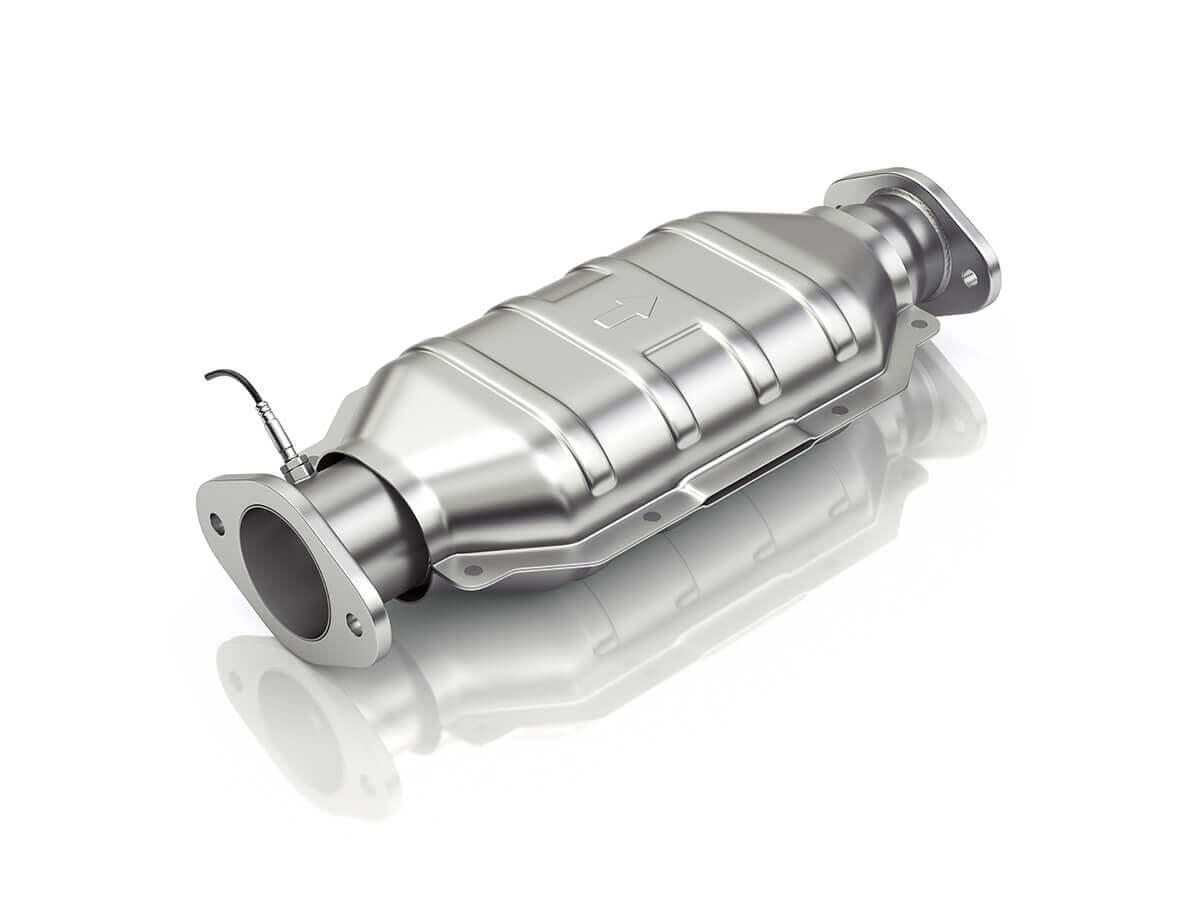

Click on each Possible Cause of a P0420 code to know the symptoms to look out for and what to inspect.
Symptoms:
- Illuminated check engine light
- Rough idling
- Reduced fuel economy
- Engine stalling or hesitation
What to Inspect:
If accessible, remove each spark plug and look for oil or carbon deposits. The electrode may also be damaged or eroded.
Symptoms:
- Illuminated check engine light
- Rough idling
- Reduced fuel economy
- Engine stalling or hesitation
What to Inspect:
If accessible, remove each spark plug wire individually and check for cracked insulation or a damaged connector.
An intermediate DIYer can conduct a 12-volt light tester for a more thorough effort.
Symptoms:
- Illuminated check engine light
- Reduced fuel economy
- Engine hesitation
- Unusual engine noise
- Burning smell or unusual odor
- Gas pedal vibration
What to Inspect:
Check for cracks or damage to the exhaust components. Look for an accumulation of black soot along any suspected trouble areas. Pay attention to any exhaust fumes or gasoline odor in the engine bay or the passenger compartment (fumes in the cabin are serious due to the potential for carbon monoxide poisoning). Consult a technician trained to work with exhaust systems if a problem is suspected.
Symptoms:
- Illuminated check engine light
- Rough idling
- Reduced fuel economy
- Engine stalling or hesitation
- Black exhaust smoke
- Failed emissions test
What to Inspect:
An intermediate DIYer or a technician can use a voltmeter to test the status of an oxygen sensor.
Symptoms:
- Illuminated check engine light
- Rough idling
- Reduced fuel economy
- Engine stalling or hesitation
- Black exhaust smoke
- Failed emissions test
What to Inspect:
A bad wire or connector can falsely cause the oxygen sensor to generate inaccurate readings. Visually inspect the wiring and connector ends for signs of damage or deterioration.
Symptoms:
- Illuminated check engine light
- Rough idling
- Reduced fuel economy
- Engine stalling or hesitation
- Failed emissions test
- Rattling noise
- Sulfur smell
What to Inspect:
Due to precise emissions requirements, it’s best to consult a professional mechanic for catalytic converter issues.
In rare instances, the problem may be traced to reduced exhaust flow due to damage or blockage. This should be investigated before replacing a catalytic converter.
Can I drive with a P0420 code?
Quick answer: Yes, it’s okay to drive with a P0420 code. For repairs, think days or weeks, not months.
Because a P0420 code doesn’t always involve replacing the catalytic converter, you’ll want to deal with the problem sooner rather than later. Prompt action can mean catching the trouble when it’s easier to fix (meaning cheaper).
Critically, you should stop driving if the symptoms include hesitation, stalling, or performance loss. Such conditions can create a driving hazard, especially on a highway or when accelerating at an intersection turn. This usually isn’t the first symptom with code P0420, but it can happen when the blockage has gotten so bad that back pressure builds. Subpar engine performance can also be a sign that other troubles are involved.
Here’s a more detailed look at driveability with a P0420 code.
| Causes | Can I Drive? | Risks / Safety / Performance |
|---|---|---|
|
Defective Spark Plug/Damaged Spark Plug Wire |
Yes, driving with a P0420 code is OK, but only for a limited period. Don’t drive if reduced engine performance occurs, which can create a safety hazard. |
A defective spark plug (or a damaged spark plug wire) can cause misfires, sending unburned fuel into the exhaust system, damaging the catalytic converter, and worsening the P0420 code issue. |
|
Exhaust Leak |
Yes, driving with a P0420 code is OK, but only for a limited period. Don’t drive if reduced engine performance occurs, which can create a safety hazard. |
An exhaust leak can aggravate a P0420 code by allowing uncontrolled air into the system, skewing sensor readings and potentially damaging the catalytic converter due to improper fuel mixture. |
|
Faulty Oxygen Sensor/Defective Oxygen Sensor Harness |
Yes, driving with a P0420 code is OK, but only for a limited period. Don’t drive if reduced engine performance occurs, which can create a safety hazard. |
A faulty oxygen sensor (or a defective oxygen sensor harness) can lead to an incorrect fuel mixture, reducing catalytic converter efficiency and potentially causing engine damage if left unchecked. |
|
Malfunctioning Catalytic Converter |
Yes, driving with a P0420 code is OK, but only for a limited period. Don’t drive if reduced engine performance occurs, which can create a safety hazard. |
Driving with a faulty catalytic converter risks increased emissions, reduced fuel efficiency, and potential engine damage due to back pressure buildup. |
DIY | How To Fix P0420 Causes
If you live in a state with mandatory emissions testing, a P0420 code is a big deal. A faulty catalytic converter or a contributing problem can result in a failed emission test and a roadblock to vehicle registration. As a result, correcting these issues can require the services of a professional technician well-versed in emissions.
An advanced DIYer may know how to install a new catalytic converter (it’s not that hard), but a missing step or two can lead to a hassle with the DMV. So, do-it-yourself action around a P0420 code involves more essential measures. Yet, there’s one fundamental DIY rule to follow: only do what you’re comfortable doing and capable of completing. If you’re not confident taking a crack at things solo, move on to a trained mechanic. It’s the best way to avoid injury risk or damage to the car.
Possible Cause: Defective Spark Plug
What is it?
Spark plugs are essential to every gasoline engine. A fouled or defective plug is a common cause of engine misfires.
How hard is it to fix?
Difficulty Level: Easy/Moderate
Fortunately, replacing a spark plug is easy if you can get to it. Some transverse-mounted engines (mounted perpendicular to the length of the car) have spark plugs located near the firewall, making access challenging. You’ll need a few tools and supplies: replacement spark plugs (it’s best to replace them all), a gap gauge, a torque wrench (to avoid overtightening), a spark plug socket, a ratchet handle, and anti-seize for the spark plug threads. A spark plug boot puller can make disconnecting the spark plug wires easier, and spark plug boot grease will make the task easier in the future.
Cost of Repairs
On average, a new set of spark plugs costs $83– $112. Tools and supplies are separate.
Possible Cause: Damaged Spark Plug Wire
What is it?
Like many things under the hood, a spark plug wire can degrade over time, affecting how the spark plug functions and leading to an engine misfire.
How hard is it to fix?
Difficulty Level: Easy/Moderate
Replacing the spark wires is typically straightforward. Like with spark plugs, the greatest challenge is getting access to the connection points. You’ll also want to pay attention to the placement and length of each wire. A spark plug boot puller (see above) can help with the task, along with spark plug boot grease. Wire loom spacers can ensure the new wires are correctly positioned to prevent arcing-to-ground and cross-firing, which can damage other components.
Keep in mind that if one spark plug wire is bad, others will likely follow the same path. So, you might as well replace them all while you’re already busy in the engine bay.
Cost of Repairs
On average, a new set of spark plugs costs $66– $84. Tools and supplies are separate.
Other DIY Considerations for Code P0420
Swapping out a bad oxygen sensor isn’t overly complicated, but access can be tricky, requiring persistence and moderate skill levels. The same applies to replacing an oxygen sensor connector or wiring harness. If tackling car repairs is a new experience, you might want to leave these activities to more experienced hands.
Before dealing with any code P0420-related repair, check whether your car is under warranty. You can save money by letting the automaker handle the work. In addition, research if there are any technical service bulletins (TSBs) for your car. TSBs are official repair/correction notices issued by the manufacturer that cover specific problem areas. You can research this online or contact a dealer.
P0420 Code FAQs
What makes and models does code P0420 affect the most?
Here’s a breakdown (in alphabetical order) of the vehicles most affected by code P0420, according to FIXD sensor data collected in 2023.
| Make | Model | Occurrence Frequency |
| Chevrolet | Equinox | High |
| Chevrolet | Silverado 1500 | High |
| Chevrolet | Traverse | High |
| Ford | Edge | High |
| Ford | F-150 | High |
| Ford | Focus | High |
| Nissan | Altima | High |
| Nissan | Frontier | High |
| Nissan | Sentra | High |
| Subaru | Forester | High |
| Subaru | Impreza | High |
| Subaru | Outback | High |
| Toyota | Camry | High |
| Toyota | Corolla | High |
| Toyota | Prius | High |
What causes code P0420?
Code P0420 is typically caused by a failing catalytic converter that can no longer efficiently clean exhaust emissions. Other potential causes include exhaust leaks, faulty oxygen sensors, or engine performance issues that lead to improper fuel mixture and incomplete combustion.
How can I prevent P0420 from occurring?
While there’s no way to completely prevent a P0420 code from happening, preventative measures can help reduce the risk. Maintain your vehicle regularly by changing oil, air filters, and spark plugs as recommended, and use high-quality fuel. Additionally, address any engine performance issues promptly and avoid short trips that don’t allow your catalytic converter to reach optimal operating temperature.
How long can you drive with a P0420 code?
Assuming there’s no stalling, hesitation, or loss of power (which can create a safety hazard), it’s acceptable to drive for a week or two with a code P0420. Continuing driving with this condition risks engine damage, increased emissions, and failed emissions testing.
What is the correct code designation, P0420 or PO420?
P0420 and PO0420 may look the same, but P0420 (the second character is a ‘zero’, not an ‘o’) is the correct usage. Most DTCs consist of a five-digit alphanumeric code that starts with a letter and is followed by four numbers.
References:
Repair-cost estimates, repairpal.com (various dates). Retrieved July 30, 2024, from repairpal.com.

Dave Goldberg is an automotive journalist and lifelong car fanatic. He writes for numerous enthusiast and business outlets and is an ongoing contributor to HotCars.com, one of the most popular car culture websites. When he’s not writing or driving, Dave is either under a hood or asleep. His credentials include a BA in Journalism from The George Washington University.