
| Table of Contents | |
| Possible Causes of P0440 & Their Repair Costs | Code P0440 indicates that the engine control module (ECM)/powertrain control module (PCM) has detected a general malfunction within the evaporative emission control (EVAP) system. |
| How to Diagnose The Cause of Your P0440 Code | While a loose gas cap commonly triggers this fault code, it may also stem from a damaged charcoal canister, broken EVAP line, or malfunctioning purge or vent valves. |
| Can I drive with a P0440 code? | Yes, short-term driving (two weeks or less) is acceptable. Failure to make timely repairs won’t correct reduced fuel economy or increased emissions. The catalytic converter could also be vulnerable to damage. |
| DIY | How To Fix P0440 Causes |
DIYable P0440 triggers include: Damaged or Defective Gas Cap Faulty EVAP line Other DIY Considerations for Code P0440 |
| P0440 Code FAQs |
Frequently asked questions: What makes and models does code P0440 affect the most? How do I resolve a P0440 Dodge error code on my car? Are P0440 Chevy error codes common? |
Like it or not, pollution controls have been part of the automotive landscape for over half a century. While much of these efforts involve minimizing the damaging effects of tailpipe emissions, another aspect often goes unnoticed until something goes wrong: preventing gasoline vapors from entering the atmosphere. These hydrocarbons have a significant impact on the atmosphere. Engineers developed the evaporative emission control or “EVAP” system to control these escaping fumes.
Like many other vehicle components, the EVAP system is prone to problems, and numerous diagnostic trouble codes (DTCs) help target these troubles. This article focuses on code P0440: Evaporative Emission Control System Malfunction.
Other related codes include P0441, P0442, P0443, P0455, P0456, and P0457. Some of these DTCs involve leaks, while others point to more generalized EVAP-related problems, like P0440. So, it’s possible for a P0440 code to be accompanied by other DTCs in this code family.
A P0440 is activated when the engine control module (ECM) or powertrain control module (PCM) detects an EVAP leak or malfunction in the EVAP system. Because the EVAP system comprises many elements, there are numerous possible causes for a P0440 code. We’ll explore these possibilities, as well as cover what repairs are involved and which vehicles are most likely to have P0440-related issues.
If there’s any good news about a P0440 code, it’s usually a low-severity problem. You can continue to drive without any noticeable effects on vehicle operation. However, this isn’t an excuse to procrastinate about repairs indefinitely. You’ll want to resolve the problem in a few weeks to minimize environmental damage and restore normal fuel economy. That said, repairs should be immediate if you smell gasoline fumes (which are combustible) or you’re up against a deadline for emissions testing.
Possible Causes of P0440 & Their Repair Costs
Even if you’re not taking a DIY approach to P0440 repairs, understanding the costs involved will make you a better-informed customer at the service facility.
Check out the FIXD article on the most common causes of check engine lights.
Here’s an overview of the most likely parts and systems that can cause a P0440 code and their average repair costs. Actual prices can depend on the vehicle and location.
P0440 Code Triggers & Typical Repair Costs
| Part To Repair | Part / DIY Price | Mechanic Total Cost |
| Replacement gas cap | $20–$60 | N/A |
| EVAP Purge Volume Control Valve | $44–$55 | $120–$131 |
| Charcoal Canister Vent Control Valve | $50–$65 | $126–$141 |
| Replacement EVAP Line | $30–$70 | $106–$146 |
| Fuel Tank Pressure Sensor | $127–$129 | $264–$304 |
| Charcoal Canister | $362–$391 | $453–$507 |
Here’s a brief look at how faulty parts trigger a P0440 code.
Parts Most Likely to Fail & Cause a P0440 Code
| Parts that can cause P0440 | How it could cause P0440 |
| Gas Cap | Ineffective gas cap sealing allows fuel vapors to freely escape into the atmosphere instead of being contained within the system for proper recycling and emissions control. |
| EVAP Purge Volume Control Valve | Faulty operation prevents the valve from correctly managing the flow of stored fuel vapors from the charcoal canister back into the engine’s intake for combustion. |
| Charcoal Canister Vent Control Valve | A malfunction causes the valve to remain fixed in one position, disrupting the system’s ability to properly regulate pressure and vent excess vapors when needed. |
| EVAP Line | Physical damage or deterioration of the vapor lines creates uncontrolled leak points where fuel vapors can escape before reaching their intended destination in the emissions system. |
| Fuel Tank Pressure Sensor | Sensor malfunctions send inaccurate pressure readings to the vehicle’s computer, causing false leak detection or preventing the system from identifying actual vapor leaks. |
| Charcoal Canister | Degradation of the carbon material inside the canister reduces its ability to effectively trap and store fuel vapors until they can be properly recycled through the engine. |
Makes Commonly Affected By P0440
Like other P044X codes, P0440 occurrences aren’t limited to a few makes or models. FIXD sensor data shows that this DTC is far-reaching. Yet, unlike some adjacent codes, P0440 strikes mainly at a low incident level when looking at overall model-level performance. There are exceptions, which we’ll explore.
The first exception starts with Toyota. The Camry, Corolla, and 4Runner are the worst of the worst for P0440 codes, with all three having high occurrence ratings. Research shows that Chevrolet earns second place, starting with the Impala and its medium-level history with this DTC. The Malibu and Trailblazer follow but at a low ranking. Chevy truck fans will appreciate that the Silverado 1500 doesn’t make this list.
Occurrence ratings flare to a high level with the Dodge Durango and Ram 1500 (before Ram was spun off in 2010 as a separate brand). Meanwhile, the Charger earns the brand’s third spot but at a medium occurrence rating.
Ford follows Mopar with the Focus, Fusion, and F-250 Super Duty at the top of this roster for the Blue Oval. While Ford ranks fourth among brands with the most P0440 codes, every surveyed model from this automaker had a low (1 out of 10) occurrence rating.
Jeep closes out the top five standings, with the Grand Cherokee being the most susceptible to P0440 codes (and at a high incident level). Other Jeeps with this problem (but at lower frequencies) include the Wrangler and Liberty.
| Top 5 Makes Affected by P0440 | Most Affected Model(s) |
|
Toyota |
Camry |
| Corolla | |
| 4Runner | |
|
Chevrolet |
Impala |
| Malibu | |
| Trailblazer | |
|
Dodge |
Durango |
| Ram 1500 | |
| Charger | |
|
Ford |
Focus |
| Fusion | |
| F-250 | |
|
Jeep |
Grand Cherokee |
| Wrangler | |
| Liberty |
How to Diagnose The Cause of Your P0440 Code
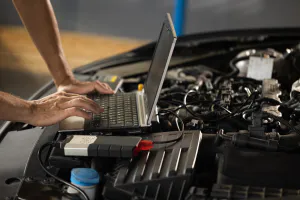
Diagnosing the cause of a check engine light starts with using an OBD-II scanner to identify what’s causing the issue. The FIXD plug-in sensor will show the code and likely causes on your phone via the accompanying FIXD app. You can also try a basic code reader with a cable to plug into the car’s OBD-II port. In truth, there are only a few things a novice DIYer can do to identify what triggered a P0440 code. You’ll want a flashlight, gloves, safety goggles, and a rag to get started. A more involved effort will require essential hand tools.
Safety Essentials
Before exploring the source of a P0440 code, you’ll want to observe the following:
- Park on a level surface in a safe area
- Ensure the car is off and the parking brake is engaged
- Allow the engine to cool
Symptoms of P0440 Causes
Although a mechanic will likely be involved for most P0440-related repairs, novice DIYers can try some basic fixes themselves.

Symptoms:
- Illuminated check engine light
- Decreased fuel economy
- Fuel aroma
- Increased vehicle emissions
What to Inspect:
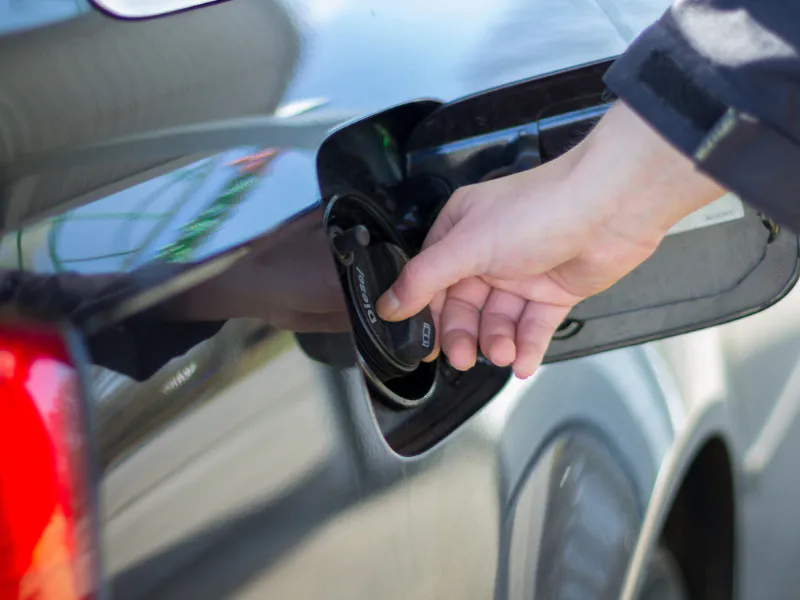
- Remove the gas cap completely from the filler neck.
- Examine the rubber seal on the cap for any debris, dirt, or damage.
- Look carefully at the mounting threads to ensure no dirt or debris is blocking them.
- Reinstall the cap, listening for at least three audible “clicks” as you turn.
- Turn the cap until you feel resistance, then give a gentle tug to ensure it’s secure.
Symptoms:
- Illuminated check engine light
- Decreased fuel economy
- Fuel aroma
- Increased vehicle emissions
What to Inspect:
- Examine the rubber seal carefully for signs of cracking, dryness, or deterioration.
- Check if the spring mechanism in the cap still has tension when you press on it.
- Look for any cracks or damage in the plastic body of the cap.
- Test if the cap’s threaded portion turns smoothly without catching or feeling loose.
- Consider the cap’s age—if it’s over five years old, it may need replacement regardless of appearance.
Symptoms:
- Illuminated check engine light
- Decreased fuel economy
- Fuel aroma
- Increased vehicle emissions
What to Inspect:
- Clean the area around the filler neck thoroughly with a damp cloth.
- Use a flashlight to inspect the exposed metal rim for rust, dents, or deformation.
- Check if the mounting surface where the cap rests is completely flat and uniform.
- Look for cracks or separation between the filler neck and the car body.
- Gently press around the filler neck to check for unusual movement or looseness.
Symptoms:
- Illuminated check engine light
- Decreased fuel economy
- Fuel aroma
- Increased vehicle emissions
What to Inspect:
- Visually trace the visible portions of the black EVAP lines from the fuel tank area toward the engine.
- Look for any obvious cracks, splits, or disconnected sections in the lines.
- Gently squeeze accessible portions of the lines to check for brittleness or crumbling.
- Inspect all visible connection points for signs of looseness or damage.
- Check for signs of rodent damage, particularly if the vehicle has been parked outdoors.
Symptoms:
- Illuminated check engine light
- Decreased fuel economy
- Fuel aroma
- Increased vehicle emissions
What to Inspect:
Due to its complex electrical and mechanical operation, a professional technician should diagnose it. They will use an advanced diagnostic scan tool to command the valve to open and close while monitoring system pressure readings and performing electrical testing to verify proper operation and control signals from the engine control module.
Symptoms:
- Illuminated check engine light
- Decreased fuel economy
- Fuel aroma
- Increased vehicle emissions
What to Inspect:
This component requires professional diagnosis due to its critical role in the EVAP system. A qualified technician will use specialized equipment to monitor the valve’s electrical operation and vacuum response while commanding the valve through different states to verify proper sealing and flow characteristics.
Symptoms:
- Illuminated check engine light
- Decreased fuel economy
- Fuel aroma
- Increased vehicle emissions
What to Inspect:
Professional diagnosis is essential due to the sensor’s integration with the vehicle’s computer system. A technician will monitor real-time sensor readings during different operating conditions, verify voltage outputs match specifications, and perform controlled leak tests to validate sensor accuracy.
Symptoms:
- Illuminated check engine light
- Decreased fuel economy
- Fuel aroma
- Increased vehicle emissions
What to Inspect:
- Locate the charcoal canister, typically mounted near the fuel tank or rear wheel well.
- Inspect the canister’s exterior for cracks, rust, or physical damage.
- Check all visible mounting brackets to ensure the canister is securely fastened.
- Examine all connected hoses and electrical connectors for loose connections or damage.
- Listen near the canister for any unusual rattling sounds that might indicate broken internal components.
- Look for signs of external impact damage or heat exposure that could compromise the canister.
Since the charcoal canister is a complex component that requires specialized tools and expertise to diagnose and test properly, it’s recommended that you contact a qualified mechanic for a thorough diagnostic if you spot any of these issues or if the P0440 code persists after checking simpler components. A professional can perform pressure testing, monitor sensor data, and evaluate the canister’s internal functionality using diagnostic equipment unavailable to most car owners.
Can I drive with Code P0440?
Quick answer: Yes, generally, driving with a P0440 code for a couple of weeks won’t worsen the situation. However, repairs shouldn’t be postponed any longer.
Extended driving with a P0440 code risks damage to the catalytic converter that could exponentially increase the repair bill. You’ll also face a failed emission test and lower fuel economy until the problem is corrected. However, due to the combustion risk, the strong gasoline smell should be investigated immediately.
Here’s a more detailed look at driveability with a P0440 code.
| Causes | Can I Drive? | Risks / Safety / Performance |
|---|---|---|
|
Faulty Gas Cap |
Yes, driving for a week or two is okay. However, repairs shouldn’t be delayed beyond this period. |
While not an immediate safety concern, fuel vapors escaping into the atmosphere contribute to air pollution and reduced fuel economy. You may also notice a strong gasoline smell around your vehicle. |
|
Damaged EVAP line |
Yes, driving for a week or two is okay. However, repairs shouldn’t be delayed beyond this period. |
A leaking vapor line allows harmful fuel vapors to escape, potentially entering the passenger cabin while also reducing fuel economy and harming the environment – the smell of gasoline may be noticeable around the vehicle. |
|
Faulty EVAP Purge Volume Control Valve |
Yes, driving for a week or two is okay. However, repairs shouldn’t be delayed beyond this period. |
Though not an immediate driving hazard, incorrect vapor flow may cause the engine to run slightly rough or experience minor performance issues while fuel vapors escape into the atmosphere instead of being recycled. |
|
Defective Charcoal Canister Vent Control Valve |
Yes, driving for a week or two is okay. However, repairs shouldn’t be delayed beyond this period. |
The vehicle remains safe to drive, but improper venting can cause slight performance issues and periods of rough idle, along with increased emissions and environmental impact from escaping fuel vapors. |
|
Faulty Fuel Tank Pressure Sensor |
Yes, driving for a week or two is okay. However, repairs shouldn’t be delayed beyond this period. |
While driving safety isn’t immediately compromised, the system cannot correctly monitor fuel vapor leaks, potentially allowing an actual leak to go undetected and worsen over time. |
|
Malfunctioning Charcoal Canister |
Yes, driving for a week or two is okay. However, repairs shouldn’t be delayed beyond this period. |
Though driveable, the system cannot properly store and filter fuel vapors, leading to increased emissions, possible fuel odors, slightly reduced fuel economy, and potential environmental regulations violations. |
DIY | How To Fix P0440 Causes
The odds favor that a faulty gas cap is to blame for a P0440 code. We’ve outlined the essential DIY steps below to tackle this issue. For car owners comfortable with a more involved repair, replacing a defective EVAP line isn’t out of the question. Remember that this project may be more complicated on some vehicles, so don’t hesitate to contact a mechanic before getting in over your head. At the same time, make sure to always keep safety in mind. Don’t proceed if there’s a risk of injury.
Possible Cause: Damaged or Defective Gas Cap
What is it?
A properly functioning gas cap maintains fuel system pressure. If the cap is loose, misaligned, or damaged, it can cause a pressure drop and vapor leak, potentially triggering a P0440 code. An improperly closed or defective gas cap can lead to the same problem.
How hard is it to fix?
Difficulty Level: Easy
Fixing a gas cap issue is simple: ensure it’s tightened correctly or replace it with a compatible, quality cap. After the repair, drive your vehicle for a few cycles or use a diagnostic tool (like the FIXD app) to clear the check engine light and P0440 code. Avoid cheap replacements that may not seal properly.
Cost of Repairs
There’s no expense if the problem is traced to a misaligned gas cap. Otherwise, a replacement costs $20 to $60.
Possible Cause: Faulty EVAP line
What is it?
A damaged EVAP line can cause system leaks, triggering the P0440 code. In this case, replacing the faulty hose usually fixes the issue.
How hard is it to fix?
Difficulty Level: Moderate
Replacing a faulty EVAP hose varies in difficulty based on its location. Engine bay repairs are often manageable for those with moderate skills. However, hoses near the axle, suspension, or gas tank may require professional help due to limited access. After the repair, drive the vehicle for several cycles or use an OBD-II scanner to clear the check engine light.
Cost of Repairs
A replacement EVAP line usually costs $30 to $70.
Other DIY Considerations for Code P0440
As with many car repairs, the difference between a DIY project and a professional repair comes down to experience. In short, you need to know what to do and how to access the components. This applies especially to EVAP system repairs, as parts aren’t always easy to reach. In addition, EVAP work often involves specialized tools ranging from a smoke machine for leak detection to a professional-level diagnostic scan tool—equipment that novice DIYers don’t have in their garages. So, leaving most EVAP repairs in the hands of an experienced technician makes sense.
Before dealing with any code P0440-related repair, check whether your car is under warranty. You can save money by letting the automaker handle the work. In addition, research if there are any technical service bulletins (TSBs) for your car. TSBs are official repair/correction notices issued by the manufacturer that cover specific problem areas. You can research this online or contact a dealer.
P0440 Code FAQs
What makes and models does code P0440 affect the most?
Here’s a breakdown of the vehicles most affected by code P0440, according to FIXD sensor data collected in 2023.
| Make | Model | Occurrence Frequency |
| Dodge | Durango | High |
| Dodge | Ram 1500 | High |
| Jeep | Grand Cherokee | High |
| Toyota | 4Runner | High |
| Toyota | Camry | High |
| Toyota | Corolla | High |
| Buick | LeSabre | Medium |
| Chevrolet | Impala | Medium |
| Dodge | Charger | Medium |
| Dodge | Grand Caravan | Medium |
| GMC | Envoy | Medium |
| Jeep | Wrangler | Medium |
| Ram | 1500 | Medium |
| Toyota | Avalon | Medium |
| Toyota | Highlander | Medium |
| Toyota | Sequoia | Medium |
| Toyota | Tacoma | Medium |
How do I resolve a P0440 Dodge error code on my car?
The gas cap is always the first place to start with a P0440 code, whether with a Dodge or another brand. Check the EVAP system for loose or damaged hoses to see if the cap is properly secured and undamaged. Ensure the EVAP lines are tight at the connection points. From there, the diagnosis process gets more complex and requires professional support.
Are P0440 Chevy error codes common?
Unfortunately, yes. Chevrolet is one of the top brands for P0440 trouble codes. According to FIXD app sensor data, the Bow Tie brand ranks second for high occurrences of this problem. Toyota ranks first, while Dodge takes third place.
References:
Repair-cost estimates, repairpal.com (various dates). Retrieved November 25, 2024, from repairpal.com.

Dave Goldberg is an automotive journalist and lifelong car fanatic. He writes for numerous enthusiast and business outlets and is an ongoing contributor to HotCars.com, one of the most popular car culture websites. When he’s not writing or driving, Dave is either under a hood or asleep. His credentials include a BA in Journalism from The George Washington University.