

| Table of Contents | |
| Possible Causes of P0442 & Their Repair Costs | Code P0442 signals that the engine control module/powertrain control module has identified a small leak in the evaporative emission control (EVAP) system. |
| How to Diagnose The Cause of Your P0442 Code | A P0422 code can often be traced to a loose or faulty gas cap. However, a defective charcoal canister, cracked EVAP line, or troublesome purge or vent valve could also be the reason. |
| Can I drive with a P0442 code? | Yes. Driving for a short period (a week or two) with a P0422 code is acceptable. Repairs are needed to restore fuel economy and emissions controls and prevent catalytic converter damage. |
| DIY | How To Fix P0442 Causes |
DIYable P0442 triggers include:
|
| P0442 Code FAQs |
Frequently asked questions:
|
An unfortunate side effect of using gasoline in an internal combustion engine is the escape of damaging hydrocarbons into the atmosphere. Controlling these vapors and minimizing the environmental impact is the purpose of the evaporative emission control or “EVAP” system that first appeared in cars in the 1970s. Like most vehicle components, the EVAP system can develop problems. In this case, we highlight diagnostic trouble code (DTC) P0442: Evaporative Emission Control System—Small Leak Detected.
A P0442 code is triggered when the engine control module (ECM) or powertrain control module (PCM) detects a small leak after a standard onboard diagnostic test. Code P0455 indicates a large leak, while P0456 arises with a very small leak. P0457 also involves an EVAP leak. Codes P0440, P0441, and P0443 may also appear. These are EVAP-related but not associated with a leak.
A P0442 code is usually a low severity problem, but that doesn’t mean you should ignore it. Repairs should happen within a week or two following the first related check engine. Remember that detecting an EVAP leak can be challenging, even for an experienced mechanic, and often requires more elaborate equipment and diagnostic skills.
Until repairs are made, the affected car will experience reduced fuel economy and increased emissions. The problem needs more urgent attention if gasoline fuels are present, as they are toxic and combustible. Passing an emissions test could also be difficult.
Keep reading for a deep dive into P0442. You’ll learn common symptoms, typical repairs, and what vehicles are most vulnerable to these issues.
Possible Causes of P0442 & Their Repair Costs
Getting a handle on what P0442-related repair might cost can provide helpful insight, especially if you’re not taking the DIY route.
Check out the FIXD article on the most common causes of check engine lights.
Here’s an overview of the most likely parts and systems that can cause a P0442 code and their average repair costs. Actual prices can depend on the vehicle and location.
P0442 Code Triggers & Typical Repair Costs
| Part To Repair | Part / DIY Price | Mechanic Total Cost |
| Replacement gas cap | $20–$60 | N/A |
| EVAP Purge Volume Control Valve | $44–$55 | $120–$131 |
| Charcoal Canister Vent Control Valve | $50–$65 | $126–$141 |
| Replacement EVAP Line | $30–$70 | $106–$146 |
| Fuel Tank Pressure Sensor | $127–$129 | $264–$304 |
| Charcoal Canister | $362–$391 | $453–$507 |
These numbers reflect average prices. Some cars may require more repair time or higher-priced components.
Here’s a brief look at how faulty parts trigger a P0442 code.
Parts Most Likely to Fail & Cause a P0442 Code
| Parts that can cause P0442 | How it could cause P0442 |
| Gas Cap | A loose, damaged, or improperly sealed gas cap can allow fuel vapors to escape from the fuel system |
| EVAP Purge Volume Control Valve | If this valve fails to open or close properly, it can disrupt the normal flow of fuel vapors, leading to pressure inconsistencies in the system. |
| Charcoal Canister Vent Control Valve | 0A malfunctioning vent control valve can prevent proper venting or sealing of the EVAP system, potentially causing small leaks. |
| EVAP Line | Cracks, holes, or loose connections in the EVAP lines can allow fuel vapors to escape from the system. |
| Fuel Tank Pressure Sensor | If this sensor malfunctions or provides inaccurate readings, it may falsely indicate a small leak in the system. |
| Charcoal Canister | A damaged or saturated charcoal canister may fail to properly absorb and store fuel vapors, leading to pressure inconsistencies in the EVAP system. |
Makes Commonly Affected By P0442
FIXD sensor data uncovers that P0442 codes are common and not limited to a particular brand or vehicle type. It’s an equal-opportunity DTC. Interestingly, almost every vehicle on this top five list has very high P0442 occurrence levels. On a one-to-ten scale, the vast majority show a model-specific average of ten.
Chevrolet has the misfortune of being the worst of the worst for this issue, with the venerable Silverado 1500 taking top dishonors. Impala hasn’t seen a new car showroom since 2020 but has a strong presence for P0442-related problems. The Traverse completes the podium.
The Altima gets credit for being Nissan’s top offender. Notably, the runner-up models, the Titan and Murano, are the only vehicles on this list with moderate incident ratings for P0442 codes.
Another Japanese brand, Toyota, sits just below Nissan in the rankings, with the long-serving Camry leading the charge. The Corolla and Highlander follow it. Outside of Toyota’s top three culprits sits the Sienna minivan, which also has a very high occurrence rating for P0442 codes.
Ford’s trio of top vehicles for P0442 codes are the F-150, Expedition, and Ranger. Meanwhile, the Mustang comes in fourth, with an almost equally high incident level. Honda also has a place on this dubious roster, with the Pilot being the most problematic model from this manufacturer for P0442-related problems.
| Top 5 Makes Affected by P0442 | Most Affected Model(s) |
|
Chevrolet |
Silverado 1500 |
| Impala | |
| Traverse | |
|
Nissan |
Altima |
| Titan | |
| Murano | |
|
Toyota |
Camry |
| Corolla | |
| Highlander | |
|
Ford |
F-150 |
| Expedition | |
| Ranger | |
| Honda | Pilot |
How to Diagnose The Cause of Your P0442 Code
Diagnosing a check engine light starts with using an OBD-II scanner to identify what’s causing the issue. The FIXD plug-in sensor will show the code and likely causes on your phone via the accompanying FIXD app. You can also try a basic code reader with a cable to plug into the car’s OBD-II port. In truth, there are only a few things a novice DIYer can do to identify what triggered a P0442 code. You’ll want a flashlight, gloves, safety goggles, and a rag to get started. A more involved effort will require essential hand tools.
Safety Essentials
Before exploring the source of a P0442 code, you’ll want to observe the following:
- Park on a level surface in a safe area
- Ensure the car is off and the parking brake is engaged
- Allow the engine to cool
Symptoms of P0442 Causes
While many P0442-related repairs require professional help, there are essential steps most car owners can take on their own.

Symptoms:
- Illuminated check engine light
- Decreased fuel economy
- Fuel aroma
- Increased vehicle emissions
What to Inspect:
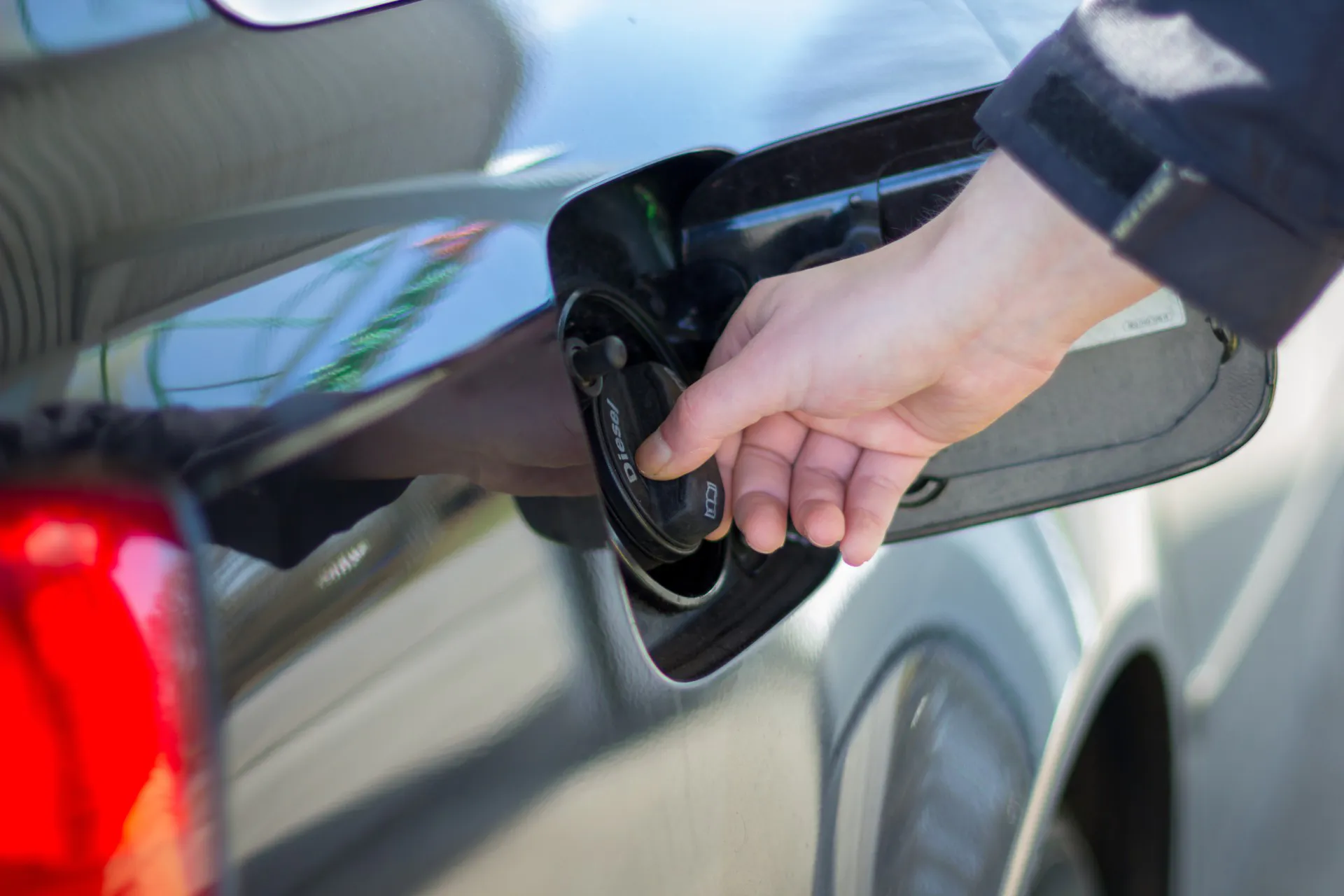
Turn the gas cap clockwise until you hear clicks, ensuring it’s fully tightened.
Symptoms:
- Illuminated check engine light
- Decreased fuel economy
- Fuel aroma
- Increased vehicle emissions
What to Inspect:
Inspect the gas cap for damage, especially the rubber seal.
For capless fuel systems, check that the flap and surrounding parts work correctly.
Symptoms:
- Illuminated check engine light
- Decreased fuel economy
- Fuel aroma
- Increased vehicle emissions
What to Inspect:
Remove the gas cap and check the filler neck’s rim for damage.
Symptoms:
- Illuminated check engine light
- Decreased fuel economy
- Fuel aroma
- Increased vehicle emissions
What to Inspect:
Check all EVAP hoses for damage, especially where they connect to the canister and fuel tank.
Symptoms:
- Illuminated check engine light
- Decreased fuel economy
- Fuel aroma
- Increased vehicle emissions
What to Inspect:
A mechanic should diagnose these issues.
Symptoms:
- Illuminated check engine light
- Decreased fuel economy
- Fuel aroma
- Increased vehicle emissions
What to Inspect:
A mechanic should diagnose these issues.
Symptoms:
- Illuminated check engine light
- Decreased fuel economy
- Fuel aroma
- Increased vehicle emissions
What to Inspect:
A mechanic should diagnose these issues.
Symptoms:
- Illuminated check engine light
- Decreased fuel economy
- Fuel aroma
- Increased vehicle emissions
What to Inspect:
Inspect the charcoal canister for damage or leaks. A mechanic should diagnose these issues.
Check to see if any P0442-related technical service bulletins (TSBs) have been issued for your car. This information can often help pinpoint trouble spots with the EVAP system.
Can I drive with Code P0442?
Quick answer: Yes, in most instances, it’s acceptable to drive for a week or two with a P0442 code. However, repairs shouldn’t be delayed after this point.
While every check engine light should be investigated immediately, repairs for a P0442-related issue don’t have to happen immediately. In the meantime, you may encounter reduced fuel economy and problems if the car needs to pass an emissions inspection. Extended driving with a P0442 code risks damage to the catalytic converter plus the out-of-pocket hit of additional fuel consumption.
Here’s a more detailed look at driveability with a P0442 code.
| Causes | Can I Drive? | Risks / Safety / Performance |
|---|---|---|
|
Faulty Gas Cap |
Yes, driving for a few is acceptable, but don’t delay repairs for too long. |
Poor gas mileage, more pollution, and possible emissions test failure. |
|
Damaged EVAP line |
Yes, driving for a bit is acceptable, but don’t delay repairs for too long. |
Lower MPG, higher emissions, and risk of not passing smog checks. |
|
Faulty EVAP Purge Volume Control Valve |
Yes, driving for a bit is acceptable, but don’t delay repairs for too long. |
Worse fuel efficiency, increased pollutants, and potential emissions test issues. |
|
Defective Charcoal Canister Vent Control Valve |
Yes, driving for a bit is acceptable, but don’t delay repairs for too long. |
Decreased fuel economy, more exhaust emissions, and emissions testing problems. |
|
Faulty Fuel Tank Pressure Sensor |
Yes, driving for a bit is acceptable, but don’t delay repairs for too long. |
Less efficient fuel use, higher pollution levels, and trouble with emissions tests. |
|
Malfunctioning Charcoal Canister |
Yes, driving for a bit is acceptable, but don’t delay repairs for too long. |
It lowers gas mileage, increases emissions, and makes passing smog tests difficult. |
DIY | How To Fix P0442 Causes
With luck, tightening or replacing the gas cap resolves a P0442 problem. It’s about as basic a fix as there is with a car, and the steps are outlined below. If you’re up to the challenge of a more moderate-level task, replacing an EVAP line is a possible DIY repair based on your skills and the vehicle.
Importantly, don’t get in over your head. You can make matters worse, risk injury, and create an even more expensive repair bill. Don’t hesitate to contact a mechanic if you have any doubts about P0442-related repairs.
Possible Cause: Damaged or Defective Gas Cap
What is it?
A properly functioning gas cap maintains fuel system pressure. If the cap is loose, misaligned, or damaged, it can cause a pressure drop and vapor leak, potentially triggering a P0442 code. An improperly closed or defective gas cap can lead to the same problem.
How hard is it to fix?
Difficulty Level: Easy
Fixing a gas cap issue is simple: ensure it’s tightened correctly or replace it with a compatible, quality cap. After the repair, drive your vehicle for a few cycles or use a diagnostic tool (like the FIXD app) to clear the check engine light and P0442 code. Avoid cheap replacements that may not seal properly.
Cost of Repairs
There’s no expense if the problem is traced to a misaligned gas cap. Otherwise, a replacement costs $20 to $60.
Possible Cause: Faulty EVAP line
What is it?
A damaged EVAP line can cause system leaks, triggering the P0442 code. In this case, replacing the faulty hose usually fixes the issue.
How hard is it to fix?
Difficulty Level: Moderate
Replacing a faulty EVAP hose varies in difficulty based on its location. Engine bay repairs are often manageable for those with moderate skills. However, hoses near the axle, suspension, or gas tank may require professional help due to limited access. After the repair, drive the vehicle for several cycles or use an OBD-II scanner to clear the check engine light.
Cost of Repairs
A replacement EVAP line usually costs $30 to $70.
Other DIY Considerations for Code P0442
As mentioned, locating an EVAP system leak isn’t easy, even for an experienced technician. Much of the work involves a specialized smoke machine. While these devices are readily available online, it doesn’t make sense for the typical car owner to buy one for a likely one-time repair. Instead, spend the money on professional diagnostic services.
At the same time, an advanced DIYer may find replacing a faulty purge or vent valve straightforward. The same could apply to swapping out a fuel tank pressure sensor or charcoal canister. It all comes down to accessibility, experience, and the correct tools.
P0442 Code FAQs
What makes and models does code P0442 affect the most?
| Make | Model | Occurrence Frequency |
| Chevrolet | Impala | High |
| Chevrolet | Malibu | High |
| Chevrolet | Silverado 1500 | High |
| Chevrolet | Traverse | High |
| Dodge | Ram 1500 | High |
| Ford | Expedition | High |
| Ford | F-150 | High |
| Ford | Mustang | High |
| Ford | Ranger | High |
| GMC | Sierra | High |
| Honda | Pilot | High |
| Nissan | Altima | High |
| Subaru | Outback | High |
| Toyota | Camry | High |
| Toyota | Corolla | High |
| Toyota | Highlander | High |
| Toyota | Sienna | High |
| Volkswagen | Jetta | High |
| Volkswagen | Passat | High |
How do I fix the P0442 Mazda 3 error code on my vehicle?
Check and tighten the gas cap to fix the p0442 Mazda 3 error code. If the problem persists, inspect the EVAP system for leaks, particularly in hoses and connections. If these steps don’t resolve the issue, a professional mechanic may be needed for a thorough diagnosis and repair.
How can I prevent a P0442 code from happening?
To prevent a P0442 code, regularly check and properly tighten your gas cap after refueling. During routine maintenance, inspect EVAP system components, such as hoses and connections, for wear or damage. Keep your vehicle well-maintained and address any fuel system issues promptly.
What is the most likely cause of a P0442 engine code?
A loose or faulty gas cap is the most likely cause of a P0442 code. To fix this, remove the gas cap and inspect it for damage. Clean the cap and filler neck, then reinstall the cap, tightening it until you hear clicks. If the cap is damaged, replace it with a new one.
References:
Repair-cost estimates, repairpal.com (various dates). Retrieved October 1, 2024, from repairpal.com.

Dave Goldberg is an automotive journalist and lifelong car fanatic. He writes for numerous enthusiast and business outlets and is an ongoing contributor to HotCars.com, one of the most popular car culture websites. When he’s not writing or driving, Dave is either under a hood or asleep. His credentials include a BA in Journalism from The George Washington University.