
While sports may have epic rivalries like the New York Yankees versus the Boston Red Sox or the Chicago Bears versus the Green Bay Packers, car lovers will argue that they pale compared to the Chevrolet Camaro–Ford Mustang match-up. It’s a contest that’s been going on for almost 60 years, with ups and downs for each automaker.
The Mustang is Ford’s longest-running nameplate still in production, with 2024 being the car’s 60th anniversary. Despite the Blue Oval’s shift from passenger cars, the company kept the Mustang in its lineup. 2024 also marked the launch of the seventh-generation Mustang, the S650, Ford’s internal model code.
Yet 2024 is also momentous for the Chevrolet, but not in a good way. It’s the final year of production for the Camaro. The Bow Tie brand is surrendering the muscle car market to Ford as it did when the company dropped the Camaro from 2003 to 2009.
Regardless of what’s happening in the car business, there’s still a place for American sports cars, especially pre-owned ones. Some may look at a Camaro or Mustang as a daily driver or weekend cruiser. That’s the beauty of these vehicles: there’s something for everyone. Get one with a turbo four-cylinder or V6 for fun and practicality. Or go for V8 power for brute strength and outrageous insurance premiums.
Talk of Mustangs brings back fond memories as my first new car was a Ford Mustang. I still kick myself for letting that silver beauty go and regularly think of rejoining the Mustang herd, perhaps as a way to recapture my youth. But my fondness for these Fords never came at the expense of liking Camaros. I’m an equal opportunity appreciator of Detroit Steel.
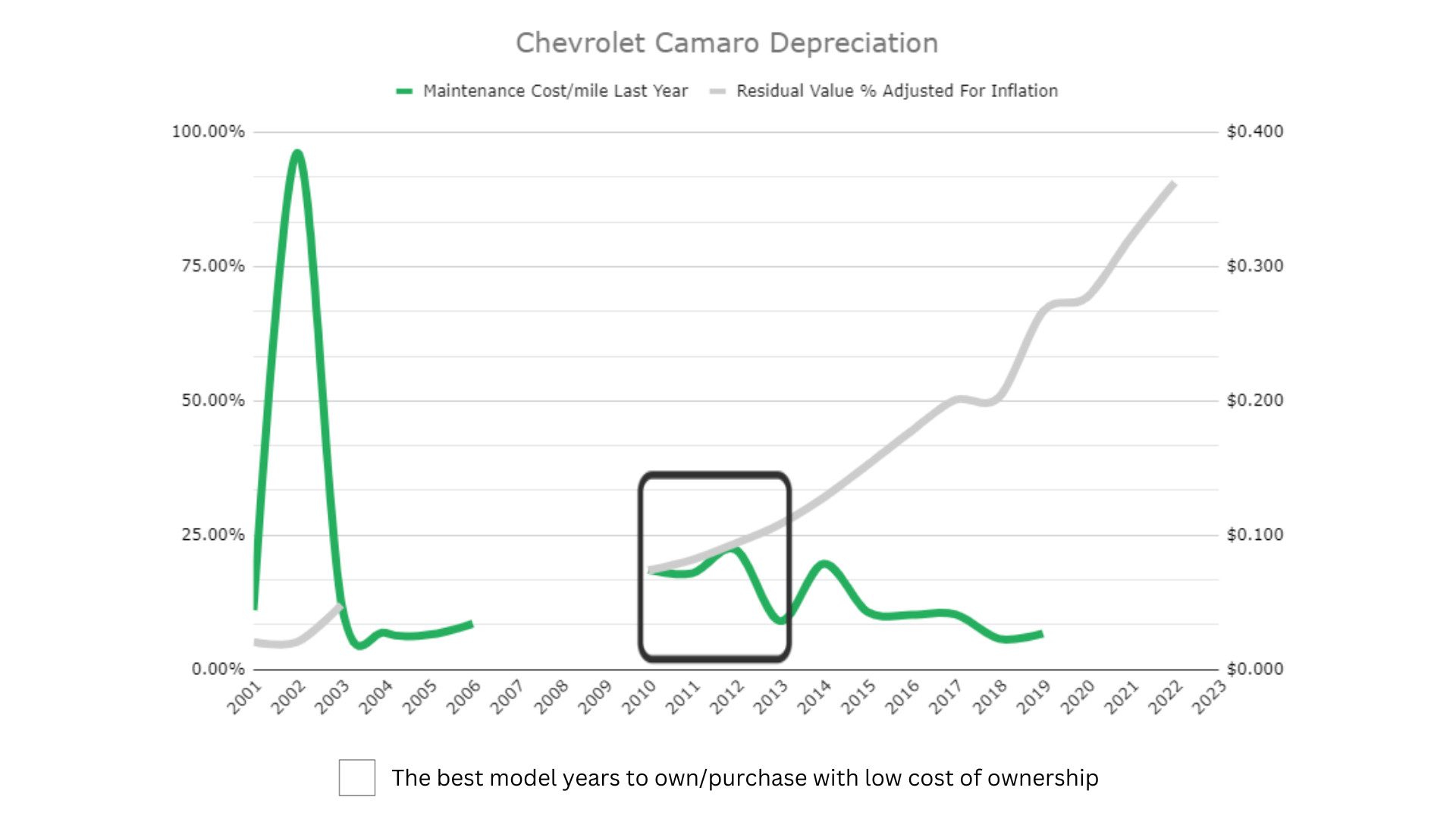
Working on this Camaro-Mustang comparison caused me to look even harder at the Chevys. Why? Because the Camaro’s engine reliability is exceptional, especially against the Mustang’s poor record. Maintenance costs are less for the Camaro, too.
But Ford fans shouldn’t give up hope, as used Mustangs are cheaper than comparable Camaros. Plus, older Mustangs tend to last longer, and there are more to buy (thanks to the missing Camaro years).
Keep reading to see how this Chevrolet Camaro and Ford Mustang contest turns out. You can learn about resale values, depreciation, reliability, longevity, maintenance costs, and fuel economy—essentials to understand to make a more informed car-buying decision.
Other match-ups to review include Jetta vs. Civic, Sentra vs. Corolla, Outback vs. Forester, 4Runner vs. Highlander, RAV4 vs. CR-V, Civic vs. Corolla, Pilot vs. Highlander, and Odyssey vs. Sienna.
| Income Bracket | Monthly Financing Cost Range | Cash Purchase Price Range | Chevrolet Camaro Years | Ford Mustang Years | Best Model Year: | Why? |
| $5k – $10k | $83 – $125 | $3,000 – $4,500 | N/A | 2004 | 2004 Mustang | Average maintenance costs, good safety scores |
| $10k – $15k | $125 – $187 | $4,500 – $6,750 | N/A | 2007 | 2007 Mustang | Average maintenance costs, good safety scores |
| $15k – $25k | $187 – $312 | $6,750 – $11,250 | 2013 | 2013 | 2013 Camaro | Top engine reliability, excellent safety score |
| $25k – $35k | $312 – $437 | $11,250 – $15,750 | 2015 | 2015 | 2015 Camaro | Top engine reliability, excellent safety score |
| $35k – $50k | $437 – $625 | $15,750 – $22,500 | 2018 | 2018 | 2018 Camaro | Top engine reliability, excellent safety score, and good value |
| $50k – $74k | $625 – $925 | $22,500 – $33,300 | 2019 | 2020 | 2020 Mustang | Very good engine reliability, excellent safety score |
See the methodology for the table above.
Curious about other car pairings? Check these articles to explore:
Volkswagen Jetta vs. Honda Civic
Chevrolet Silverado vs. Ford F-150
Ford Ranger vs. Chevrolet Colorado
Nissan Frontier vs. Toyota Tacoma
Before you respond to the “For Sale” ad, check out this How to Buy a Used Car article for a step-by-step checklist.
Price History Comparison | Chevrolet Camaro vs. Ford Mustang
Average Market Value – Based on Owners’ Self-Reported Mileages | Chevrolet Camaro vs. Ford Mustang
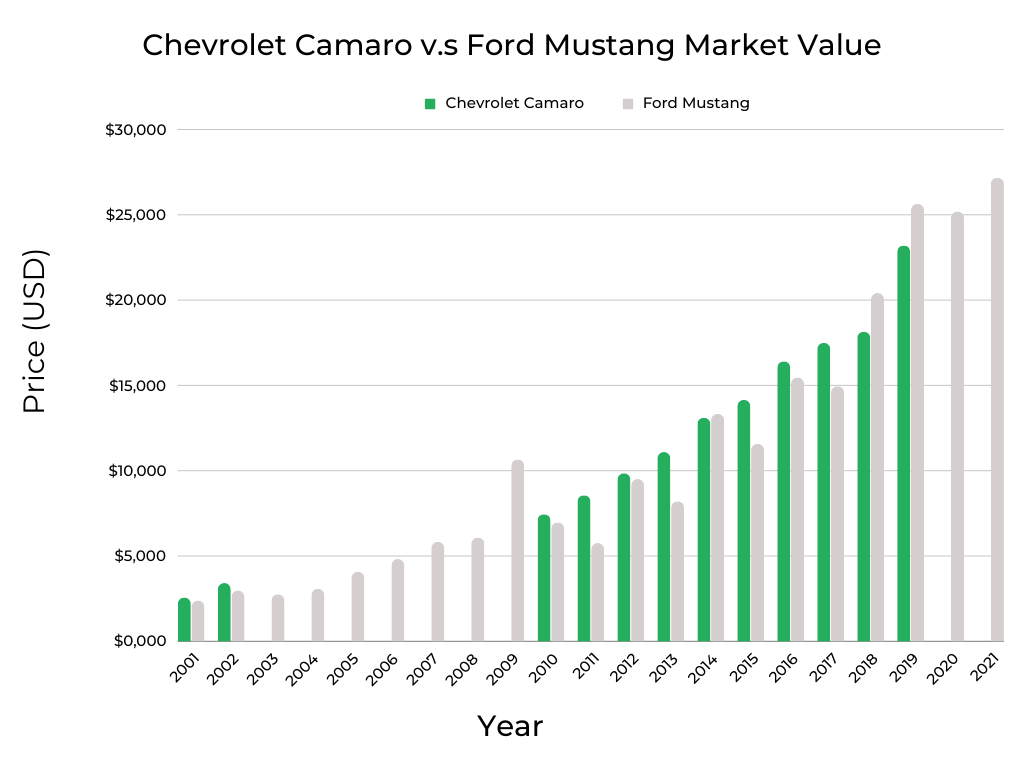
Understanding prices is the first step for most prospective car buyers. Looking at private-party sales data from Kelley Blue Book (KBB) shows that while the Chevy Camaro (green) and Ford Mustang (gray) have similar price trajectories (newer models are worth more than older ones), the Camaro generally costs more.
There are a couple of explanations. For one, this information incorporates owner-reported mileage via FIXD surveys, which helps put a real-world perspective on these numbers. This information shows that for a few model years, like 2011 and 2013, the average Camaro owner drove less than their Mustang counterpart, helping to boost Camaro valuations.
Also in the mix is the Camaro’s higher original MSRP. For instance, a base 2010 Camaro LS stickered at $24,985, compared to $22,840 for an entry-level, same-year Mustang. In 2016, a Camaro LT started at $29,685, while an equivalent Mustang EcoBoost had a $26,240 price tag.
Lastly, the Camaro’s lower depreciation is added to these calculations. According to CarEdge, a new Camaro loses 17% of its original value versus a 25% depreciation hit for an equivalent Mustang over the same period.
Crunch all the numbers, and sports car shoppers will generally find that their dollar goes further with the Mustang than the Camaro. This assumes that several factors align (age, condition, mileage, and equipment). Do some digging, and you’ll likely come across a Camaro bargain; you just may have to look more diligently.
Keep in mind that the chart reflects private-party transactions, not what you’re likely to pay at a dealer. Going the retail route will increase prices by 30%-50%. One way to offset higher dealer prices is by shopping for an older Camaro or Mustang or one with higher miles or less equipment.
The reasons for a Camaro’s stronger market values are explained below. So, continue reading to get a complete understanding of what contributes to used Camaro and Mustang pricing.
Be sure to read our Best and Worst Years series of articles highlighting the Chevrolet Camaro and Ford Mustang winners and losers.
Depreciation vs. Maintenance Expenses
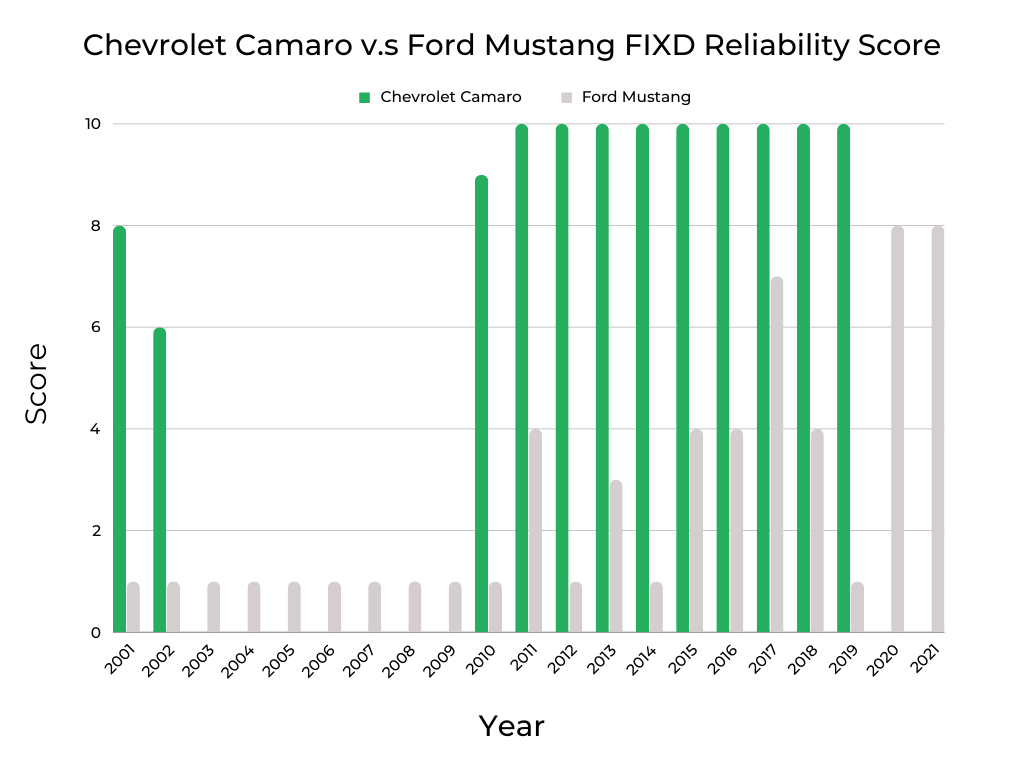
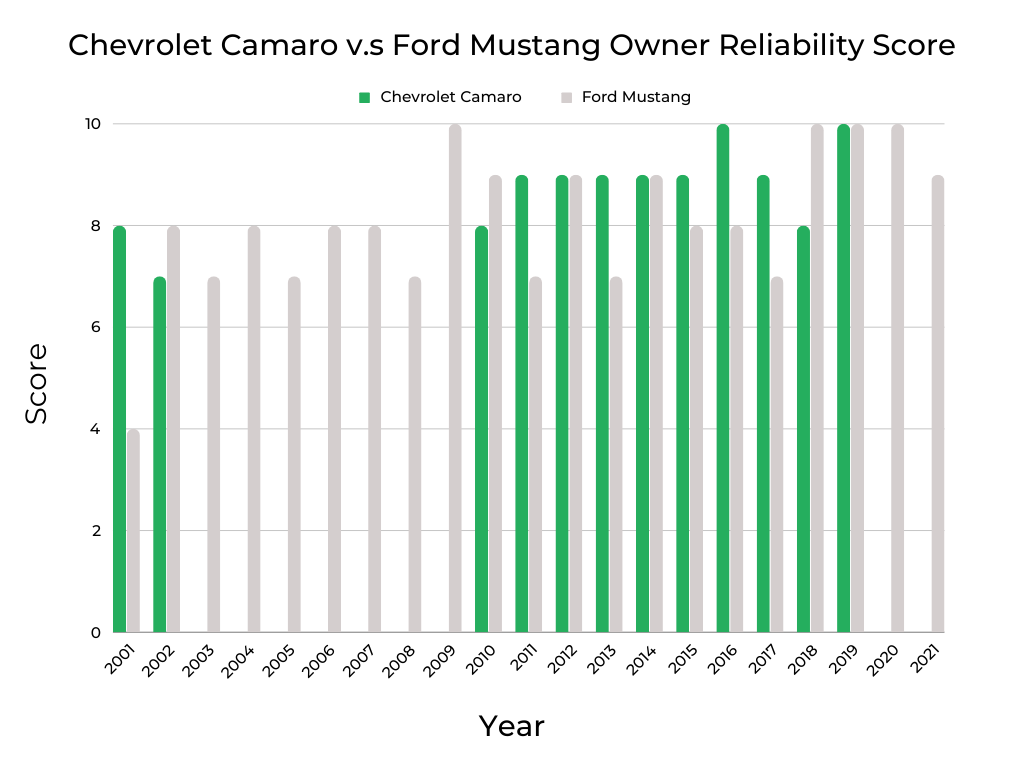
Diehard Mustang fans will find the FIXD Reliability Scores for these Fords unsettling, while Camaro lovers will likely share an “I told you so” comment or two with their Blue Oval opposite numbers. Frankly, the difference in engine reliability is astounding. I was amazed when I wrote in 2023 about this Mustang data, and I still am. At the time, I triple-checked these FIXD Reliability Scores because of my disbelief, but the facts are the facts, even if they’re not pretty.
In particular, among the 21 evaluated years, the Mustang scored a bottom-of-the-barrel 1 rating for 13 model years, over 60% of the time. Further, there are five years where Mustang engine reliability ranked a below-average 3 or 4. If there’s any good news, a 7 or 8 score was achieved in the 2017, 2020, and 2021 model years. Still, no Mustang, even newer ones, could pull off a score of 9 or 10. Curious why the Mustang has poorer resale values than the Camaro? These horrible FIXD Reliability Scores are the answer.
Yet, the Camaro has no problem in the engine dependability department. Every model year since its 2010 resurrection has produced stellar ratings. Even the 2001 and 2002 Camaros, which almost qualify as classic cars, outshine more modern Mustangs. It’s OK if you’re a Ford aficionado and need to go sulk in a corner.
Before you ask, the FIXD Reliability Scores for the Camaro and Mustang reflect an average among all the engines used in these cars. There’s no breakdown of how the engine types (turbo four-bangers, V6s, and V8s) performed.
No matter what’s under the hood, Camaro and Mustang owners love their cars. Except for the 2001 Mustang, those with a Ford pony car in the driveway are especially forgiving.
While Camaro owners are highly optimistic about their rides, these owner reliability scores don’t align with a lack of check engine lights. In other words, you’d think that with mostly flawless FIXD Reliability Scores (10 out of 10), Camaro owners would believe their cars are perfect. However, the still-admirable score of 9 for most years hints that these Camaros have minor problems not associated with the engine.
Review the Best and Worst Years articles on the Chevrolet Camaro and Ford Mustang to learn more about these vehicles’ FIXD Reliability and Owner Reliability Scores.
Longevity Comparison | Chevrolet Camaro vs. Ford Mustang
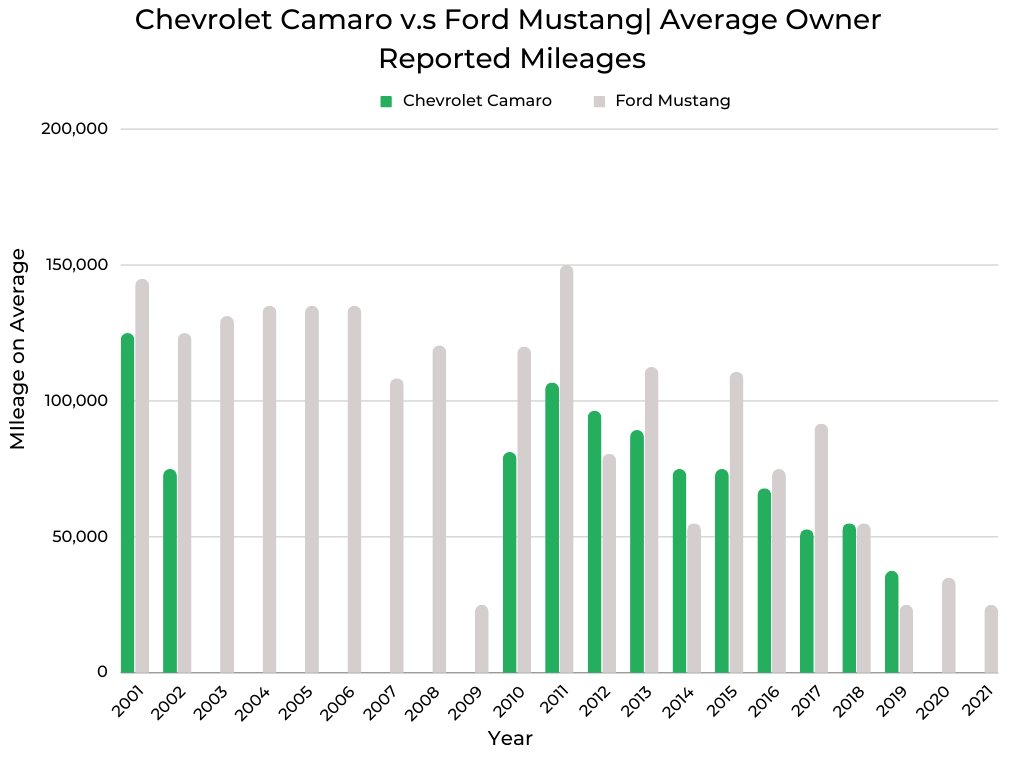
Whether you’re considering a used Camaro or Mustang as a daily driver, weekend warrior, or track scorcher, it’s helpful to learn about the longevity of these cars. The data from FIXD owner surveys suggests that the Mustang, despite its engine reliability problems, has no problem reaching 100,000 miles or more. Saying the same about the Camaro is less certain because of the missing years (2003-2009), which are likely the ones to rack up the miles (like the Mustang).
To look at the longevity question differently, I reviewed listings from autotrader.com (February 27, 2024). Ordinarily, I’d assess the 2001-2012 model years, but such an approach isn’t possible with the Camaro. Instead, I’ll divide things into two model-year groups: 2001-2002 and 2010-2014.
Among the older examples from 2001-2002 are 122 Camaros and 137 Mustangs. Of these listings, 23 (18.9%) Camaros and 45 (32.9%) Mustangs have at least 100,000 miles. The numbers aren’t enough to make a scientific evaluation, but older Mustangs appear to have greater longevity.
The results for more recent examples (2010-2014) show 1,584 Camaros and 1,392 Mustangs. Of these listings, 527 (33.3%) Camaros and 435 (31.3%) Mustangs have at least 100,000 miles—near identical results. This information points to equal lifespan prospects for newer Camaros and Mustangs.
For a more thorough look at longevity, review the individual articles on the best and worst years of the Chevrolet Camaro and Ford Mustang.
Who Should Buy These Cars: The Legacy of Chevrolet Camaro vs. Ford Mustang
Surprisingly, the Chevy Camaro and Ford Mustang see a fair amount of usage as family vehicles, according to FIXD owner surveys. If you’ve ever tried to install a child car seat in the back, you’ll understand how unusual this is. What makes more sense is that owners use these cars for “lots of driving.” If you have to spend time behind the wheel for commuting or road trips, you might as well have some fun.
What’s also typical is that the Camaro and Mustang get tasked for sport/fast driving. Even models with four- and six-cylinder power can be fun to drive (and cost less to insure and maintain). The Camaro and Mustang also see duty for luxurious driving.
| Frequent Use Categories: | Chevrolet Camaro | How Useful? (Out of 5 Stars) | Ford Mustang | How Useful? (Out of 5 Stars) |
| Family Vehicle | * * * * | * * * |
| Lots of Driving (travel/long commute) | * * * | * * * |
| Hauling/Towing | * | * |
| Office on Wheels | * | * |
| Sport/Fast Driving | * * * * | * * * * |
| Luxurious Driving | * * | * * |
| Outdoor/Off-Road | * | * |
Driver Experience | A Summary of The Top 10 Chevrolet Camaro vs. Ford Mustang Posts:
The Camaro versus Mustang debate is lively on Reddit—there’s no shortage of comments. Here are some of the highlights of the conversations from Reddit: r/whatcarshouldIbuy.
Performance and Driving Experience
In the discussions about choosing between the Chevrolet Camaro SS and the Ford Mustang GT, Redditors often highlight both vehicles’ performance and driving experience. One commenter notes that the Camaro is generally considered the better driver’s car, offering a more engaging driving experience, especially for those prioritizing handling and performance on the track. The Camaro’s MagneRide suspension is praised for its ride quality, although the car’s practicality is questioned due to limited trunk space. On the other hand, the Mustang is described as the better daily driver, with a comfortable interior that makes it suitable for long drives. The Coyote engine in the Mustang receives commendation for its strength. However, some users prefer the power delivery of the Camaro’s LS engine, mentioning its remarkable performance.
Comfort, Functionality, and Interior
Regarding comfort and daily usability, the Mustang is often favored for its better interior and comfort features, making it a more practical choice for everyday use. Redditors mention that the Mustang’s interior is more refined and comfortable for long hours of driving. While offering better handling and potentially lower costs, the Camaro is criticized for its interior and the challenge of visibility due to its design. One user’s experience with the Camaro mentions difficulty with visibility and buffeting at speed with windows down but praises its sound and track performance. Another point of comparison is the functionality aspect, where the Mustang’s interior and comfort for daily driving contrast with the Camaro’s performance-oriented setup.
Reddit Recap
The choice between the Chevrolet Camaro and Ford Mustang among Reddit users seems to hinge on the balance between performance driving and daily usability. The Camaro is lauded for its superior handling, engaging driving experience, and performance capabilities, particularly noted by those who value a driver-focused vehicle. The Mustang, however, is often recommended for those seeking a balance of performance and comfort, with its refined interior and suitability for longer drives being key selling points. Ultimately, the decision is a personal preference, with both cars offering strong engines and distinct advantages depending on the prospective buyer’s priorities.
Year-by-Year Comparison | Chevrolet Camaro vs. Ford Mustang
Best & Worst Years | Chevrolet Camaro vs. Ford Mustang | 2001-2024
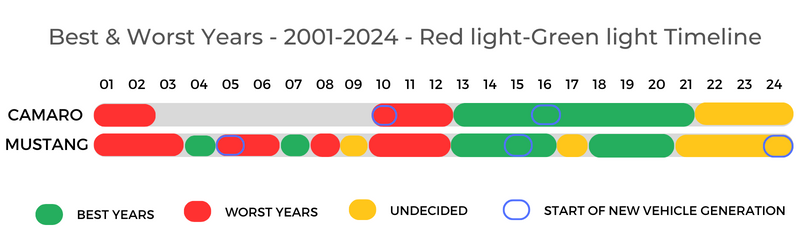
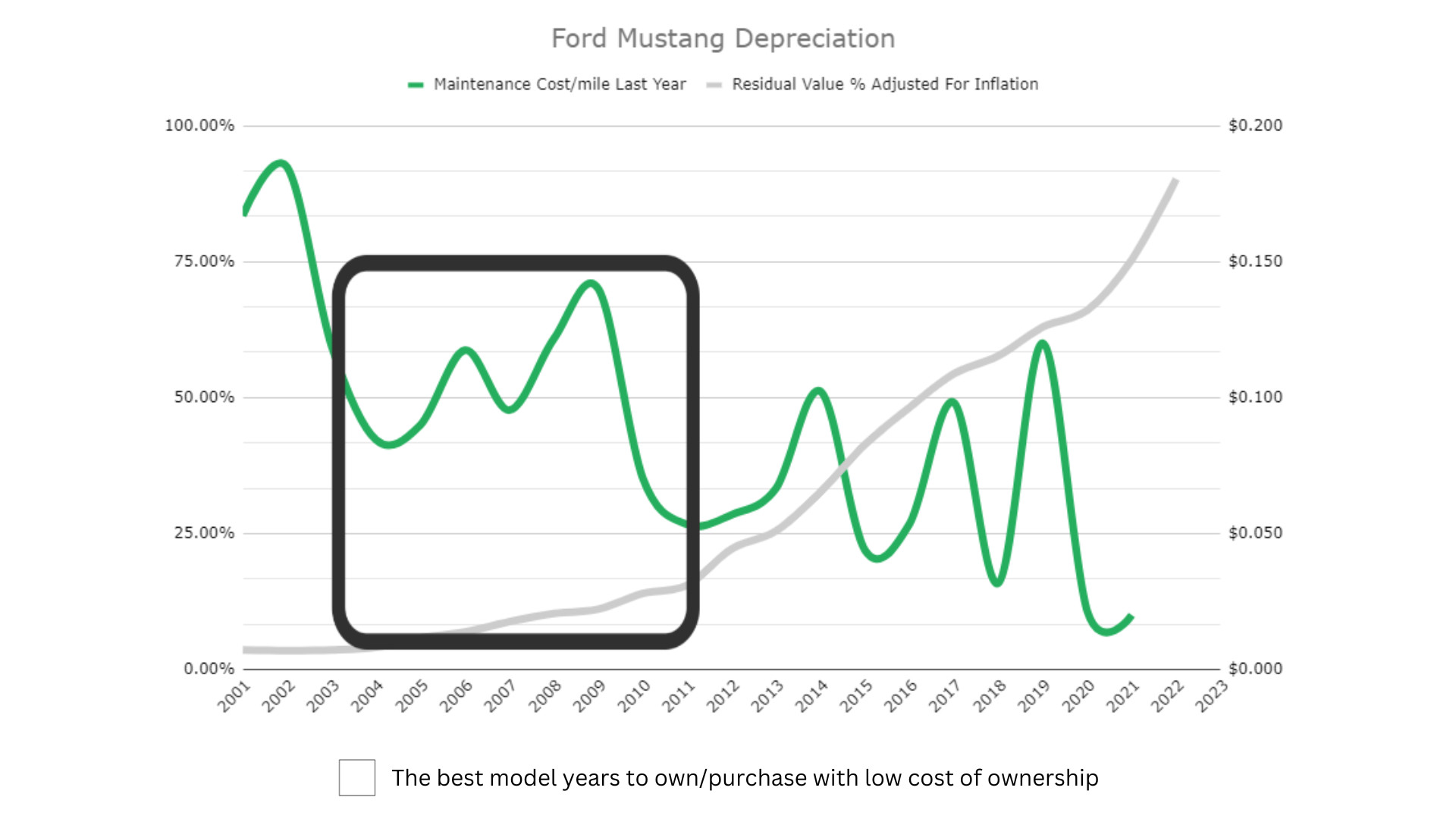
The 2004 and 2007 Mustangs aren’t the best model years to buy, thanks to poor engine reliability ratings. However, due to moderate repair costs, they’re your best and only options if funds are tight.
Better choices don’t arise until the 2013 model year for both vehicles. While the Camaro green light streak continues through the 2021 model year, Mustang shoppers should avoid examples from 2017. I’ll call attention to the undecided years (yellow) only because there isn’t enough information to give these editions a thumbs up or down.
Regardless of any recommendations, any used Camaro o Mustang under consideration should undergo a pre-purchase inspection by an independent mechanic. Data-supported advice is no substitute for a hands-on assessment by a professional.
Important Features Timeline | Chevrolet Camaro vs. Ford Mustang
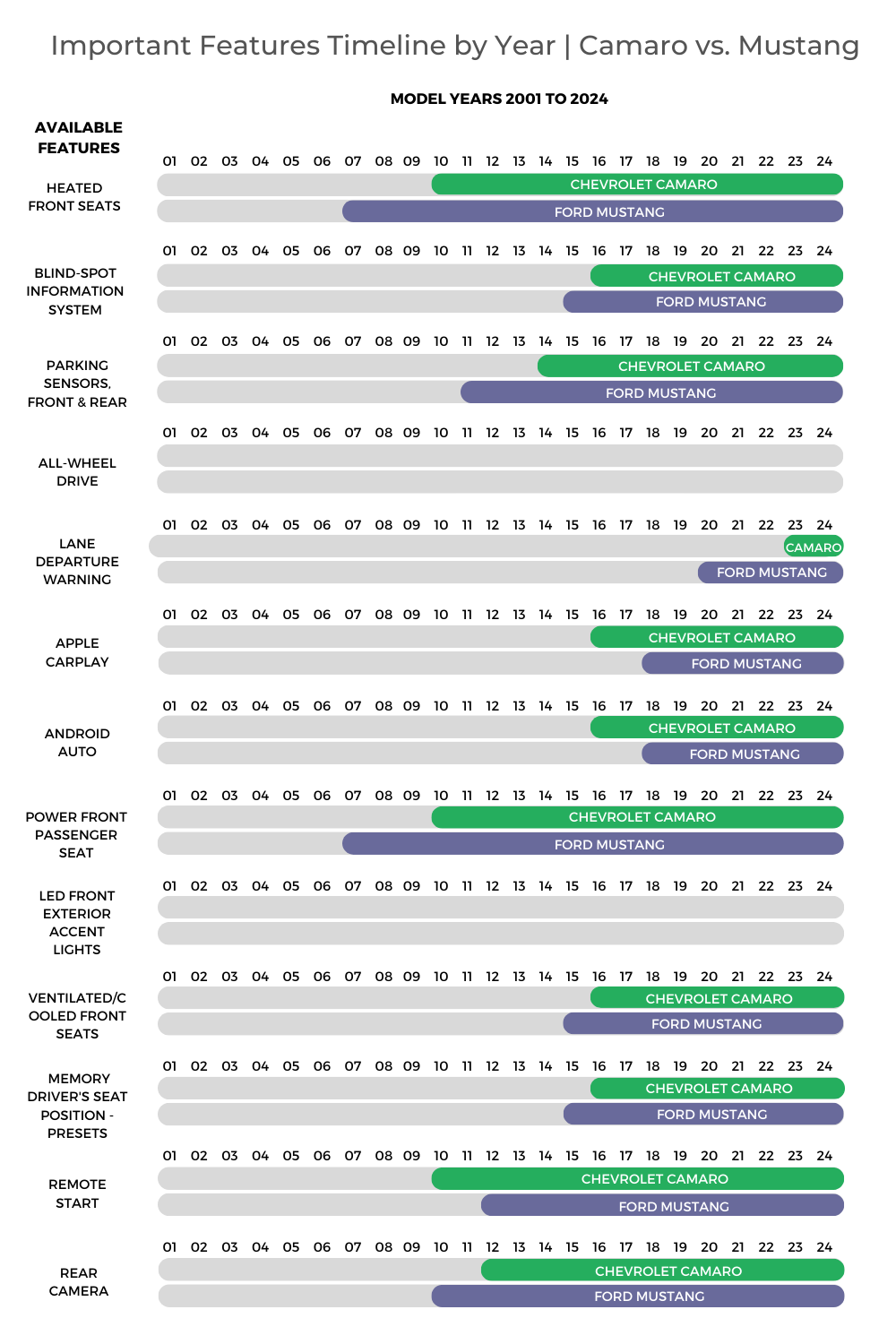
The decades-long rivalry between the Camaro and Mustang has led to victories for each side. However, there’s one area where Ford has maintained dominance: the introduction of new features.
To be fair, some of this is due to the Camaro’s 2003-2009 production hiatus. For example, the Mustang got heated front seats and a power front passenger seat ahead of the Camaro because no Camaro was being sold in 2007.
But even when both models were on the market at the same time, the Mustang usually got first bragging rights. This is the case with the introduction of safety features like blind-spot monitoring, parking sensors, lane departure warning, and a rearview monitor. The Mustang also led the way with comfort and convenience equipment such as a driver’s memory system and ventilated front seats.
Yet, the Camaro didn’t get entirely left behind. The launch of the fifth generation for 2010 included the availability of remote start (which the Mustang didn’t get until 2012). In addition, Chevy first jumped in with Apple CarPlay and Android Auto as part of the sixth-generation Camaro debut for 2016. This tech didn’t appear in the Mustang until two years later.
Maintenance Costs (Year-by-Year Average) | Chevrolet Camaro vs. Ford Mustang
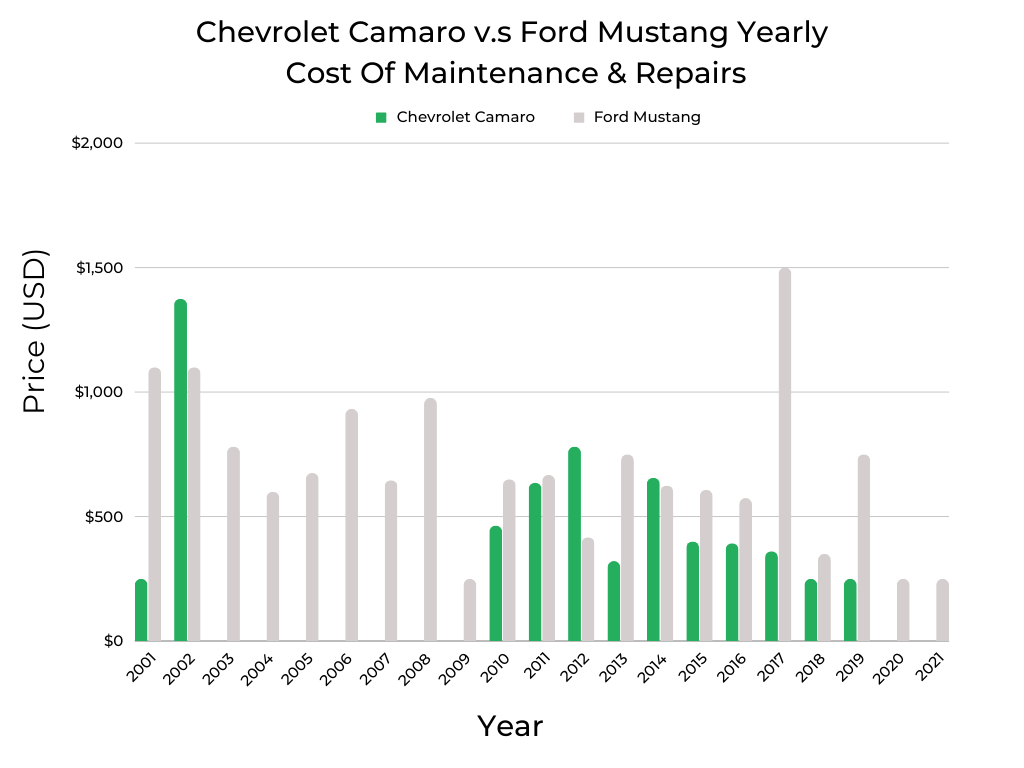
The lack of Camaros from 2003 to 2009 (and resulting data) doesn’t prevent comparing maintenance and repair costs with the Mustang. FIXD surveys show that Camaro owners spent an average of $512 in 2022 on vehicle upkeep. In contrast, Mustang owners spent $688, about 35% more than their Chevy peers. RepairPal indicates that maintenance for the average midsize car is $526, which is consistent with what Camaro owners reported.
However, specific Camaro years cost more to own than the $512 average indicates. In particular, examples from 2002, 2011, 2012, and 2014 exceeded the average by at least 20%, with 2002 being the worst offender at $1,375.
Meanwhile, the Mustang has its share of expensive-to-own model years. 2001, 2002, 2006, 2008, and 2017 all incurred maintenance and repairs bills that top the $688 average by at least 20%. A $1,500 repair bill for the 2017 Mustang is especially eye-opening because of the relative newness of this model year.
Review the best and worst years of the Chevrolet Camaro and Ford Mustang to learn more about maintenance and repair costs for these vehicles.
Safety Rating Comparison | Chevrolet Camaro vs. Ford Mustang
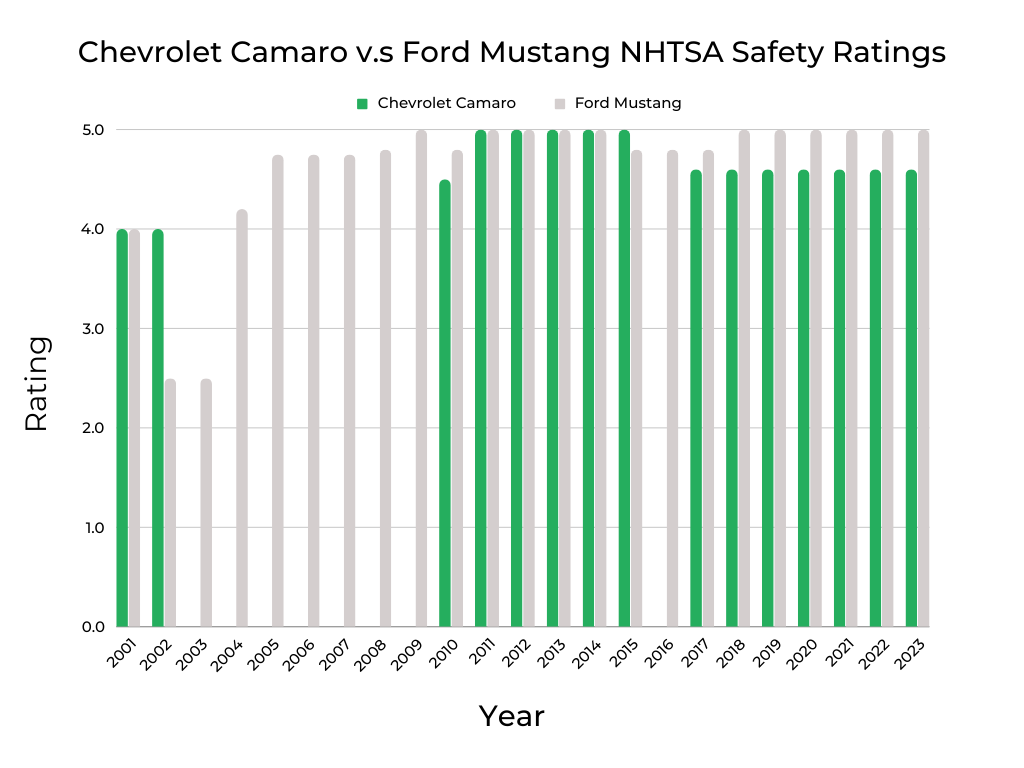
While safety ratings may be an afterthought during the car buying process, purchasing a vehicle with good crash test scores matters for occupant protection and lower insurance premiums. Fortunately, most Camaro and Mustang model years perform well in assessments by the National Highway Traffic Safety Administration (NHTSA).
With a 4.0 (out of 5) considered a minimum good score, both cars—except 2002-2003 Mustangs—provide good to exceptional passenger protection. In particular, seeing older Camaros and Mustangs (2011-2015) achieve a perfect (or close to a) 5 is reassuring. You don’t often see such strong performance in decade-old vehicles, especially after the government instituted more stringent testing in 2011.
The launch of the sixth-generation Camaro for the 2016 model year caused scores to dip a bit. However, a 4.6 rating is still quite good.
More details about crash test safety scores are covered in the Chevrolet Camaro and Ford Mustang articles.
Fuel Efficiency Comparison | Chevrolet Camaro vs. Ford Mustang
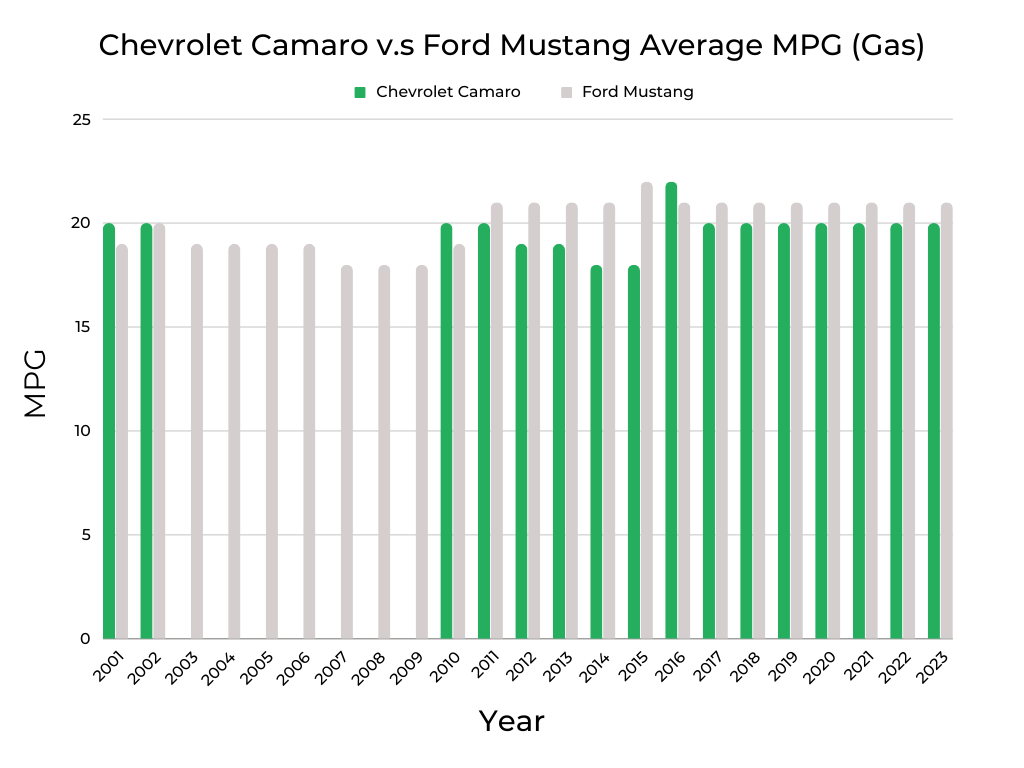
Seeing an average fuel economy rating of about 20 mpg (give or take) across all Camaro and Mustang model years, engine types, and uses (city and highway) is expected. No one buys a sports car to save gas. What’s also predictable is worse fuel economy if there’s a V8 under the hood—the graph reflects an average of all Camaro and Mustang engines.
Looking at specific examples, a 2020 Chevy Camaro SS with a 6.2-liter V8 and an automatic transmission is rated for 15 mpg in the city. In the city, a 2020 Ford Mustang with a 5.0-liter Coyote V8 and automatic gearbox isn’t much better at 16 mpg.
If saving at the pump is a priority, and you still have to have a Camaro or Mustang, consider one with a turbocharged four-cylinder powerplant in the engine bay. The result is 30%-40% less fuel consumption.

Dave Goldberg is an automotive journalist and lifelong car fanatic. He writes for numerous enthusiast and business outlets and is an ongoing contributor to HotCars.com, one of the most popular car culture websites. When he’s not writing or driving, Dave is either under a hood or asleep. His credentials include a BA in Journalism from The George Washington University.