


| Table of Contents | |
| Possible Causes of P0141 & Their Repair Costs | The P0141 code means a problem with an oxygen sensor’s heating circuit for Bank 1, Sensor 2. This issue leads to greater fuel consumption and pollution while delaying the sensor’s ability to operate at the ideal temperature. |
| How to Diagnose the Cause of Your P0141 Code | Several things can cause a P0141 code. Usually, a bad oxygen sensor is the problem. However, the trouble can sometimes be traced to damaged wires, a blown fuse, an exhaust leak, or a problem with the engine’s computer (engine control module/powertrain control module). |
| Can I drive with a P0141 code? | You can drive for a short time with a P0141 code but get the problem fixed within two weeks. Waiting too long can damage the car and waste fuel. Stop driving if the vehicle hesitates or stalls. |
| DIY | How To Fix P0141 Causes |
DIYable P0141 triggers include:
|
| P0141 Code FAQs |
Frequently asked questions:
|
The average car owner doesn’t think much about oxygen sensors, yet these critical components are vital in enhancing fuel economy and reducing harmful emissions. The process starts when the engine control module (ECM) or powertrain control module (PCM) receives data from the oxygen sensor (most cars have multiple O2 sensors). However, measurements may not be accurate during a cold start, so oxygen sensors have an integrated heater circuit.
As the name implies, heater circuit issues are at the heart of diagnostic trouble code (DTC) P0141: Oxygen O2 Sensor Heater Circuit Malfunction (Bank 1, Sensor 2). Knowing which oxygen sensor is the potential problem makes you a better-informed car owner, even if you’re not the DIY type. That’s helpful knowledge to have at the repair shop.
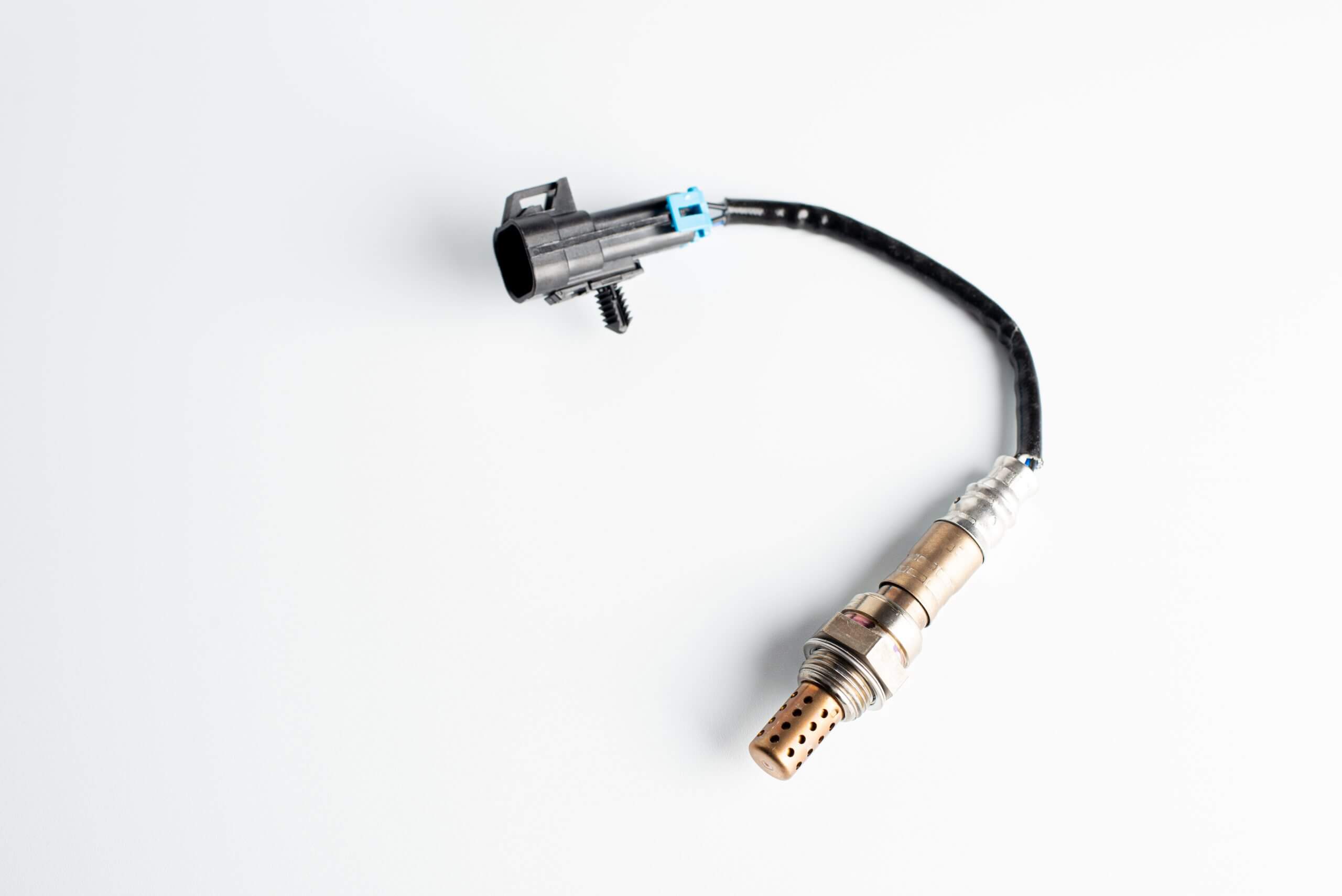
In the case of DTC P0141, the problematic sensor (Sensor 2) is located downstream (after the catalytic converter). Bank 1 indicates it is on the same side of the engine as Cylinder 1 (which can vary by manufacturer).
The P0141 code is part of a family of related diagnostic codes that signal oxygen sensor heater circuit problems. These include P0135 for Bank 1, Sensor 1 (the upstream or front sensor on the Bank 1 side of the engine), P0155 for Bank 2, Sensor 1 (the front sensor on the other side), and P0161 for Bank 2, Sensor 2 (the rear or downstream sensor on the other side).
While you can drive for a short time with a code P0141, it’s best to get the problem fixed in a week or two. Ignoring this trouble can cause:
- Reduced fuel efficiency
- Higher emissions
- Potential engine performance issues
- Possible damage to your catalytic converter or engine if left unfixed
In some cases, you might experience engine hesitation or stalling. If this happens, having your car towed to a mechanic is safer. Losing power on the highway or at an intersection is dangerous.
The paragraphs ahead contain everything you need to know about P0141 codes. Keep reading to learn about typical symptoms, repairs, and which makes and models are most prone to this problem.
Possible Causes of P0141 & Their Repair Costs
A malfunctioning oxygen sensor usually causes a P0141 code, but ruling out all the possible reasons can streamline repairs and reduce headaches.
Check out the FIXD article on the most common causes of check engine lights.
Here’s an overview of the parts and systems that can cause a P0141 code and their average repair costs. Actual prices can depend on the vehicle and location.
P0141 Code Triggers & Typical Repair Costs
| Part To Repair | Part / DIY Price | Mechanic Total Cost |
| Oxygen Sensor | $300–$333 | $362–$412 |
| Damaged Wiring (oxygen sensor harness) | $25–$100 | $100–$350 |
| Fuse | $1–$5 | $26–$45 |
| Exhaust: Repair Leak (welding) | N/A | $100–$200 |
| Coolant Temperature Sensor | $306–$325 | $400–$443 |
| Engine Control Module/Powertrain Control Module | $929–$978 | $1,006–$1,075 |
Let’s explore how these failed components can cause a P0141 code.
Parts Most Likely to Fail & Cause a P0141 Code
| Parts that can cause P0141 | How it could cause P0141 |
Oxygen Sensor Oxygen Sensor Harness | A faulty heater circuit can prevent the oxygen sensor from accurately measuring exhaust gases. When this happens, the sensor sends incorrect information or fails to communicate with the ECM/PCM, causing the P0141 code to appear. |
| Fuse | If the sensor’s heater circuit fuse blows, its power is cut off. Without power, the sensor can’t warm up or send data to the ECM/PCM. This lack of communication triggers the P0141 code. |
| Exhaust (leak) | An exhaust leak near the oxygen sensor can let extra air into the system. This additional oxygen throws off the sensor’s readings, confusing the ECM/PCM. As a result, the P0141 code may be triggered even though the sensor itself is working fine. |
| Coolant Temperature Sensor | Sometimes, a problem with the coolant temperature sensor can indirectly cause a P0141 code. If this sensor gives the ECM/PCM wrong information, it can lead to incorrect fuel mixture adjustments. These adjustments can affect the oxygen sensor readings, potentially triggering the code. |
| Engine Control Module/Powertrain Control Module | In rare cases, the ECM/PCM itself might be the problem. If it’s not working correctly, it could misunderstand signals from a functioning oxygen sensor. This misinterpretation might lead the module to wrongly detect a heater circuit problem, setting off the P0141 code. |
Makes Commonly Affected By P0141
FIXD sensor data shows that some auto brands have higher P0141 occurrence rates than others. Chevrolet leads this unfortunate pack like the other related codes (P0135 and P0161). The Silverado 1500 is the worst, closely followed by the Impala. Another sedan, the Malibu, completes the podium.
Nissan’s best-selling four-door, the Altima, far exceeds any of the automaker’s other vehicles for P0141 codes. The next-closest models, the Sentra and Pathfinder, are at low incident rankings but enough to make this list.
Ford takes third place overall for P0141 codes, but unlike the adjacent oxygen sensor heater circuit DTCs, the F-150 is low on the roster. Instead, the storied Mustang has the dishonor of having the most significant history with P0141 DTCs among all Blue Oval models. The Escape sits at a not-too-distant second. The Fusion follows.
The long-serving Corolla is the Toyota with the greatest occurrence level of P0141 codes, followed by the RAV4 and Tacoma, but with low occurrence ratings.
GMC earned the fifth overall spot, led by the Sierra pickup, a clone of the Silverado 1500. The Yukon shares much of its underpinnings with the Sierra and Silverado 1500 and takes second place. The Acadia crossover comes in third.
| Top 5 Makes Affected by P0141 | Most Affected Model(s) |
Chevrolet | Silverado 1500 |
| Impala | |
| Malibu | |
Nissan | Altima |
| Sentra | |
| Pathfinder | |
Ford | Mustang |
| Escape | |
| Fusion | |
Toyota | Corolla |
| RAV4 | |
| Tacoma | |
GMC | Sierra |
| Yukon | |
| Acadia |
How to Diagnose the Cause of Your P0141 Code
Diagnosing a check engine light starts with using an OBD-II scanner to identify what’s causing the issue. The FIXD plug-in sensor will show the code and likely causes on your phone via the accompanying FIXD app. You can also try a basic code reader with a cable to plug into the car’s OBD-II port. In truth, there are only a few things a novice DIYer can do to identify what triggered a P0141 code. You’ll want a flashlight, gloves, safety goggles, and a rag to get started. A more involved effort will require essential hand tools.
Safety Essentials
Before exploring the source of a P0141 code, you’ll want to observe the following:
- Park on a level surface in a safe area
- Ensure the car is off and the parking brake is engaged
- Allow the engine to cool
Symptoms of P0141 Causes
As mentioned, P0141-related issues can involve more than a faulty oxygen sensor. Here’s a look at other possibilities.


Symptoms:
- Illuminated check engine light
- Rough idling
- Reduced fuel economy
- Engine stalling or hesitation
- Black exhaust smoke
- Failed emissions test
What to Inspect:
Use the FIXD app or an OBD-II scanner with live data capability to compare sensor performance against expected values. A mechanic or intermediate DIYer can visually inspect the sensor for signs of damage or contamination. A voltmeter test can also check the sensor’s condition.
Symptoms:
- Illuminated check engine light
- Rough idling
- Reduced fuel economy
- Engine stalling or hesitation
- Black exhaust smoke
- Failed emissions test
What to Inspect:
For the wiring harness, a mechanic or skilled DIYer can look for obvious problems like cuts, frayed wires, or melted spots. They can also use a multimeter to check the electrical flow between the sensor and the ECM/PCM. This test can show any breaks or shorts in the wiring.
Symptoms:
- Illuminated check engine light
- No power to the oxygen sensor
What to Inspect:
Find the fuse box diagram in the car’s owner’s manual to locate the correct fuse for the oxygen sensor heater circuit. Once that’s confirmed, check if the fuse is blown, or use a multimeter set to continuity mode to test if it’s still working properly.
Symptoms:
- Illuminated check engine light
- Reduced fuel economy
- Engine hesitation
- Unusual engine noise
- Burning smell or unusual odor
- Gas pedal vibration
What to Inspect:
Check for cracks or damage to the exhaust components. Look for an accumulation of black soot along any suspected trouble areas. Pay attention to any exhaust fumes or gasoline odor in the engine bay or the passenger compartment (fumes in the cabin are serious due to the potential for carbon monoxide poisoning). Consult a technician trained to work with exhaust systems if a problem is suspected.
Symptoms:
- Illuminated check engine light
- Rough idling
- Reduced fuel economy
What to Inspect:
You can use the FIXD app or an OBD-II scanner to check the coolant temperature sensor and see what temperature it’s reporting. Compare this to the actual engine temperature. You can also use an infrared thermometer to measure the engine’s temperature against the dashboard gauge.
A mechanic or experienced amateur can use a multimeter to test the sensor’s resistance at different temperatures and compare these to the manufacturer’s standards.
Symptoms:
- Check engine light
- Slow engine warm-up
- Lack of cabin heat
- Temperature gauge reading low
- Engine running cooler
- Fluctuating temperature readings
- Reduced fuel economy
- Engine performance issue
- Difficulty starting the engine
- Incorrect idle speed
- Transmission shifting issues
- Multiple, seemingly unrelated error codes
What to Inspect:
If you’re not a professional, figuring out if the ECM/PCM is faulty is tricky. The easiest way is to use the FIXD app or an OBD-II scanner to look for multiple unrelated error codes or sensor readings. These could point to problems with the ECM/PCM. However, confirmation requires advanced skills and specialized diagnostic equipment.
Can I drive with a P0141 code?
Quick answer: Yes, driving with a P0141 code is okay for a limited time, but repairs are needed within one or two weeks.
You don’t need to panic immediately if a check engine light comes on due to a P0141 code. You can usually continue driving for a week or two. However, it’s vital to understand what this means for your car and what actions you should take.
In the short term, your car will likely:
- Be less fuel-efficient
- Produce more exhaust emissions
- Have an underperforming engine
While these issues aren’t ideal, they usually won’t cause immediate harm for limited driving. However, this isn’t the time for long-distance driving. Further, continued driving with a P0141-related problem risks damaging the catalytic converter or internal engine components (including the pistons rings and cylinder walls)
When to Stop Driving Immediately: If your car starts to hesitate or stall, it’s time to stop driving. These symptoms can make driving dangerous, especially on highways or busy intersections. In this case, it’s safer to call a tow truck and have your car checked by a mechanic.
Here’s a more detailed look at driveability with a P0141 code.
| Causes | Can I Drive? | Risks / Safety / Performance |
|---|---|---|
|
Faulty Oxygen Sensor/Defective Oxygen Sensor Harness |
Short-time driving with a P0141 code usually won’t cause problems, but repairs shouldn’t be delayed. Don’t drive if the car hesitates, stalls, or there’s a noticeable performance loss. |
A defective oxygen sensor or harness can lower fuel economy and increase emissions, which can, over time, cause problems with the catalytic converter and engine. |
|
Damaged Fuse |
Short-time driving with a P0141 code usually won’t cause problems, but repairs shouldn’t be delayed. Don’t drive if the car hesitates, stalls, or there’s a noticeable performance loss. |
A blown fuse makes the oxygen sensor inoperable, lowering fuel economy and increasing emissions. Other components (such as the catalytic converter) may also be damaged. |
|
Exhaust Leak |
Short-time driving with a P0141 code usually won’t cause problems, but repairs shouldn’t be delayed. Don’t drive if the car hesitates, stalls, or there’s a noticeable performance loss. |
An exhaust leak increases pollution, wastes fuel, and reduces engine performance. Dangerous fumes can also enter the cabin. |
|
Malfunctioning Coolant Temperature Sensor |
Short-time driving with a P0141 code usually won’t cause problems, but repairs shouldn’t be delayed. Don’t drive if the car hesitates, stalls, or there’s a noticeable performance loss. |
A faulty coolant temperature sensor impacts emissions control and fuel efficiency. The car may struggle to start in cold weather. If left unfixed, this issue risks damaging crucial engine parts. |
|
Defective Engine Control Module / Powertrain Control Module |
Short-time driving with a P0141 code usually won’t cause problems, but repairs shouldn’t be delayed. Don’t drive if the car hesitates, stalls, or there’s a noticeable performance loss. |
When the ECM/PCM malfunctions, it may misinterpret oxygen sensor data, leading to poor emissions control and fuel economy. Ignoring this problem can damage vital engine components and trigger additional error codes. |
DIY | How To Fix P0141 Causes
Because of access issues and the complexity of some systems, an amateur DIYer is limited to replacing a blown fuse, if applicable. Here’s how to tackle that task.
Possible Cause: Damaged Fuse
What is it?
Most cars rely on a fuse to control the electrical current used by an oxygen sensor. A blown fuse shuts down the sensor’s operation. If your vehicle doesn’t have a dedicated fuse for the oxygen sensor, skip this step and consult a mechanic.
How hard is it to fix?
Difficulty Level: Easy
Replacing a fuse is a fundamental task that every car owner should know how to do. The biggest challenge is locating the problem fuse. Rather than pull and inspect each of dozens of fuses, you’ll want to research which fuse to zero in on.
First, shut off the car and locate the fuse box, which may be under the dashboard or in the engine compartment (or both). There may be a diagram on the fuse box lid, but you’ll likely have to review the owner’s manual or check online for a more detailed breakdown. Identify which fuse (or fuses) serves the oxygen (O2) sensor, which may be labeled differently (GM often uses the lambda sensor name).
Once the fuse has been identified, gently pull the suspected fuse from the box. Use a fuse puller to avoid damaging any components. A fuse puller looks like oversized tweezers and is often included with the car (look in or around the fuse box). Otherwise, this simple tool can be purchased online or at an auto supply store for a few dollars.
Carefully inspect the suspect fuse for a broken or burnt metal strip inside the plastic housing. Replace a damaged fuse with one of the same amperage (usually 10 to 30 amps). Consult a mechanic if the fuse requires repeated replacement. This is an indicator of other problems.
Cost of Repairs
On average, a new oxygen sensor fuse costs $1– $5. Tools are separate.
Other DIY Considerations for Code P0141
When fixing car problems like the P0141 code, you must understand what you can safely do yourself and when to call a professional. The complexity of the repair often determines who should handle it.
Basic DIY Tasks:
- Checking and replacing fuses
- Visual inspections of easily accessible parts
- Using diagnostic tools to read error codes
Advanced DIY or Professional Tasks:
- Repairs that require lifting the car
- Replacing oxygen sensors or wiring harnesses
- Fixing exhaust leaks
- Changing coolant temperature sensors
- Working on the engine control module/powertrain control module
Safety should always be the top priority. Many P0141-related repairs involve working underneath the car or handling complex electrical systems, which can be dangerous without proper equipment and knowledge. There’s also a risk of creating more damage.
Even experienced DIY mechanics should be cautious. Some repairs might seem straightforward but can quickly become complicated. If you’re unsure about any step in the repair process, it’s always better to step back and consult a professional.
Before dealing with any code P0141-related repair, check whether your car is under warranty. You can save money by letting the automaker handle the work. In addition, research if there are any technical service bulletins (TSBs) for your car. TSBs are official repair/correction notices issued by the manufacturer that cover specific problem areas. You can explore this online or contact a dealer.
P0141 Code FAQs
What makes and models does code P0141 affect the most?
Here’s a breakdown of the vehicles most affected by code P0141, according to FIXD sensor data collected in 2023.
| Make | Model | Occurrence Frequency |
| Chevrolet | Impala | High |
| Chevrolet | Silverado 1500 | High |
| Ford | Escape | High |
| Ford | Mustang | High |
| GMC | Sierra | High |
| Nissan | Altima | High |
| Audi | A4 | Medium |
| Cadillac | CTS | Medium |
| Chevrolet | Malibu | Medium |
| Chevrolet | Cobalt | Medium |
| Chevrolet | Camaro | Medium |
| Chevrolet | Equinox | Medium |
| Dodge | Ram 1500 | Medium |
| Ford | Fusion | Medium |
| Ford | Ranger | Medium |
| Ford | Expedition | Medium |
| Ford | Explorer | Medium |
| Ford | Focus | Medium |
| GMC | Yukon | Medium |
| Jeep | Grand Cherokee | Medium |
| Mercury | Mountaineer | Medium |
| Toyota | Corolla | Medium |
Which brand gets the most P0141 codes, Chevy or Ford?
According to FIXD sensor data, Chevrolets are the worst offenders for P0141 codes. The Silverado 1500 is at the top of the list, followed closely by the Impala. Nissan takes second place for P0141 code frequency, mainly due to the Altima. Ford is third, with the Mustang and Escape being the most problematic.
Is the P0141 code a problem for Jeeps?
Yes. While code P0141 is less of an issue for Jeeps than other makes, like Chevrolet, Nissan, Ford, and Toyota, Jeep still ranks in the top ten for this issue. The Grand Cherokee has the highest occurrence rating for P0141 codes, followed by the Liberty and Wrangler.
Can I drive with a P0141?
Generally, driving for a short period (a week or two) is acceptable, but repairs shouldn’t be delayed past this point. In addition to reduced fuel economy and increased emissions, continued driving with a P0141 risks damaging critical components. Regardless, don’t drive with a P0141 code if the engine hesitates or stalls to avoid dangerous driving conditions.
What causes code P0141?
A P0141 code is typically caused by a problem with an oxygen sensor’s heater circuit. The problem is focused on the downstream sensor (Sensor 2) for the engine’s Bank 1. This can be due to a faulty oxygen sensor, damaged wiring, a blown fuse, or issues with the car’s computer that controls the sensor.
References:
Repair-cost estimates, repairpal.com (various dates). Retrieved September 17, 2024, from repairpal.com.

Dave Goldberg is an automotive journalist and lifelong car fanatic. He writes for numerous enthusiast and business outlets and is an ongoing contributor to HotCars.com, one of the most popular car culture websites. When he’s not writing or driving, Dave is either under a hood or asleep. His credentials include a BA in Journalism from The George Washington University.