Check engine light flashing meaning and what to do

Updated: October 2026

A flashing check engine light usually means a severe misfire threatens your catalytic converter. Worn spark plugs, failing ignition coils, and fuel delivery faults are common reasons. Ease off the accelerator, pull over safely, and shut off your car. Arrange roadside assistance rather than driving to a shop. The warning does not identify the failed part. Treat each flash seriously.

Car alert icons lamp on dashboard close up view
TABLE OF CONTENTS
CEL duo2.png

Diagnose and clear your check engine light!

How Serious is a Check Engine Light?

A flashing check engine light needs immediate attention. Each flash signals potential harm. When a cylinder fails to burn properly, unburned fuel enters the exhaust system and raises exhaust temperatures, overheating the catalytic converter. Continued operation risks further damage to expensive components.

A blinking check engine light is the same warning. Shaking, rough idling, unusual sounds, smoke, or reduced power increase urgency. Do not wait for more symptoms before acting on a flash.

What should you do when the light flashes?

Reduce speed and load immediately. Avoid hard acceleration, high speeds, hills, and towing while reaching a safe stopping place. Do not test whether higher speed makes the lamp flash.

Pull off the roadway, park, and switch off the vehicle. Request towing assistance. Explain when the flashing light started and whether other warning lights appeared. Describe any repeated flash pattern. Follow your vehicle owner’s manual for vehicle-specific instructions.

Our guide on what to do when your check engine light comes on explains initial checks. Learn which warning lights require shutdown. Never inspect hot or moving parts beside traffic.

Can You Drive With The Check Engine Light On?

Stop driving once safely parked. The lamp might flash under load during acceleration even when a misfire disappears at idle. Continuing your trip risks catalytic converter damage. There is no universal safe distance to continue driving with a flashing check engine light.

If the blinking light stops, the fault has not necessarily disappeared. Another flash might happen without notice. Record the circumstances and arrange diagnosis before another trip.

Dashboard indicator

What does it mean when the check engine light is solid?

A steady check engine light usually signals a less urgent emissions or powertrain fault. A loose gas cap is one possibility. A gas-cap leak alone ordinarily does not make the lamp flash. A steady light still needs prompt diagnosis, even when your car feels normal.

A solid check engine light never guarantees safety. Stop for overheating, oil-pressure warnings, knocking, or poor vehicle control. With a steady check engine light and no concerning symptoms, avoid unnecessary travel and schedule service.

Why was your check engine light flashing then solid?

An intermittent engine misfire might happen only during acceleration or cold starts, making the lamp flash intermittently. The computer often retains diagnostic trouble codes after the blinking check engine light stops.

Do not wait for the blinking light to return. Tell the shop when the light flashes and book a service appointment. A flashing check engine light followed by steady illumination still warrants investigation, even without another flash.

What are the most common causes?

Ignition system faults, fuel system problems, air leaks, and compression loss are important possibilities. Read our broader guide to common check engine light causes for related faults.

Do spark plugs or ignition coils make the lamp flash?

Worn spark plugs or a bad coil interrupt combustion. Damaged plugs, wires, or coils weaken the spark, especially during acceleration. A technician tests ignition parts before deciding which components to replace. Never replace parts solely because the lamp began to flash.

Keep spark plugs on your vehicle’s maintenance schedule. Test ignition coils and their wiring instead of replacing every coil after one misfire code.

A clogged fuel injector restricts fuel delivery. Leaking fuel injectors admit too much fuel, while pressure faults disrupt the fuel mixture. Contaminated fuel also causes combustion problems.

These fuel system problems sometimes trigger a blinking check engine light. Test pressure and injector operation before authorizing repairs to your car.

Vacuum leaks admit unmetered air. A mass airflow sensor or oxygen sensor fault also affects mixture control and engine performance. Low compression from valve, piston, or timing problems causes engine misfires too. These engine faults also make the lamp flash.

A sensor code does not prove sensor failure. Diagnose wiring, leaks, and mechanical condition first. Sensor lifespan varies, with no universal replacement mileage. Such faults happen at different ages.

How do you diagnose a flashing check engine light?

Start with stored codes and symptoms, then test the indicated system. On-board diagnostics, or OBD2, records diagnostic trouble codes in the vehicle computer. P0300 indicates random or multiple misfires. P0301 points to cylinder 1. Note whether the lamp continued to flash when the fault was detected.

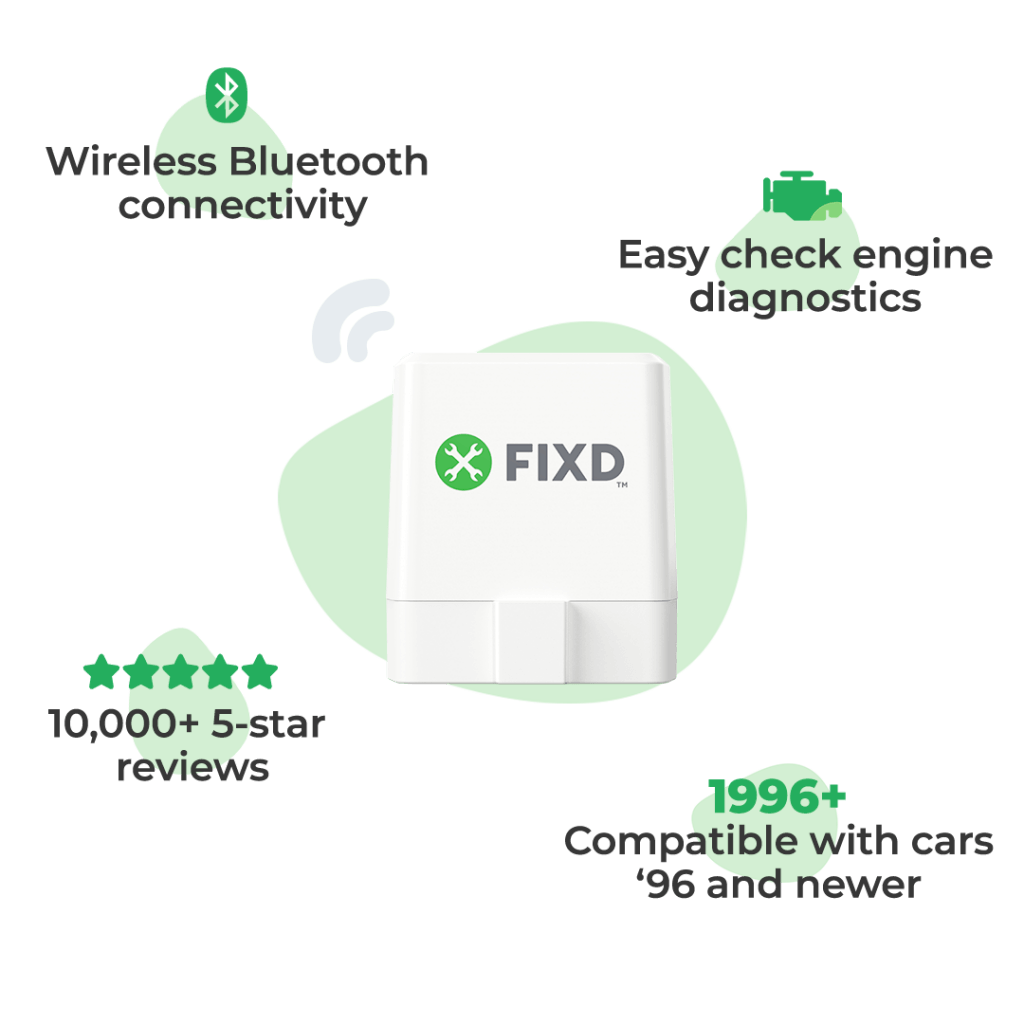
Once safely parked, connect the FIXD OBD2 scanner to the diagnostic port. The FIXD OBD2 scanner app translates supported codes into plain English. Read our scanning instructions and code directory for context.

A scan tool narrows the search after a flash. A technician checks the ignition system, battery voltage, fuel pressure, compression, and sensor readings to diagnose the cause. Ask which test confirms the proposed repair.

How much does it cost to repair a flashing check engine light?

The price depends on the confirmed engine fault. Replacing accessible plugs or coils generally costs less than replacing a catalytic converter or repairing internal engine damage. Diagnosis, parts, labor, your location, and vehicle access determine the bill.

Request an itemized estimate after testing. FIXD’s catalytic converter and oxygen sensor cost guides explain related repairs. Do not assume a fixed savings figure: an unresolved misfire might quickly damage the replacement converter too.

Engine and emissions indicators


How do you clear the check engine light?

Repair the cause before clearing codes. Resetting a flashing check engine light does not fix the problem. Disconnecting the battery also erases useful diagnostic information and resets emissions readiness monitors. Diagnose before erasing engine evidence.

Follow our reset guide after repair verification. Avoid running the car for long periods to see whether a flashing light clears. An active fault will often trigger another flash.

Frequently asked questions

Can low oil cause a check engine light?

Low oil sometimes affects valve timing or causes mechanical problems, indirectly producing this warning. The separate oil-pressure lamp requires an immediate safe shutdown. Adding oil does not diagnose a blinking check engine light or rule out damage.

A blinking check engine light often signals a misfire, but certain 2012–2016 Soul 1.6-liter GDI models have a knock sensor protection system. Kia bulletin PI2002A links continuous blinking, reduced power, and P1326 to possible bearing wear. Arrange towing and a VIN-specific dealer assessment of your car.

A shop diagnoses the fault behind each flash episode. Our free code-check guide covers scanning options, but do not drive a flashing vehicle there. Review FIXD offers, sensor options, optional Premium support, and DIY repair resources after arranging safe transport.

David Goldberg

Dave Goldberg is an automotive journalist and lifelong car fanatic. He writes for numerous enthusiast and business outlets and is an ongoing contributor to HotCars.com, one of the most popular car culture websites. When he’s not writing or driving, Dave is either under a hood or asleep. His credentials include a BA in Journalism from The George Washington University.

We’re here to help you simplify car care and save, so this post may contain affiliate links to help you do just that. If you click on a link and take action, we may earn a commission. However, the analysis and opinions expressed are our own.

Topics

Clear your check engine light in seconds

The FIXD Sensor and free app tells you why your check engine light is on in easy-to-understand terms and lets you clear it with the touch of a button. 

LEARN MORE AND SAVE 67%

About the Author

Picture of David Goldberg

David Goldberg

Dave Goldberg is an automotive journalist and lifelong car fanatic. He writes for numerous enthusiast and business outlets and is an ongoing contributor to HotCars.com, one of the most popular car culture websites. When he’s not writing or driving, Dave is either under a hood or asleep. His credentials include a BA in Journalism from The George Washington University.

You might also like

Explore Car Resources

car insurance icons

Car Insurance

Find the best insurance deals for your car

Car buying resources

Car Buying

Everything you need to know about buying a vehicle

FIXD Team logo

Car Care

Car repair costs, how-to guides, and more

car buying icons

Vehicle Search

Search any make/model for reviews, parts and more