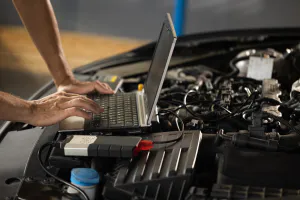
P0171 Engine Code | System Too Lean (Bank 1)

DTC P0171 signals that Engine Bank 1 is getting too much air or not enough fuel. Trouble spots include an oxygen sensor, vacuum leak, MAF sensor, or the fuel system (filter, pump, or pressure regulator). Cost: $20–$1,042, depending on the issue. Fords, Chevrolets, and Toyotas are most vulnerable.

Original graphic image Code P0171

Diagnose and fix your check engine light yourself


See what your engine code means in plain English
Get the most likely repair and cost
Access our Mechanic Hotline
Do repairs yourself and save $1000s

Table of Contents
Possible Causes of P0171 & Their Repair Costs Code P0171 indicates that Bank 1 of the engine is too lean—the air-to-fuel ratio has too much oxygen or insufficient fuel.
How to Diagnose the Cause of Your P0171 Code There are multiple possible reasons for a P0171 code to arise. Trouble spots can include a vacuum leak, faulty mass air flow sensors, clogged fuel injectors, or issues with an oxygen sensor or fuel pressure regulator.
Can I drive with a P0171 code?  Yes, driving with a P0171 code is acceptable, but only temporarily. Operating a car under this condition can cause damage and affect safety. Repairs should be completed right away. 
DIY | How To Fix P0171 Causes

DIYable P0171 triggers include:

  • Vacuum Leak
  • Fault MAF Sensor
  • Other DIY Considerations for Code P0171
P0171 Code FAQs

Frequently asked questions:

  • What makes and models does code P0171 affect the most?
  • How can I prevent P0171 from occurring?
  • What causes code P0171?

The meaning behind diagnostic trouble code (DTC) P0171: System Too Lean (Bank1) is straightforward. The engine receives too much oxygen or too little fuel, upsetting the ideal air-fuel ratio required for optimum combustion. Further, the problem is occurring in Bank 1 of the engine. This explanation is simple enough, but solving the problem often isn’t. A P0171 code can be traced to many possible causes, making DIY diagnosing challenging.

P0171 is related to other error codes that deal with the air-fuel mixture. For instance, P0172 signals that the ratio is too rich; there’s not enough air or too much fuel entering the combustion chamber. Meanwhile, P0173 is the equivalent of P0171, but in Bank 2. Likewise, P0174 is similar to P0172 but, again, revolves around Bank 2.  Codes P0170 (Bank 1) and P0173 (Bank 2) are also in the mix and cover fuel trim—the required amount of fuel needed for combustion. We’ll explain engine banks below, but let’s return to code P0171.

A P0171-associated check engine light comes on when the powertrain control module (PCM) or engine control module (ECM) detects the engine isn’t getting enough fuel. For most gasoline engines, this means using 14.7 parts of air for every 1 part of fuel. However, this ratio can vary slightly, depending on the type of gasoline. This 14.7:1 ratio, also called the stoichiometric air-fuel ratio, is vital because it ensures that all fuel is consumed during combustion (assuming everything is working correctly). 

A lean air-fuel mixture, as indicated by code P0171, translates into reduced engine power and compromised performance. While this doesn’t create a do-not-drive scenario, it’s a problem that requires immediate attention to minimize the risk of damage to critical components.  Everything about P0171 codes, including causes, symptoms, repairs, and most vulnerable vehicles, is detailed below.

Possible Causes of P0171 & Their Repair Costs

Subtle variations in the air-fuel mixture often go undetected, but a P0171 code gets generated at a certain point. When this situation occurs, you’ll want to give it prompt attention to avoid damaging the engine or catalytic converter. An underperforming engine can also create hazardous driving conditions. 

Check out the FIXD article on the most common causes of check engine lights.

Here’s an overview of the parts and systems that can cause a P0171 code and their average repair costs. Actual prices can depend on the vehicle and location. 

P0171 Triggers and Typical Repair Costs

Part To Repair Part / DIY Price Mechanic Total Cost
Vacuum Line $50–$100 $200–$300
Mass Air Flow (MAF) Sensor: Clean $20–$40 $100–$200
Mass Air Flow (MAF) Sensor: Replace $40–$50 $239–$346
Exhaust: Repair Leak (welding) N/A $100–$200
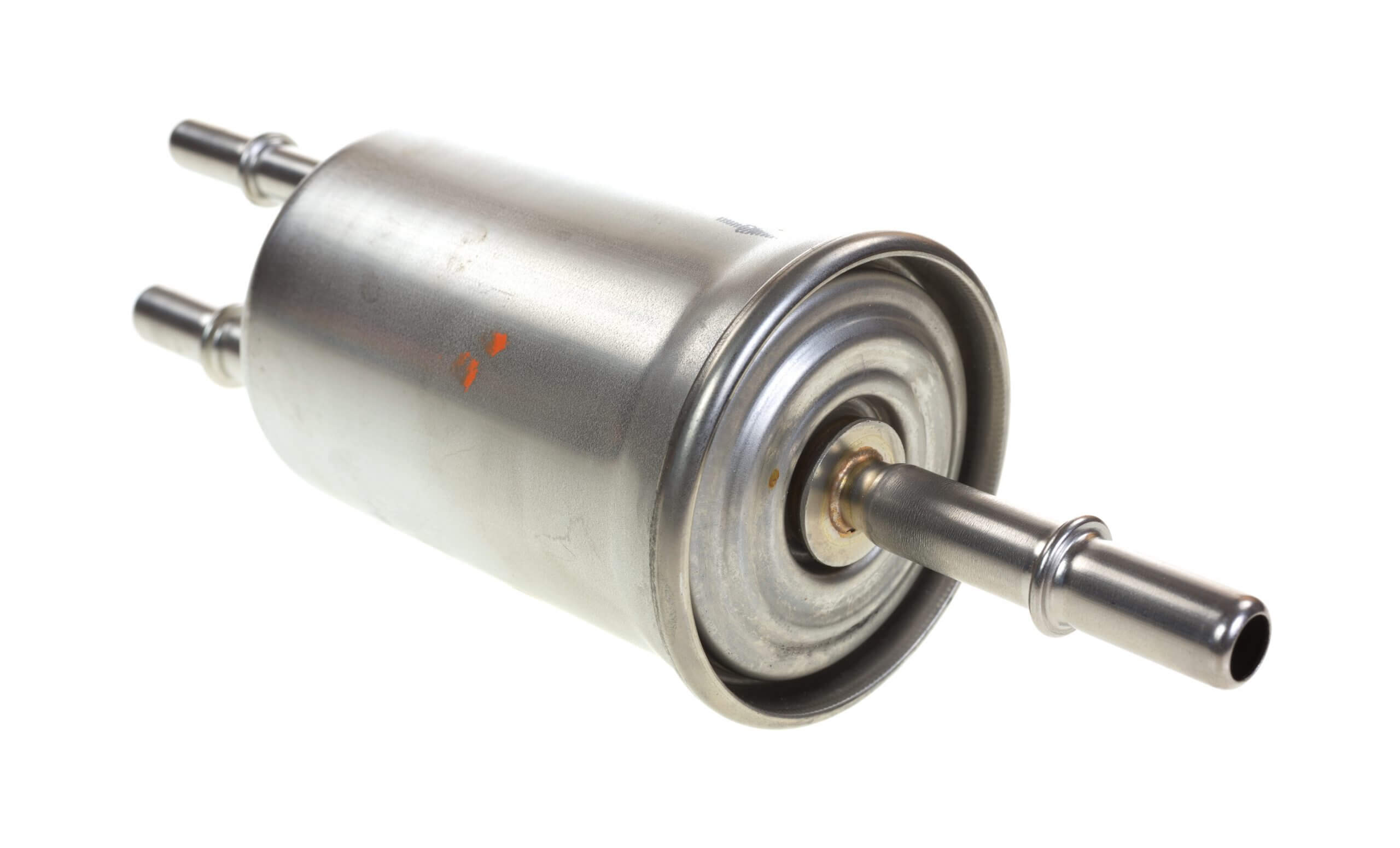
Fuel Filter $87–$100 $175–$211
Fuel Pressure Regulator $165–$195 $266–$322
Oxygen Sensor $300–$333 $362–$412
Fuel Injector $450–$541 $644–$784
Fuel Pump $916–$1,042 $166–$209

Let’s explore how these failed components can cause a P0171 code.

Parts Most Likely to Fail & Cause a P0171 Code

Parts that can cause P0171 How it could cause P0171

•Vacuum Line

•MAF Sensor

•Exhaust

•Oxygen Sensor

Introduces too much air into the combustion process, creating an imbalance in the correct air-to-fuel ratio.

•Fuel Filter

•Fuel Pressure Regulator

•Fuel Injector

•Fuel Pump

Disrupts the normal combustion cycle by limiting the amount of fuel. 

Makes Commonly Affected By P0171

According to FIXD sensor data, code P0171 is widespread and not limited to a particular automaker. That said, some manufacturers were worse in this regard than others. 

In particular, several Fords are at the top of the list for code P0171 vulnerability. Among them is the Expedition SUV, followed by the venerable F-150 pickup. Seeing both vehicles have similarly high occurrence rates for this issue isn’t unusual, as they share platforms and many components. Taking the third spot is the iconic Mustang, which also has an unfortunate and frequent history with P0171 codes. 

Chevrolet fans may be disappointed that this automaker isn’t too far behind the Blue Oval. Leading the charge are two sedans, the Impala and the Malibu. The company’s trucks aren’t exempt, as the Silverado 1500 has more incidents with the code P0171 than any other Chevy pickup. Nipping on the heels of the Silverado is the subcompact Sonic, another Bow Tie model with very high occurrence ratings. 

Yet Toyota enthusiasts shouldn’t be too confident. The Camry is especially problematic, followed by the RAV4 and Sienna. All three vehicles have high incident levels with the DTC P0171. Meanwhile, another Japanese automaker, Nissan, occupies the fourth spot, starting with the Altima. The Maxima and Sentra take second and third place, respectively. Nissan’s trucks are immune, either. The Frontier has the same occurrence level (medium) as the Maxima and Sentra.

Completing the top five list is the Audi A4,

Top 5 Makes Affected by P0171 Most Affected Model(s)


Ford
Expedition
F-150
Mustang


Chevrolet

Impala
Malibu
Silverado 1500


Toyota
Camry
RAV4
Sienna


Nissan
Altima
Maxima
Sentra
Audi A4 

How to Diagnose the Cause of Your P0171 Code 

Diagnosing a check engine light starts with using an OBD-II scanner to identify what’s causing the issue. The FIXD plug-in sensor will show the code and likely causes on your phone via the accompanying FIXD app. You can also try a basic code reader with a cable to plug into the car’s OBD-II port. In truth, there are only a few things a novice DIYer can do to identify what triggered a P0171 code. You’ll want a flashlight, gloves, safety goggles, and a rag to get started. A more involved effort will require essential hand tools.

Safety Essentials

Before exploring the source of a P0171 code, you’ll want to observe the following:

  • Park on a level surface in a safe area
  • Ensure the car is off and the parking brake is engaged
  • Allow the engine to cool

Symptoms of P0171 Causes

As mentioned, problems relating to a P0171 code involve a deviation in the correct air-fuel mixture. Any imbalance in this formula triggers an error message. Because this DTC indicates a problem with Bank 1, it can be helpful to know how to identify the different engine banks associated with your car before investigating any symptoms.

For most V6 or V8 engines, Bank 1 is usually located on the side (or bank) with Cylinder #1. Most automakers use a numbering convention with odd-numbered cylinders on one bank and even-number cylinders on the opposite side. Ford uses sequential numbering. For instance, Cylinders #1–4 are on one side, and Cylinders #5–8 are on the other.

Inline engines also use banks (typically two), with Bank #1 comprising the first two or three cylinders. Boxer-style or “flat” engines, usually found in Subarus and some Porsches, also use a Bank 1/Bank 2 system, similar to how V-formation engines are configured.

Pinpointing which portion of the engine is Bank 1 can sometimes quicken the diagnosis process. For example, you only have to be concerned with the fuel injectors that serve Bank 1 cylinders. Likewise, many cars have bank-specific oxygen sensors

Contact a professional technician or a service manual to confirm the location of Bank 1 on your car. You’ll save time and effort. Some P0171-related repairs are best handled by a trained mechanic, but a curious car owner with modest DIY skills can still investigate some potential trouble spots. 

Click on each Possible Cause of a P0171 code to know the symptoms to look out for and what to inspect.

Symptoms:

  • Illuminated check engine light
  • Higher-than-normal engine RPMs at idle
  • Rough engine idle
  • Engine sputtering or stalling 
  • Hard-to-start engine
  • Abrupt transmission shifts at high RPMs


What to Inspect:

Visually inspect the air hoses and vacuum lines for any cracks or deterioration.

Turn the engine on, open the hood, and listen for any high-pitched hissing or whistling sound. 

Spray water along air hoses, vacuum lines, gaskets, and fuel injectors while listening for any change in engine operation. A sputtering can indicate water entering the system, signaling a likely leak.

Symptoms:

  • Hesitation or jerking during acceleration
  • Higher-than-normal engine RPMs at idle
  • Rough engine idle
  • Engine sputtering or stalling 
  • Hard-to-start engine
  • Abrupt transmission shifts at high RPMs


What to Inspect:

Verify that the wired connection to the MAF sensor is secure and free of damage or dirt build-up. Then, a professional technician can proceed. 

Symptoms:

  • Illuminated check engine light
  • Reduced fuel economy
  • Engine hesitation
  • Unusual engine noise
  • Burning smell or unusual odor
  • Gas pedal vibration


What to Inspect:

Check for cracks or damage to the exhaust components. Look for an accumulation of black soot along any suspected trouble areas. Pay attention to any exhaust fumes or gasoline odor in the engine bay or in the passenger compartment (fumes in the cabin are serious due to the potential for carbon monoxide poisoning). Consult a technician trained to work with exhaust systems if a problem is suspected.

Symptoms:

  • Illuminated check engine light
  • Rough idling
  • Reduced fuel economy
  • Engine stalling or hesitation
  • Black exhaust smoke
  • Failed emissions test


What to Inspect:

An intermediate DIYer or a technician can use a voltmeter to test the status of an oxygen sensor.

Symptoms:

  • Illuminated check engine light
  • Reduced fuel economy
  • Engine hesitation or stalling
  • Engine misfiring
  • Reduced acceleration (particularly while under load or ascending a hill)


What to Inspect:

A DIYer with intermediate skills and familiarity with working around gasoline can remove the fuel filter for inspection or replacement. Otherwise, let a mechanic handle the problem.

Symptoms:

  • Illuminated check engine light
  • Rough idling
  • Engine stalling or hesitation
  • Black exhaust smoke
  • Gas in the regulator vacuum line
  • Engine cranks but doesn’t start


What to inspect:

Requires intermediate DIY skills or a professional mechanic and a fuel pressure tester. 

Symptoms:

  • Illuminated check engine light
  • Rough idling
  • Engine stalling or hesitation
  • Fuel leak/smell
  • Black exhaust smoke


What to Inspect:

Find the fuel injector associated with each Bank 1 cylinder. Start the engine. 

Take a long screwdriver and touch its tip to the injector. Listen carefully by putting your ear near the screwdriver’s handle. If you don’t hear clicking sounds, the injector may be clogged or broken.

An intermediate DIYer or a mechanic can try disconnecting each injector while the car is running. If the RPMs or engine sound doesn’t, then that injector is faulty.

Symptoms:

  • Illuminated check engine light
  • Rough idling
  • Reduced fuel economy
  • Engine stalling or hesitation
  • Hard-to-start engine
  • Whirring noise from the fuel tank area
  • Overheating


What to Inspect:

Requires intermediate DIY skills or a professional mechanic and a fuel pressure tester. Additional electrical testing may be required.

Can I drive with Code P0171?

Quick answer: Yes, you can drive with a code P0171, but get the problem corrected right away.

Consider a P0171 code as a warning sign to get your car repaired as soon as possible. We’re talking a timeframe of days, not weeks. Otherwise, you risk damaging the pistons, catalytic converter, and other expensive-to-replace components. 

However, if the car is suffering severe performance issues, there’s a crucial safety factor. Stalling, hesitation, or poor acceleration can put you, your passengers, and other motorists at risk, especially on the highway or at a busy intersection. In this case, getting the car towed to the repair shop is safer than creating a hazard.

Here’s a more detailed look at driveability with a P0171 code. 

Causes Can I Drive? Risks / Safety / Performance
Vacuum Leak Yes, you can drive only briefly until the problem is corrected. Don’t drive if there’s a risk of reduced engine performance due to safety concerns.  Driving with a P0171 code for an extended period risks damaging vital components. A stalling or hesitating engine can also create a driving hazard.
Faulty Mass Air Flow (MAF) Sensor Yes, you can drive only briefly until the problem is corrected. Don’t drive if there’s a risk of reduced engine performance due to safety concerns.  Driving with a P0171 code for an extended period risks damaging vital components. A stalling or hesitating engine can also create a driving hazard.
Exhaust Leak Yes, you can drive only briefly until the problem is corrected. Don’t drive if there’s a risk of reduced engine performance due to safety concerns.  Driving with a P0171 code for an extended period risks damaging vital components. A stalling or hesitating engine can also create a driving hazard.
Faulty Oxygen Sensor Yes, you can drive only briefly until the problem is corrected. Don’t drive if there’s a risk of reduced engine performance due to safety concerns.  Driving with a P0171 code for an extended period risks damaging vital components. A stalling or hesitating engine can also create a driving hazard.
Defective Fuel Filter Yes, you can drive only briefly until the problem is corrected. Don’t drive if there’s a risk of reduced engine performance due to safety concerns.  Driving with a P0171 code for an extended period risks damaging vital components. A stalling or hesitating engine can also create a driving hazard.
Bad Fuel Pressure Regulator Yes, you can drive only briefly until the problem is corrected. Don’t drive if there’s a risk of reduced engine performance due to safety concerns.  Driving with a P0171 code for an extended period risks damaging vital components. A stalling or hesitating engine can also create a driving hazard.
Bad Fuel Injector Yes, you can drive only briefly until the problem is corrected. Don’t drive if there’s a risk of reduced engine performance due to safety concerns.  Driving with a P0171 code for an extended period risks damaging vital components. A stalling or hesitating engine can also create a driving hazard.
Defective Fuel Pump Yes, you can drive only briefly until the problem is corrected. Don’t drive if there’s a risk of reduced engine performance due to safety concerns.  Driving with a P0171 code for an extended period risks damaging vital components. A stalling or hesitating engine can also create a driving hazard.

DIY | How To Fix P0171 Causes

With so many possible triggers for a P0171 code, figuring out the problem can be challenging, especially for a novice DIYer. Nonetheless, there are a few essential tasks that an amateur can attempt. 

Every DIY mechanic needs to know their limits. You don’t want to damage the car any further or risk getting injured. Take your time going solo, and don’t hesitate to contact a professional if you’re uncertain how to proceed. 

Lorem ipsum dolor sit amet, consectetur adipiscing elit. Ut elit tellus, luctus nec ullamcorper mattis, pulvinar dapibus leo.

What is it?

Proper air-fuel mixture is one vital element of a smooth-running engine. A vacuum leak creates an imbalance that can lead to a higher-revving engine and code P0171. 

How hard is it to fix?

Difficulty Level: Moderate

The greatest challenge to fixing a vacuum leak is finding the problem. The water spray technique (see above) only goes so far and can require more sophisticated methods that are best left to experienced hands. While replacing some vacuum lines is relatively easy, a vacuum leak involving a gasket, intake manifold, or other components requires professional intervention.

Cost of Repairs

Depending on the vehicle and the component, a replacement vacuum line will cost $50 to $150. 

What is it?

The mass air flow (MAF) sensor measures the amount of air entering the engine, which determines how much fuel is sent into the combustion chamber. A dirty or defective MAF sensor affects this reading. 

How hard is it to fix?

Difficulty Level: Moderate

Accessing the MAF sensor is uncomplicated in most cars, but if a replacement is involved, it requires a delicate touch and very specific steps. 

Cost of Repairs

Expect to pay $20 to $40 for MAF sensor cleaner spray and supplies. A new MAF sensor costs $40 to $50.

We’ll call replacing the fuel filter more of an intermediate task. It’s not an overly complicated project, but requires a systematic approach and patience. Not only is there a precise procedure, but accessing the filter is also challenging (it’s usually located near the gas tank). Someone with experience who isn’t deterred by crawling under a car can likely tackle this job.

Before dealing with any code P0171-related repair, check whether your car is under warranty. You can save money by letting the automaker handle the work. In addition, research if there are any technical service bulletins (TSBs) for your car. TSBs are official repair/correction notices issued by the manufacturer that cover specific problem areas. You can research this online or contact a dealer.

P0171 Code FAQs

Here’s a breakdown of the vehicles most affected by code P0171, according to FIXD sensor data collected in 2023.

Make Model Occurrence
Frequency
Ford Expedition High
Ford F-150 High
Ford Mustang High
Chevrolet Impala High
Chevrolet Malibu High
Chevrolet Silverado 1500 High
Chevrolet Sonic High
Toyota Camry High
Toyota RAV4 High
Toyota Sienna High
Nissan Altima High
Audi A4 High
Nissan Maxima Medium
Nissan Sentra Medium

Other than performing regular maintenance, which includes inspecting vital components, nothing can definitively prevent a check engine light triggered by a P0171 code. However, it’s essential not to ignore DTC P0171. Not only can this create a potentially hazardous driving situation due to stalling or engine hesitation, but driving under these conditions risks damage to the engine and catalytic converter. 

  1. Repair-cost estimates, repairpal.com (various dates). Retrieved July 9, 2024, from repairpal.com.
<\/p>\n
\n\n\n\n\n\n\n\n\n\n\n\n\n\n\n\n\n\n
Make<\/strong><\/td>\nModel<\/strong><\/td>\nOccurrence <\/strong>
Frequency<\/strong><\/td>\n<\/tr>\n
Ford<\/td>\nExpedition<\/td>\nHigh<\/td>\n<\/tr>\n
Ford<\/td>\nF-150<\/td>\nHigh<\/td>\n<\/tr>\n
Ford<\/td>\nMustang<\/td>\nHigh<\/td>\n<\/tr>\n
Chevrolet<\/td>\nImpala<\/td>\nHigh<\/td>\n<\/tr>\n
Chevrolet<\/td>\nMalibu<\/td>\nHigh<\/td>\n<\/tr>\n
Chevrolet<\/td>\nSilverado 1500<\/td>\nHigh<\/td>\n<\/tr>\n
Chevrolet<\/td>\nSonic<\/td>\nHigh<\/td>\n<\/tr>\n
Toyota<\/td>\nCamry<\/td>\nHigh<\/td>\n<\/tr>\n
Toyota<\/td>\nRAV4<\/td>\nHigh<\/td>\n<\/tr>\n
Toyota<\/td>\nSienna<\/td>\nHigh<\/td>\n<\/tr>\n
Nissan<\/td>\nAltima<\/td>\nHigh<\/td>\n<\/tr>\n
Audi<\/td>\nA4<\/td>\nHigh<\/td>\n<\/tr>\n
Nissan<\/td>\nMaxima<\/td>\nMedium<\/td>\n<\/tr>\n
Nissan<\/td>\nSentra<\/td>\nMedium<\/td>\n<\/tr>\n<\/tbody>\n<\/table>\n<\/figure>"}},{"@type":"Question","name":"How can I prevent P0171 from occurring?","acceptedAnswer":{"@type":"Answer","text":"

<\/p>\n

Other than performing regular maintenance, which includes inspecting vital components, nothing can definitively prevent a check engine light triggered by a P0171 code. However, it\u2019s essential not to ignore DTC P0171. Not only can this create a potentially hazardous driving situation due to stalling or engine hesitation, but driving under these conditions risks damage to the engine and catalytic converter.\u00a0<\/p>"}},{"@type":"Question","name":"What causes code P0171?","acceptedAnswer":{"@type":"Answer","text":"

<\/p>\n

A diagnostic trouble code (DTC) P0171 indicates that Bank 1 of the engine is running too lean (too much air or insufficient fuel in the air-fuel mixture). A bad oxygen sensor or fuel pressure regulator, a vacuum leak, adefective mass air flow sensor, or a clogged or faulty fuel injector can cause this problem.\u00a0<\/p>"}}]}

References:

  1. Repair-cost estimates, repairpal.com (various dates). Retrieved July 9, 2024, from repairpal.com.
<\/p>\n

Here\u2019s a breakdown of the vehicles most affected by code P0171, according to FIXD<\/a> sensor data collected in 2023.<\/p>\n

<\/p>\n

\n\n\n\n\n\n\n\n\n\n\n\n\n\n\n\n\n\n
Make<\/strong><\/td>\nModel<\/strong><\/td>\nOccurrence <\/strong>
Frequency<\/strong><\/td>\n<\/tr>\n
Ford<\/td>\nExpedition<\/td>\nHigh<\/td>\n<\/tr>\n
Ford<\/td>\nF-150<\/td>\nHigh<\/td>\n<\/tr>\n
Ford<\/td>\nMustang<\/td>\nHigh<\/td>\n<\/tr>\n
Chevrolet<\/td>\nImpala<\/td>\nHigh<\/td>\n<\/tr>\n
Chevrolet<\/td>\nMalibu<\/td>\nHigh<\/td>\n<\/tr>\n
Chevrolet<\/td>\nSilverado 1500<\/td>\nHigh<\/td>\n<\/tr>\n
Chevrolet<\/td>\nSonic<\/td>\nHigh<\/td>\n<\/tr>\n
Toyota<\/td>\nCamry<\/td>\nHigh<\/td>\n<\/tr>\n
Toyota<\/td>\nRAV4<\/td>\nHigh<\/td>\n<\/tr>\n
Toyota<\/td>\nSienna<\/td>\nHigh<\/td>\n<\/tr>\n
Nissan<\/td>\nAltima<\/td>\nHigh<\/td>\n<\/tr>\n
Audi<\/td>\nA4<\/td>\nHigh<\/td>\n<\/tr>\n
Nissan<\/td>\nMaxima<\/td>\nMedium<\/td>\n<\/tr>\n
Nissan<\/td>\nSentra<\/td>\nMedium<\/td>\n<\/tr>\n<\/tbody>\n<\/table>\n<\/figure>"}},{"@type":"Question","name":"How can I prevent P0171 from occurring?","acceptedAnswer":{"@type":"Answer","text":"

<\/p>\n

Other than performing regular maintenance, which includes inspecting vital components, nothing can definitively prevent a check engine light triggered by a P0171 code. However, it\u2019s essential not to ignore DTC P0171. Not only can this create a potentially hazardous driving situation due to stalling or engine hesitation, but driving under these conditions risks damage to the engine and catalytic converter.\u00a0<\/p>"}},{"@type":"Question","name":"What causes code P0171?","acceptedAnswer":{"@type":"Answer","text":"

<\/p>\n

A diagnostic trouble code (DTC) P0171 indicates that Bank 1 of the engine is running too lean (too much air or insufficient fuel in the air-fuel mixture). A bad oxygen sensor or fuel pressure regulator, a vacuum leak, adefective mass air flow sensor, or a clogged or faulty fuel injector can cause this problem.\u00a0<\/p>"}}]}

References:

  1. Repair-cost estimates, repairpal.com (various dates). Retrieved July 9, 2024, from repairpal.com.

A diagnostic trouble code (DTC) P0171 indicates that Bank 1 of the engine is running too lean (too much air or insufficient fuel in the air-fuel mixture). A bad oxygen sensor or fuel pressure regulator, a vacuum leak, adefective mass air flow sensor, or a clogged or faulty fuel injector can cause this problem. 

References:

  1. Repair-cost estimates, repairpal.com (various dates). Retrieved July 9, 2024, from repairpal.com.

A diagnostic trouble code (DTC) P0171 indicates that Bank 1 of the engine is running too lean (too much air or insufficient fuel in the air-fuel mixture). A bad oxygen sensor or fuel pressure regulator, a vacuum leak, adefective mass air flow sensor, or a clogged or faulty fuel injector can cause this problem. 

References:

  1. Repair-cost estimates, repairpal.com (various dates). Retrieved July 9, 2024, from repairpal.com.
David Goldberg

Dave Goldberg is an automotive journalist and lifelong car fanatic. He writes for numerous enthusiast and business outlets and is an ongoing contributor to HotCars.com, one of the most popular car culture websites. When he’s not writing or driving, Dave is either under a hood or asleep. His credentials include a BA in Journalism from The George Washington University.

Find a Certified Shop

We've partnered with RepairPal to recommend trustworthy shops in your area. Enter your details to see certified shops near you that offer upfront estimates, guaranteed fair pricing, and a minimum 12-month, 12,000-mile warranty.


We’re here to help you simplify car care and save, so this post may contain affiliate links to help you do just that. If you click on a link and take action, we may earn a commission. However, the analysis and opinions expressed are our own.

Topics

About the Author

Picture of David Goldberg

David Goldberg

Dave Goldberg is an automotive journalist and lifelong car fanatic. He writes for numerous enthusiast and business outlets and is an ongoing contributor to HotCars.com, one of the most popular car culture websites. When he’s not writing or driving, Dave is either under a hood or asleep. His credentials include a BA in Journalism from The George Washington University.

You might also like

Explore Car Resources

car insurance icons

Car Insurance

Find the best insurance deals for your car

Car Buying

Everything you need to know about buying a vehicle

FIXD Team logo

Car Care

Car repair costs, how-to guides, and more

car buying icons

Vehicle Search

Search any make/model for reviews, parts and more