


| Table of Contents | |
| Possible Causes of P0430 & Their Repair Costs | Code P0430 signals that the catalytic converter on Bank 2 is not effectively cleaning the engine’s exhaust gases. |
| How to Diagnose the Cause of Your P0430 Code | Though a failing catalytic converter is often the main cause of P0430, other potential culprits include faulty spark plugs or wires, malfunctioning oxygen sensors or sensor wiring, and exhaust system leaks. |
| Can I drive with a P0430 code? | Driving with a P0430 code for a short period is acceptable, but repairs should be made within a couple of weeks. Stop driving if you notice decreased engine performance, which could pose safety hazards. |
| DIY | How To Fix P0430 Causes | DIYable P0430 repairs include:
|
| P0430 Code FAQs | Frequently asked questions:
|
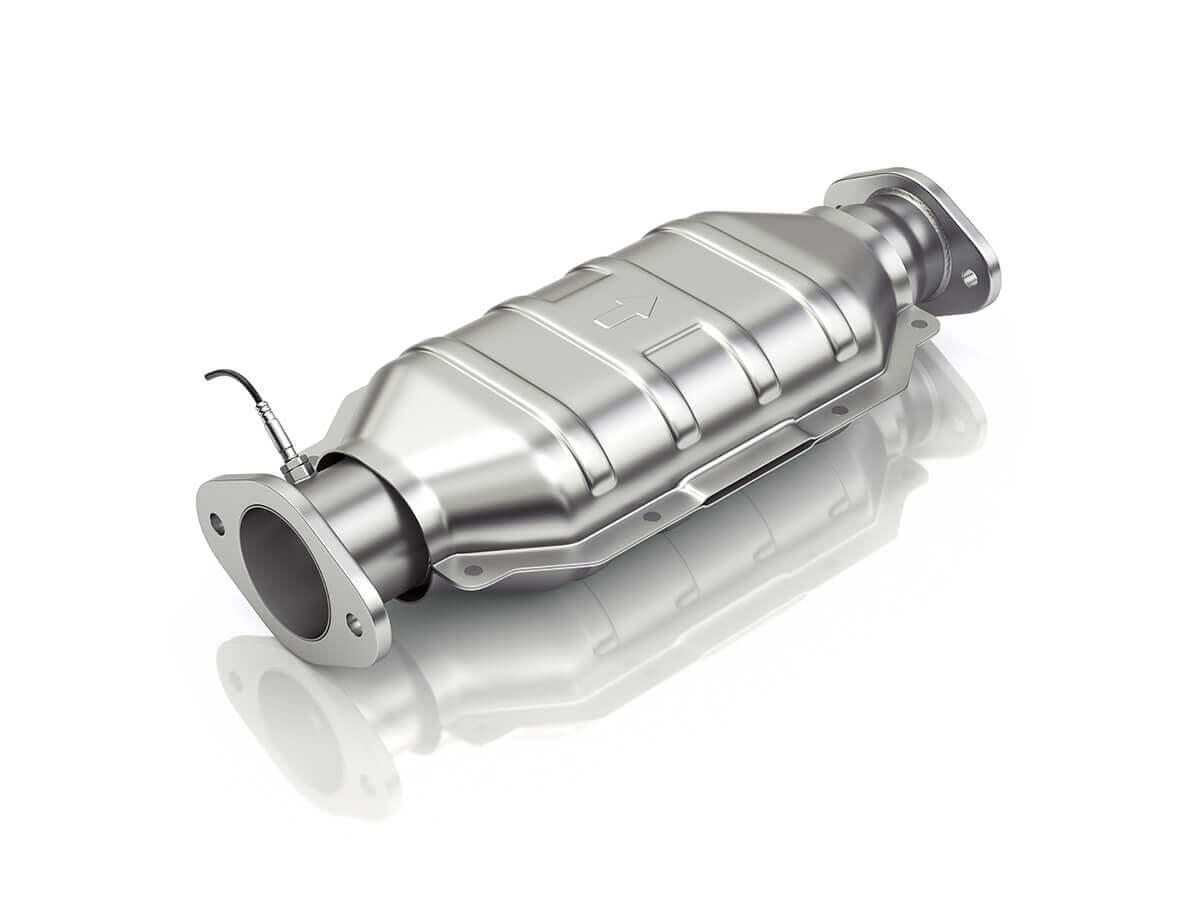
The catalytic converter is an essential element of every modern automobile with an internal combustion engine (ICE). This vital component removes harmful pollutants from exhaust gases. While some cars have one catalytic converter, others have two (or more), which is where code P0430: Catalyst System Efficiency Below Threshold (Bank 2) comes into play.
Every ICE-equipped vehicle is vulnerable to code P0420, which covers the engine’s catalytic converter for Bank 1. However, code P0430 is reserved for the catalytic converter that works with Bank 2. Some cars have this; some don’t. Either code gets triggered when the engine control module (ECM) or powertrain control module (PCM) detects that the respective catalytic converter is malfunctioning.
Today’s automotive pollution control systems are highly complex; catalytic converters are only part of the solution. It’s not unusual to have a catalytic converter-related code accompanied by an oxygen or mass air flow (MAF) sensor issue. A P0430 diagnostic trouble code (DTC) might piggyback on other DTCs, like P0171, P0172, P0174, and P0175.
In more severe instances, engine misfires (see codes P0300, P0301, P0302, P0303, P0304, P0305, P0306, P0307, and P0308), and the resulting incorrect air-fuel mixture can irreparably harm a catalytic converter. For example, unburnt fuel entering the converter is a sure path to damage and an expensive repair bill.
So, don’t assume P0430 codes appear in a vacuum. Otherwise, this issue is likely to resurface later.
Driving with a P0430 code is acceptable for a brief period. However, continuing to use the car beyond a week or two risks engine or exhaust system damage, not to mention the potential for performance reduction (which can create hazardous driving situations).
A closer look at code P0430 continues as we examine likely causes, typical symptoms, and common repairs. You’ll also learn which makes and models are most prone to have these troubles.
Possible Causes of P0430 & Their Repair Costs
While a faulty catalytic converter is often to blame for a P0430 code, this isn’t always true. A savvy car owner will explore all possibilities. This approach can save time and money and minimize the headaches associated with this DTC.
Check out the FIXD article on the most common causes of check engine lights.
Here’s an overview of the parts and systems that can cause a P0430 code and their average repair costs. Actual prices can depend on the vehicle and location.
P0430 Code Triggers & Typical Repair Costs
| Part To Repair | Part / DIY Price | Mechanic Total Cost |
| Spark Plugs | $83–$112 | $212–$276 |
| Spark Plug Wires | $66–$84 | $208–$256 |
| Damaged Wiring (oxygen sensor harness) | $25–$100 | $100–$350 |
| Exhaust: Repair Leak (welding) | N/A | $100–$200 |
| Oxygen Sensor | $300–$333 | $362–$412 |
| Catalytic Converter | $2,153–$2,254 | $2,304–$2,443 |
Let’s explore how these failed components can cause a P0430 code.
Parts Most Likely to Fail & Cause a P0430 Code
| Parts that can cause P0430 | How it could cause P0430 |
Spark Plugs Spark Plug Wires | Excess fuel increases emissions and risks catalytic converter damage. |
Oxygen Sensor Oxygen Sensor Harness | A malfunctioning oxygen sensor or bad oxygen sensor wiring can send inaccurate exhaust data, causing the engine control module (ECM) to improperly adjust fuel levels. |
| Exhaust (leak) | Exhaust leaks introduce extra oxygen, prompting the ECM to overfuel. This can lead to incomplete combustion, risking catalytic converter damage and increased harmful emissions. |
| Catalytic Converter | A failing catalytic converter becomes less effective at processing exhaust gases, triggering the P0430 code due to reduced functionality. |
Makes Commonly Affected By P0430
FIXD sensor data reveals that P0430 codes are widespread and not limited to a particular brand or vehicle type. Unsurprisingly, America’s best-selling vehicle for decades, the Ford F-150, leads the list of most-affected models. The Taurus and Edge complete the Blue Oval’s podium positions, but the Expedition, Explorer, and Mustang could also make this list with similar high-occurrence levels of P0430 codes.
While the Altima, Frontier, and Pathfinder lead the pack for Nissan with P0430 troubles, the Xterra, Maxima, and Titan also have strong histories with these issues. Meanwhile, Chevrolet gets bronze dishonors for the frequency of P0430 issues across its model range. In particular, the Silverado 1500, Traverse, and Camaro are the worst offenders.
Some of Toyota’s most popular vehicles are vulnerable to P0430 codes, with the Sienna minivan leading the charge, followed closely by the Camry and Tundra. Other high occurrence-level Toyotas include the 4Runner, Highlander, and Tacoma.
At the same time, Honda has only one entry, the Pilot. This family-hauling SUV has a high frequency of P0430 codes.
| Top 5 Makes Affected by P0430 | Most Affected Model(s) |
|
Ford |
F-150 |
| Taurus | |
| Edge | |
|
Nissan |
Altima |
| Frontier | |
| Pathfinder | |
|
Chevrolet |
Silverado |
| Traverse | |
| Camaro | |
|
Toyota |
Sienna |
| Camry | |
| Tundra | |
| Honda | Pilot |
How to Diagnose the Cause of Your P0430 Code
Discovering the reason behind a check engine light requires an OBD-II scanner. Your options include the FIXD plug-in sensor and accompanying app that shows the diagnostic trouble code and common causes behind the problem. Alternatively, a basic code reader that plugs into your car’s OBD-II port will also work, but these devices only show the code, not the underlying issue that triggered the code.
For a P0430 code, there’s not much for an amateur mechanic to investigate (problems like a faulty oxygen sensor or catalytic converter are best left to a professional). Nonetheless, if you decide to explore under the hood or elsewhere, there are a few essential safety steps to follow:
- Have the right tools for a basic inspection: a flashlight, gloves, safety goggles, and a rag. Hand tools may be necessary for more detailed work.
- Park on a safe, level surface.
- Turn the car off and engage the parking brake.
- Allow the engine to cool.
Symptoms of P0430 Causes
Whether taking a DIY approach or seeking professional help with a P0430 code, the correct diagnostic procedure involves exploring all possibilities. While replacing the catalytic converter is the likely outcome, who wouldn’t prefer just to have to pay for a new oxygen sensor or an exhaust system leak? Also, as covered earlier, you want to rule out any contributing factors to a P0430 code.


Symptoms:
- Illuminated check engine light
- Rough idling
- Reduced fuel economy
- Engine stalling or hesitation
What to Inspect:
Examine accessible spark plugs for signs of oil contamination, carbon buildup, or electrode erosion. These issues can indicate broader engine problems.
Symptoms:
- Illuminated check engine light
- Rough idling
- Reduced fuel economy
- Engine stalling or hesitation
What to Inspect:
If possible, remove and inspect individual spark plug wires. Look for insulation cracks or damaged connectors that could disrupt the ignition system.
Intermediate-level DIY mechanics can employ a 12-volt light tester to assess electrical components for a more comprehensive check.
Symptoms:
- Illuminated check engine light
- Reduced fuel economy
- Engine hesitation
- Unusual engine noise
- Burning smell or unusual odor
- Gas pedal vibration
What to Inspect:
Inspect the exhaust system for cracks, damage, or black soot accumulation, particularly in suspect areas.
Be alert for exhaust odors in the engine compartment or passenger cabin. Cabin fumes pose a serious carbon monoxide risk and require immediate professional attention.
Symptoms:
- Illuminated check engine light
- Rough idling
- Reduced fuel economy
- Engine stalling or hesitation
- Black exhaust smoke
- Failed emissions test
What to Inspect:
Intermediate DIYers or professional technicians can use a voltmeter to assess oxygen sensor functionality and accuracy.
Symptoms:
- Illuminated check engine light
- Rough idling
- Reduced fuel economy
- Engine stalling or hesitation
- Black exhaust smoke
- Failed emissions test
What to Inspect:
Faulty wiring or connectors can lead to inaccurate oxygen sensor readings. Carefully examine these components for visible damage or wear.
Symptoms:
- Illuminated check engine light
- Rough idling
- Reduced fuel economy
- Engine stalling or hesitation
- Failed emissions test
- Rattling noise
- Sulfur smell
What to Inspect:
Given the complexity of emissions systems, it’s advisable to consult a professional mechanic for catalytic converter issues, especially if you live in an area with emissions testing.
In some cases, the root cause may be reduced exhaust flow due to damage or blockage, which should be looked at before considering converter replacement.
Can I drive with a P0430 code?
Quick answer: Yes, generally, driving for a week or two with a P0430 code is okay.
While driving with a P0430 code won’t worsen problems in the short term, this is still a moderately severe issue. So, repairs shouldn’t be postponed beyond a few weeks. What might easily be a simple and cheap fix could escalate into major repairs if there’s an extended delay.
Not to mention, waiting to get work done means your car is polluting more, getting worse fuel economy, and vulnerable to even more damage.
You should pay close attention to any reduced performance, marked by engine hesitation or stalling. These conditions can create a safety hazard, especially while turning at an intersection or during high-speed highway maneuvers. In this instance, stop driving and call a tow truck.
Here’s a more detailed look at driveability with a P0430 code.
| Causes | Can I Drive? | Risks / Safety / Performance |
|---|---|---|
|
Defective Spark Plug/Damaged Spark Plug Wire |
Yes, driving with a P0430 code is OK, but only for a limited period. Don’t drive if reduced engine performance occurs, which can create a safety hazard. |
A malfunctioning spark plug or damaged spark plug wire can trigger misfires, allowing unburned fuel to enter the exhaust. This can harm the catalytic converter and magnify the P0430 code problem. |
|
Exhaust Leak |
Yes, driving with a P0430 code is OK, but only for a limited period. Don’t drive if reduced engine performance occurs, which can create a safety hazard. |
Exhaust leaks can worsen a P0430 code by introducing excess air into the system. This skews sensor readings and may damage the catalytic converter due to improper fuel-air ratios. |
|
Faulty Oxygen Sensor/Defective Oxygen Sensor Harness |
Yes, driving with a P0430 code is OK, but only for a limited period. Don’t drive if reduced engine performance occurs, which can create a safety hazard. |
A failing oxygen sensor (or sensor harness) can result in an incorrect air-fuel ratio. This reduces catalytic converter efficiency and, if not addressed, could lead to engine and catalytic converter troubles. |
|
Malfunctioning Catalytic Converter |
Yes, driving with a P0430 code is OK, but only for a limited period. Don’t drive if reduced engine performance occurs, which can create a safety hazard. |
Operating a vehicle with a deteriorating catalytic converter may result in higher emissions, decreased fuel economy, and possible engine damage from increased exhaust back pressure. |
DIY | How To Fix P0430 Causes
It’s best to divide P0430-related causes into two categories: DIYable and professional assistance required. Below are a couple of tasks that a moderately talented amateur mechanic can handle. Swapping out spark plugs and spark plug wires isn’t overly complex with many cars.
That said, fixing an exhaust leak, changing an oxygen sensor, or replacing a catalytic converter requires good (and safe) under-car access, the right equipment, and greater skills. We suggest leaving these repairs to the experts.
Regardless of what P0430-related repairs you attempt to undertake yourself, honestly assess your capabilities. Even changing spark plugs may be too complex for some. Identifying your limits at the outset can minimize the risk of injury and the chance of worsening the problem.
Possible Cause: Defective Spark Plug
What is it?
Spark plugs are essential to every gasoline engine. A fouled or defective plug is a common cause of engine misfires.
How hard is it to fix?
Difficulty Level: Easy/Moderate
Fortunately, replacing a spark plug is easy if you can get to it. Some transverse-mounted engines (mounted perpendicular to the length of the car) have spark plugs located near the firewall, making access challenging. You’ll need a few tools and supplies: replacement spark plugs (it’s best to replace them all), a gap gauge, a torque wrench (to avoid overtightening), a spark plug socket, a ratchet handle, and anti-seize for the spark plug threads. A spark plug boot puller can make disconnecting the spark plug wires easier, and spark plug boot grease will make the task easier in the future.
Cost of Repairs
On average, a new set of spark plugs costs $83– $112. Tools and supplies are separate.
Possible Cause: Damaged Spark Plug Wire
What is it?
Like many things under the hood, a spark plug wire can degrade over time, affecting how the spark plug functions and leading to an engine misfire.
How hard is it to fix?
Difficulty Level: Easy/Moderate
Replacing the spark wires is typically straightforward. Like with spark plugs, the greatest challenge is getting access to the connection points. You’ll also want to pay attention to the placement and length of each wire. A spark plug boot puller (see above) can help with the task, along with spark plug boot grease. Wire loom spacers can ensure the new wires are correctly positioned to prevent arcing-to-ground and cross-firing, which can damage other components.
Keep in mind that if one spark plug wire is bad, others will likely follow the same path. So, you might as well replace them all while you’re already busy in the engine bay.
Cost of Repairs
On average, a new set of spark plugs costs $66– $84. Tools and supplies are separate.
Before dealing with any code P0430-related repair, check whether your car is under warranty. You can save money by letting the automaker handle the work. In addition, research if there are any technical service bulletins (TSBs) for your car. TSBs are official repair/correction notices issued by the manufacturer that cover specific problem areas. You can research this online or contact a dealer.
P0430 Code FAQs
What makes and models does code P0430 affect the most?
Here’s a breakdown (in alphabetical order) of the vehicles most affected by code P0430, according to FIXD sensor data collected in 2023.
| Make | Model | Occurrence Frequency |
| Cadillac | CTS | High |
| Chevrolet | Silverado 1500 | High |
| Chevrolet | Traverse | High |
| Chevrolet | Camaro | High |
| Dodge | Grand Caravan | High |
| Ford | F-150 | High |
| Ford | Taurus | High |
| Ford | Edge | High |
| Ford | Expedition | High |
| Ford | Explorer | High |
| Ford | Mustang | High |
| GMC | Acadia | High |
| Honda | Pilot | High |
| Infiniti | G35 | High |
| Jeep | Wrangler | High |
| Jeep | Grand Cherokee | High |
| Nissan | Altima | High |
| Nissan | Frontier | High |
| Nissan | Pathfinder | High |
| Nissan | Xterra | High |
| Nissan | Maxima | High |
| Nissan | Titan | High |
| Toyota | Sienna | High |
| Toyota | Camry | High |
| Toyota | Tundra | High |
| Toyota | 4Runner | High |
| Toyota | Highlander | High |
| Toyota | Tacoma | High |
What causes code P0430?
Code P0430 typically indicates a problem with the catalytic converter’s efficiency in Bank 2 of the engine. This can be caused by a failing catalytic converter or by issues that affect the converter’s performance, such as exhaust leaks, faulty oxygen sensors, or spark plug issues.
Is P0430 common to the Ford F-150?
According to data collected by FIXD, Ford models generally have the highest incident level of check engine lights associated with P0430 codes. At the top of this list is the F-150. In short, P0430 codes are quite common to the Ford F-150.
What Chevy models are most affected by P0430 codes?
FIXD sensor data shows that several Chevrolet models, including the Silverado 1500, Traverse, and Camaro, have an extensive history of P0430-related problems.
How can I prevent P0430 from happening?
To minimize the risk of dealing with a P0430 code, focus on maintaining optimal engine performance through timely tune-ups and promptly addressing any exhaust system issues. Pay special attention to the health of the oxygen sensors, as their accuracy directly impacts the efficiency of the catalytic converter. Additionally, using quality fuel with additives is designed to clean fuel injectors and reduce carbon buildup. Further, be watchful for conditions, like engine misfires, that can cause an imbalance with the air-fuel mixture, resulting in unburnt fuel entering the catalytic converter.
References:
Repair-cost estimates, repairpal.com (various dates). Retrieved October 15, 2024, from repairpal.com.

Dave Goldberg is an automotive journalist and lifelong car fanatic. He writes for numerous enthusiast and business outlets and is an ongoing contributor to HotCars.com, one of the most popular car culture websites. When he’s not writing or driving, Dave is either under a hood or asleep. His credentials include a BA in Journalism from The George Washington University.